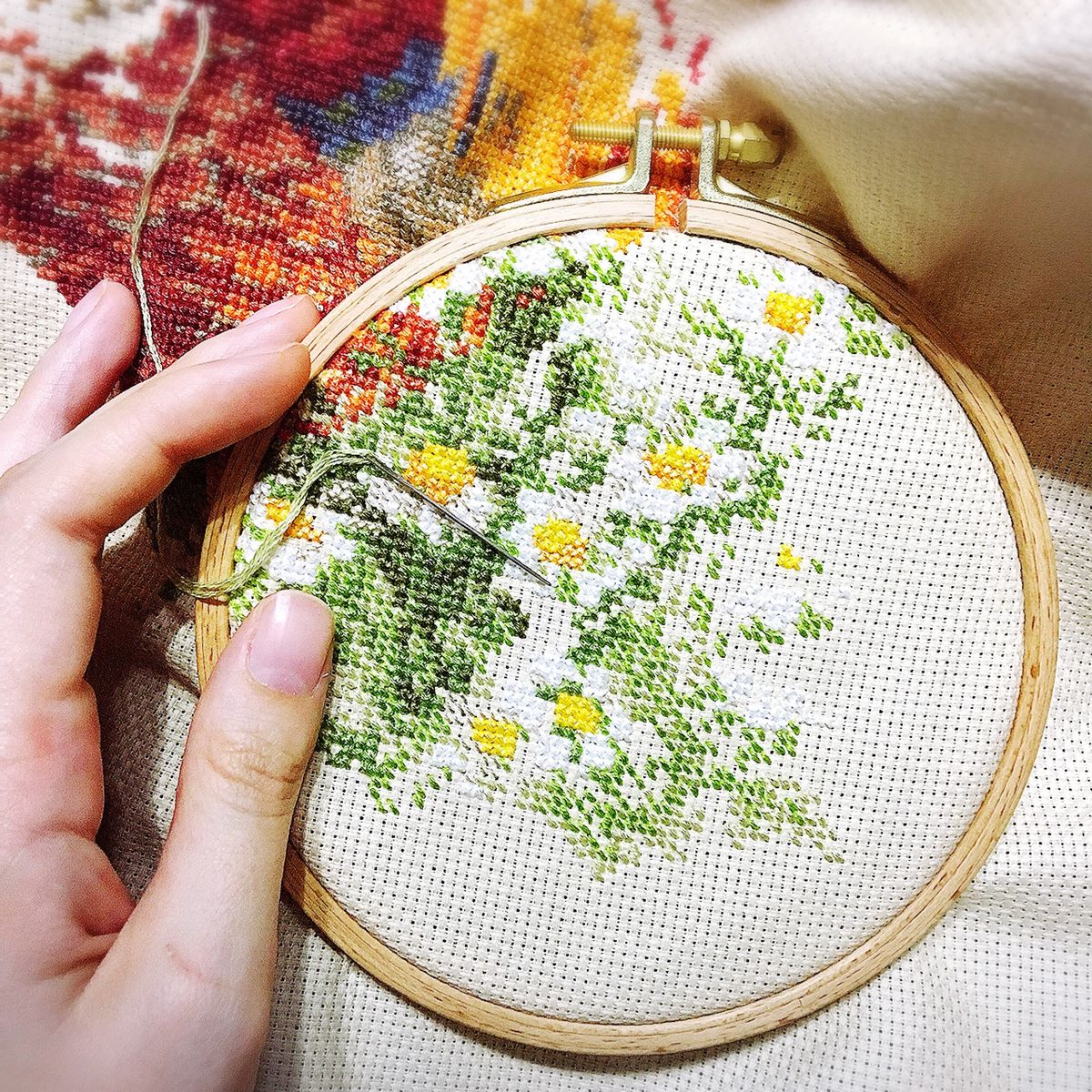
Imagine transforming a simple piece of fabric into a vibrant tapestry of color and texture. Picture the satisfaction of meticulously placing each stitch, watching a design emerge with every carefully executed ‘X.’ This form of needlework offers a unique avenue for artistic expression, where patience and precision converge to create enduring beauty. The process is often described as meditative, allowing the creator to slow down, focus on the present moment, and find tranquility in the rhythmic motion of the needle.
The roots of counted thread embroidery extend deep into history, with evidence of similar techniques found across numerous cultures throughout the ages. From ancient textiles adorned with intricate geometric patterns to samplers meticulously crafted by young women honing their skills, the legacy of this craft is rich and varied. These historical pieces serve as tangible connections to the past, showcasing the enduring appeal and versatility of this timeless art form.
One of the most appealing aspects is its accessibility. Requiring only a few basic materials fabric, thread, a needle, and a pattern it’s easy for anyone to begin. Whether seeking a simple, relaxing hobby or a challenging, complex project, this technique caters to all skill levels. The relatively low initial investment and readily available resources make it a perfect entry point into the world of textile arts.
While traditional designs often feature floral motifs, alphabets, or geometric shapes, the possibilities are truly limitless. Modern interpretations embrace a diverse range of styles, from whimsical character designs to realistic landscapes and abstract art. The evolving trends constantly push the boundaries of this craft, incorporating new techniques, materials, and color palettes, ensuring its continued relevance in contemporary crafting circles.
This exploration will delve into the fundamentals of this needlework, providing a comprehensive guide to getting started, selecting materials, mastering essential techniques, and discovering inspiring resources to fuel creative endeavors. Whether a complete novice or an experienced stitcher looking to refine skills, prepare to embark on a fulfilling journey into the world of counted thread embroidery.
Counted Fabric
Counted fabric is inextricably linked to counted thread embroidery; it forms the very foundation upon which every design is built. Without the precisely woven grid of evenly spaced threads, the intricate patterns characteristic of this needlework would be impossible to execute. The fabric’s consistent structure dictates the size and shape of each stitch, ensuring that the final image conforms accurately to the intended design. In essence, the fabric serves as a digital canvas, where each intersection of warp and weft represents a pixel in the overall picture.
Consider, for example, Aida cloth, perhaps the most popular choice for beginners. Its distinct, easily discernible squares make it simple to count and place stitches accurately. Conversely, linen or evenweave fabrics offer a finer, more subtle grid, allowing for greater detail and realism in the finished piece. The choice of fabric directly impacts the level of complexity and the overall aesthetic of the design. A larger count fabric will result in a larger finished piece, while a smaller count creates a more intricate and detailed image within the same dimensions.
Therefore, understanding the nuances of counted fabric is crucial for any enthusiast. Selecting the appropriate fabric for a particular project is not merely a matter of preference; it is a fundamental decision that influences the final outcome. Mastering the art of working with different types of counted fabric unlocks a broader range of creative possibilities, allowing stitchers to explore various styles and achieve increasingly sophisticated results. This understanding, therefore, forms an important skill to acquire.
Thread Tension
Thread tension plays a pivotal role in the overall aesthetic and durability of any counted thread embroidery project. It’s the invisible force that shapes the appearance of each stitch, influencing the fabric’s drape and the design’s texture. Maintaining consistent tension ensures a professional finish, preventing puckering, distortion, or an uneven surface. Mastering this aspect is paramount to producing high-quality work.
-
Uniform Stitch Appearance
Consistent tension creates uniform stitches, resulting in a smooth, even surface. When tension is too tight, stitches may appear distorted or sunken into the fabric. Conversely, loose tension leads to floppy, undefined stitches. By maintaining a balanced tension, each ‘X’ sits neatly on the fabric’s surface, contributing to the overall harmony of the design. This balance leads to enhanced visual appeal and longevity.
-
Fabric Distortion Prevention
Improper thread tension can wreak havoc on the fabric itself. Overly tight tension pulls on the fabric threads, causing it to pucker or warp, distorting the design. Loose tension can also lead to problems, as the stitches lack the necessary structure to hold the fabric taut. The goal is to find a tension that secures the stitches without unduly stressing the fabric, preserving its integrity and shape.
-
Achieving Proper Coverage
Thread tension directly affects the degree of coverage achieved. With appropriate tension, the floss fills the designated space on the fabric, creating a solid, opaque image. However, loose tension may result in gaps or thin coverage, allowing the fabric to show through. Tight tension can compress the floss, making it appear flattened and less vibrant. The ideal tension ensures adequate coverage, allowing the floss to showcase its true color and texture.
-
Influence on Fabric Drape
The final drape of the finished piece is also affected by thread tension. A project stitched with consistent, balanced tension will retain the fabric’s natural drape, allowing it to hang smoothly and gracefully. Uneven tension, on the other hand, can create stiffness or awkward folds, detracting from the overall presentation. Paying attention to tension from the outset helps ensure that the finished piece drapes beautifully, whether it’s a framed artwork or a functional textile.
These elements of thread tension demonstrate its significance in this needlework. It is not merely a technical detail but a crucial factor determining the final piece’s overall appearance, durability, and aesthetic appeal. By honing the ability to maintain consistent, balanced thread tension, any practitioner can elevate their work from simple stitches to enduring works of art.
‘X’ Formation
At the very heart of counted thread embroidery lies the ‘X’ formation, the quintessential stitch that defines the craft. This seemingly simple intersection of two diagonal lines, repeated meticulously across a gridded fabric, unlocks a world of creative possibilities. It’s the fundamental element that transforms a blank canvas into a vibrant tapestry of color and design, embodying the spirit of this needlework art form.
-
The Foundation of Design
The ‘X’ stitch, in its basic form, acts as the building block for countless designs. By varying the color and placement of these individual ‘X’s, intricate patterns emerge, from simple geometric shapes to complex pictorial scenes. Imagine a field of wildflowers, each bloom composed of dozens of precisely placed ‘X’s, or a majestic landscape rendered in subtle gradations of color, all achieved through the strategic arrangement of this fundamental stitch.
-
Uniformity and Precision
The beauty of counted thread embroidery lies in its inherent precision, and the ‘X’ formation plays a vital role in achieving this. Each stitch must be executed with care, ensuring that the diagonal lines intersect perfectly and maintain consistent tension. This uniformity creates a visually pleasing effect, giving the finished piece a polished and professional appearance. A slight deviation in stitch formation can disrupt the overall flow of the design, highlighting the importance of meticulous execution.
-
Adaptability and Texture
While the basic ‘X’ stitch remains the cornerstone of the craft, variations in technique can create a range of textures and visual effects. For instance, using different numbers of floss strands can alter the density and depth of the stitch, adding dimension to the design. Similarly, varying the stitch direction can create subtle shading and highlight specific areas, bringing the image to life. The adaptability of the ‘X’ formation allows stitchers to experiment and develop their unique style.
-
A Universal Language
Across cultures and time periods, the ‘X’ formation has remained a constant symbol of counted thread embroidery. From historical samplers to contemporary works of art, this stitch serves as a universal language understood by stitchers around the world. It’s a testament to the enduring appeal and versatility of this simple yet powerful technique, connecting practitioners across generations and geographical boundaries.
In essence, the ‘X’ formation is more than just a stitch; it’s the DNA of counted thread embroidery. Its simplicity belies its transformative power, capable of creating intricate designs and expressing artistic vision. By mastering the ‘X’ and understanding its nuances, stitchers unlock the full potential of this beloved craft and embark on a journey of creative exploration.
Pattern Following
Within the realm of counted thread embroidery, pattern following emerges as the indispensable guide, translating artistic vision into tangible reality. It’s the blueprint, the roadmap, that navigates the stitcher through a labyrinth of colors and symbols, ensuring accuracy and coherence in the final design. Without a clear and well-defined pattern, the art of creating complex and beautiful imagery through counted thread embroidery would be nearly impossible.
-
Symbol Interpretation and Placement
Patterns typically employ a system of symbols, each representing a specific color of embroidery floss. These symbols are meticulously arranged on a grid, corresponding to the fabric’s weave, dictating where each ‘X’ stitch should be placed. Accurate interpretation and precise placement are critical; a single misplaced stitch can disrupt the flow of the design and alter its intended appearance. For instance, a pattern might use a square to denote blue, a circle for red, and a triangle for green. A stitcher carefully follows this key, ensuring each symbol is translated into the correct color and positioned in the corresponding location on the fabric. This meticulous process guarantees that the final image faithfully reflects the original design.
-
Color Changes and Gradations
Intricate designs often involve subtle color changes and gradations, adding depth and realism to the finished piece. Patterns meticulously indicate these transitions, guiding the stitcher through the process of blending colors and creating smooth gradients. A pattern might specify that two strands of one color should be mixed with one strand of another to achieve a particular hue, or that a certain color should gradually fade into another over a series of stitches. This attention to detail is essential for capturing the nuances of light and shadow, transforming a flat surface into a three-dimensional work of art.
-
Maintaining Stitch Count and Direction
Patterns not only specify color and placement but also often provide guidance on stitch count and direction. Maintaining a consistent stitch count ensures that the design remains proportionate and balanced, while adhering to the specified stitch direction contributes to the overall texture and visual appeal. A pattern might indicate that a particular area should be stitched with a specific number of strands or that the diagonal lines of the ‘X’ stitch should always slope in the same direction. These seemingly minor details can have a significant impact on the final outcome, highlighting the importance of careful and consistent execution.
-
Adaptation and Personalization
While patterns provide a framework for creating counted thread embroidery designs, they also offer opportunities for adaptation and personalization. Experienced stitchers may choose to modify the colors, add embellishments, or alter the overall composition to suit their individual preferences. A pattern might serve as a starting point, inspiring the stitcher to create a unique and original work of art. This blend of structure and creativity is one of the most appealing aspects of counted thread embroidery, allowing individuals to express their personal style while adhering to the fundamental principles of the craft.
Ultimately, pattern following is an integral component, breathing life into designs, and guiding the hand of the stitcher from start to the completion of their artistic vision. The ability to understand, interpret, and execute patterns accurately unlocks countless creative avenues, transforming a simple piece of fabric into a treasured heirloom. Whether adhering strictly to the original design or incorporating personal modifications, pattern following remains the key to navigating the rewarding realm of counted thread embroidery.
What You’ll Need
- Embroidery Hoop or Frame: This keeps your fabric taut, making it easier to stitch evenly. Choose a size that fits your project. A hoop can be round or square and made of plastic, wood, or bamboo.
- Aida Cloth (or other Counted Fabric): This is the foundation of your project! Aida has evenly spaced holes for easy stitching. The “count” refers to the number of stitches per inch (e.g., 14-count Aida is common for beginners). Linen or evenweave fabric is another option, offering a finer finish as the stitch count increases.
- Embroidery Floss (Thread): These come in a vast array of colors. Cotton floss is most common, but silk or rayon floss can also be used for special effects. The pattern specifies the colors needed.
- Embroidery Needle: A blunt-tipped needle with a large eye is ideal. The blunt tip helps avoid splitting the fabric threads. Size 24 or 26 needles are generally good for Aida cloth.
- Pattern: This is your roadmap! Patterns can be printed, digital, or in a kit. They use symbols to represent different floss colors.
- Scissors: Small, sharp scissors are essential for cutting floss ends.
- Optional: Thread Organizer: A thread organizer keeps your floss neatly arranged and prevents tangling. This could be a cardboard organizer with numbered slots or plastic bobbins.
- Optional: Needle Minder: This is a magnetic accessory that will hold your needle and help to prevent losing it in your work area.
Preparation Tips
Before starting, find the center of your Aida cloth by folding it in half both ways and lightly creasing the center point. This helps you position your design correctly. You can also serge or tape the edges of your fabric to prevent fraying while you work.
Good lighting is essential to prevent eye strain. Stitch in a well-lit area, and consider using a magnifying lamp if needed. Sit comfortably with good posture to avoid back and neck pain. Taking breaks helps too! Have fun and enjoy the process!
Step-by-Step Instructions
Step 1
Begin by finding the center of your Aida cloth. Gently fold the fabric in half lengthwise, then in half again widthwise. Lightly crease the fabric at the center point; this marks the center of your design area. It’s wise to bind the raw edges to prevent fraying. Use masking tape or a serger to neatly finish the edges.
Step 2
Cut a length of embroidery floss approximately 18 inches long. Separate the floss into its individual strands (usually 6 strands). For most counted thread embroidery, using two strands is recommended. Thread the two strands through the eye of your embroidery needle. If the thread frays, try moistening the end and twisting it tightly before threading.
Step 3
Bring the needle up from the back of the fabric at the lower left corner of where your first ‘X’ stitch should be (refer to your pattern). Leave a tail of about an inch of floss at the back; you’ll secure it later. Pull the thread through until the knot rests on the back of the fabric. Don’t make a knot when you start cross-stitch; instead, weave the tail of the thread under a few stitches in the back to secure it.
Step 4
Bring the needle up through hole number one; you’ll need to put the thread down at hole number 2. Now, insert the needle into the upper right corner (diagonally across from where you started) and pull the thread through. You’ve now completed the first half of the ‘X’ stitch (a diagonal line).
Step 5
Next, bring the needle up from the back of the fabric at the lower right corner (diagonally across from your last stitch). Insert the needle into the upper left corner, completing the ‘X’ stitch. Ensure the tension of the thread is even; avoid pulling too tightly, which can distort the fabric.
Step 6
Most patterns involve stitching several ‘X’s of the same color in a row. One common method is to work a row of half stitches (diagonal lines) in one direction, then return to complete the ‘X’s by stitching the diagonal lines in the opposite direction. This is called the “English” method. The “Danish” method has you complete the first row in diagonal stitches, and then you return to finish up the rest of the X’s.
Step 7
When you finish a color or run out of thread, turn your work over to the back. Weave the needle under several stitches of the same color to secure the thread. Trim the excess floss close to the fabric, being careful not to cut any of your stitches.
Step 8
Carefully follow your pattern, counting the squares on the Aida cloth to determine where to place each stitch. Pay attention to the symbols and their corresponding colors. Double-check your work frequently to avoid errors.
Step 9
Once you’ve completed all the stitching, gently hand-wash your piece in cool water with a mild detergent. Rinse thoroughly and gently blot with a clean towel. Lay flat to dry away from direct sunlight. Once dry, iron the piece on the reverse side, placing it on a padded surface (like a towel) to protect the stitches. Framing your finished work is a lovely way to display your creation!
From the satisfying click of the needle to the beautiful designs that emerge, counted thread embroidery offers a unique blend of relaxation and creative accomplishment. It’s a journey from a blank piece of fabric to a personalized work of art, all achieved with simple stitches and a little patience. You’ll find yourself absorbed in the process, losing track of time as the pattern comes to life beneath your fingers.
Beyond the immediate enjoyment, each piece you create becomes a lasting testament to your creativity and skill. Whether it’s a gift for a loved one or a treasured addition to your own home, counted thread embroidery pieces have a timeless quality that will be appreciated for years to come.
Now it’s your turn to pick up a needle and thread and experience the joy of counted thread embroidery! We’d love to see what you create, so please share photos of your projects or leave a comment with your thoughts and experiences. Don’t be afraid to experiment and make it your own!
Happy stitching!
Images References :
Image used for illustration purposes only. All rights belong to their respective owners.



