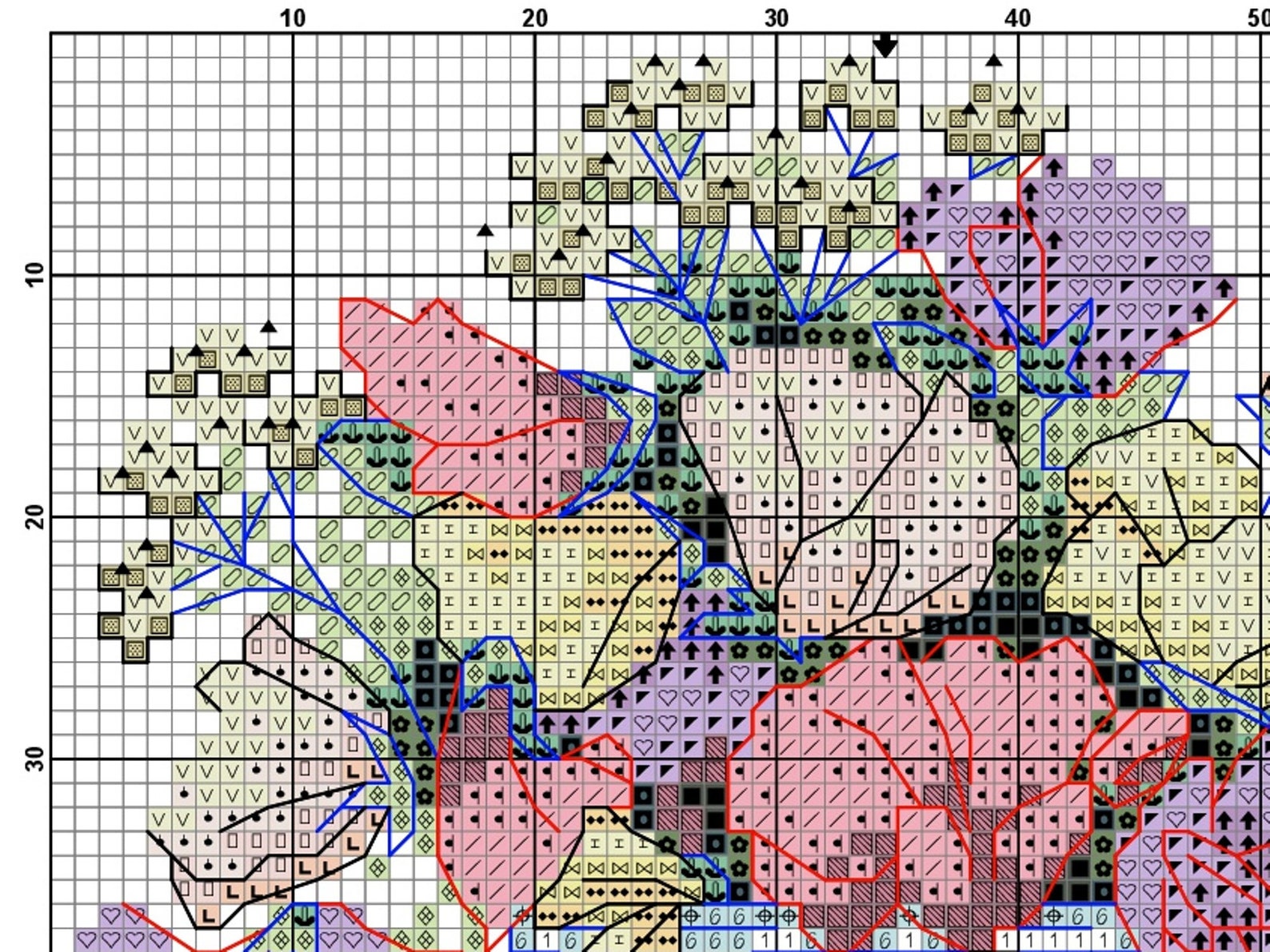
Imagine the quiet rhythm of needle meeting fabric, each tiny ‘X’ meticulously placed, slowly building into a vibrant tapestry of color and form. A finished piece, born from dedication and patience, offers a unique sense of accomplishment and a visual feast for the eyes, transforming simple thread into enduring art. The creation process itself becomes a mindful escape, a meditative journey where the worries of the day fade away with each stitch.
The art of counted thread has a rich and fascinating history, with roots stretching back centuries across cultures and continents. From the intricate samplers of the Victorian era to the bold geometric designs of folk traditions, this craft has always been a way to document life, express creativity, and preserve stories. Passed down through generations, it connects us to a legacy of handcraftsmanship and artistic expression.
One of the beautiful aspects of this craft is its accessibility. Whether a complete novice or a seasoned artist, anyone can pick up a needle and thread and begin creating. The materials are relatively inexpensive, and the techniques are easy to learn, making it a rewarding hobby for individuals of all skill levels. Moreover, the finished pieces can be treasured heirlooms, personalized gifts, or striking home decor, adding a touch of handcrafted charm to any space.
Today, the craft continues to evolve, embracing modern aesthetics and innovative techniques. From intricate floral motifs to minimalist geometric patterns and even pixelated portraits, the possibilities are endless. Contemporary designers are pushing the boundaries of traditional techniques, incorporating new materials, and exploring fresh color palettes, breathing new life into this timeless art form.
Whether drawn to the meditative rhythm, the rich history, or the boundless creative potential, many are eager to explore this fulfilling craft. The following guide will illuminate the steps involved in bringing your vision to life, offering a comprehensive overview to design your own custom masterpiece and celebrate the art of needle and thread.
Grid Customization
The foundation of any exceptional cross stitch design lies in a carefully considered grid. This essential element dictates the level of detail, the overall scale, and ultimately, the visual impact of the finished piece. A well-chosen grid empowers the designer to translate ideas into stitchable reality, transforming a simple concept into a beautiful and engaging work of art.
-
Aida Cloth Count: Density and Detail
The Aida cloth’s count, or stitches per inch, significantly affects the final design. A lower count (e.g., 11-count Aida) creates larger stitches and a bolder, more graphic look, ideal for beginners or simpler patterns. A higher count (e.g., 18-count or higher) allows for finer details, smoother curves, and more intricate shading, appealing to experienced stitchers seeking greater realism. The selection dictates the overall aesthetic and the complexity achievable.
-
Pattern Size: Balancing Scope and Manageability
The grid size directly influences the physical dimensions of the completed design. A larger pattern, while offering more room for intricate details, requires more time, thread, and space. Smaller patterns are quicker to complete and more manageable for beginners or those with limited time. Careful consideration of the desired final size and the available stitching time is crucial for project satisfaction. For example, a complex landscape might need a larger grid to capture its nuances, while a small floral motif can be stunning in a smaller size.
-
Grid Software and Templates: Digital Precision
Modern software and online pattern generators offer powerful tools for precise grid customization. These platforms allow designers to import images, adjust grid sizes, select colors, and even convert photos into stitchable patterns. This digital approach ensures accuracy and efficiency, particularly for complex designs. Even free online grid templates can be invaluable in creating initial designs before digitizing.
-
Adapting Existing Patterns: Scaling for Different Aida Counts
Understanding how to adapt a pattern designed for one Aida cloth count to another is a valuable skill. A pattern designed for 14-count Aida will be smaller when stitched on 18-count Aida and larger on 11-count. Resizing calculations are essential to ensure the finished piece matches the desired dimensions. This adaptation allows for greater flexibility and creative control, letting stitchers personalize patterns to their specific preferences and materials.
Ultimately, grid customization is the keystone to a successful cross stitch project. By carefully considering the Aida count, pattern size, and available tools, any stitcher can unlock their creative potential. From traditional samplers to modern masterpieces, the tailored grid allows for unique, personalized expressions of artistic intent, ensuring each project is a testament to vision and skill.
Color Palette
The selection of a color palette is far more than a mere aesthetic choice when crafting a cross stitch design; it is the very emotional heart of the piece. It dictates the mood, breathes life into the imagery, and guides the viewer’s eye across the stitched landscape. A well-considered palette transforms a simple pattern into a compelling narrative, each shade contributing to the story told in thread. For example, a design meant to evoke tranquility might employ soft blues, greens, and creams, while a celebratory pattern could burst forth with vibrant reds, oranges, and yellows.
The impact of color extends beyond surface appeal. The careful orchestration of hues can create depth, highlight specific details, and even suggest texture within the limitations of the medium. Consider how a subtle shift from a deep forest green to a lighter, mossy green can imply sunlight dappling through leaves, adding dimension to a stitched forest scene. Similarly, the strategic use of contrasting colors can draw attention to focal points, such as a bright red cardinal perched on a snowy branch. Numerous resources exist to aid the color selection process, including online palette generators, color theory guides, and even photographs that inspire the perfect blend of tones for any design.
Ultimately, the color palette is an indispensable tool in the cross stitch designer’s arsenal. A cohesive palette ensures visual harmony and elevates the overall impact of the finished project. While individual preferences certainly play a role, a foundational understanding of color theory and the careful consideration of the design’s intended message lead to truly stunning and expressive stitched creations. Overlooking color in favor of other aspects of design is akin to crafting a melody without harmony, lacking the depth and richness that a carefully crafted color story provides.
Symbol Assignment
Within the tapestry of “how to make a cross stitch pattern”, symbol assignment emerges as the key to clarity, acting as a bridge between the designer’s vision and the stitcher’s needle. Without a well-defined system of symbols, a design can quickly devolve into a confusing jumble of colors and stitches. This process, therefore, becomes paramount to ensuring an enjoyable and successful crafting experience.
-
Unambiguous Correspondence
Each color in a cross stitch pattern requires a unique symbol to represent it. These symbols can be anything from simple geometric shapes (circles, squares, triangles) to letters, numbers, or even custom-designed icons. The key is to ensure that each symbol is easily distinguishable from the others to avoid misinterpretation and stitching errors. For instance, if two similar shades of blue are represented by a circle and a slightly larger circle, the potential for confusion is high. A better approach would be to use a circle for one shade and a triangle for the other, eliminating any ambiguity and guiding the stitcher with greater precision.
-
Readability and Legibility
The chosen symbols must remain clear and legible even when reduced in size on a printed pattern or displayed on a digital screen. Intricate or overly detailed symbols can become difficult to discern, especially in complex designs with many different colors. Simple, bold symbols are generally the most effective, ensuring that the stitcher can easily identify the correct color at a glance. Think of it like choosing a font for a book; clarity trumps ornamentation when readability is paramount.
-
Pattern Software Integration
Modern pattern-making software simplifies the symbol assignment process considerably. These programs often offer a library of pre-designed symbols and allow designers to create their own custom symbols. Furthermore, they automatically generate a color key that clearly displays each symbol alongside its corresponding color and thread code (e.g., DMC, Anchor). This seamless integration not only streamlines the design process but also enhances the overall clarity and usability of the finished pattern.
-
Standardization and Best Practices
While there are no strict rules governing symbol selection, adhering to certain best practices can improve the accessibility and usability of a cross stitch pattern. For instance, avoiding symbols that are visually similar to common stitching errors (e.g., using a single dot to represent a color, which could be easily mistaken for a stray mark on the pattern) is a good idea. Furthermore, consistently placing the color key in a prominent location on the pattern (e.g., at the top or bottom of the page) ensures that stitchers can easily reference it throughout the project.
In essence, thoughtful symbol assignment serves as a visual language, guiding the stitcher through the intricate landscape of a cross stitch design. A well-executed system of symbols transforms a potentially daunting task into a manageable and enjoyable creative endeavor, allowing the beauty of the design to shine through, stitch by meticulous stitch. Failing to consider this crucial element undermines the entire design process, like using the wrong key for a finely crafted lock.
What Youll Need
- Aida Cloth: This even-weave fabric, with its distinct squares, is the foundation of cross stitch. Choose the count (number of stitches per inch) based on your desired detail level. Lower counts (like 11) are great for beginners, while higher counts (like 18) allow for finer detail.
- Embroidery Hoop or Frame: This tool keeps your Aida cloth taut, making stitching easier and preventing puckering. Hoops are generally round and come in various sizes, while frames are rectangular and offer more even tension.
- Embroidery Needles: These needles have a large eye to accommodate embroidery floss and a blunt tip to easily slide between the Aida cloth’s fibers without splitting them. Size 24 or 26 needles are commonly used.
- Embroidery Floss: Six-strand divisible embroidery floss, usually made of cotton, is the “paint” of cross stitch. It comes in a vast array of colors. DMC and Anchor are popular brands known for their quality and color range.
- Scissors or Thread Snips: Small, sharp scissors are essential for trimming floss ends neatly. Embroidery scissors or thread snips are ideal for this purpose.
- Cross Stitch Pattern: You’ll need a pattern to guide your stitching. This can be a printed chart, a digital pattern on a tablet or computer, or a pattern created using cross stitch software.
- Optional: Light Source: Good lighting is essential for seeing the Aida cloth’s grid and the colors of the floss. A daylight lamp can be particularly helpful for stitching in low-light conditions.
- Optional: Needle Minder: A magnetic needle minder keeps your needle safe and prevents it from getting lost when you’re not actively stitching.
Preparation Tips
Before you start, it’s a good idea to prepare your Aida cloth. Wash and iron it to remove any wrinkles or sizing. Then, “overcast” or tape the raw edges of the fabric to prevent fraying as you work. This can be done with a serger, zig-zag stitch on a sewing machine, or masking tape.
Organize your embroidery floss by separating each color and storing it in bobbins or small bags. This will prevent tangling and make it easier to find the color you need. When working, good lighting is your friend! Make sure your work area is well-lit to avoid eye strain. Take breaks to stretch and relax your hands and back to prevent fatigue.
Step-by-Step Instructions
Step 1
Begin by securing your Aida cloth in the embroidery hoop or frame, ensuring the fabric is taut but not overly stretched. This provides a stable stitching surface and prevents puckering. Trim any excess fabric around the hoop, leaving a few inches for comfortable handling. If you haven’t already, overcast or tape the edges of the fabric to prevent fraying during the stitching process.
Step 2
Cut a length of embroidery floss approximately 18 inches long. Separate two strands of floss from the six-strand skein. Thread the two strands through the eye of the embroidery needle. A needle threader can be helpful if you’re having trouble. Once threaded, bring the two ends of the floss together and knot them to secure the thread.
Step 3
Locate the starting point on your cross stitch pattern. Bring the needle up through the back of the Aida cloth at the lower-left corner of the first stitch location. Pull the floss through, leaving a small “tail” on the back. Hold the tail against the back of the fabric as you stitch to secure it. Then, bring the needle diagonally across to the upper-right corner of the stitch and down through the fabric.
Step 4
Bring the needle up through the back of the Aida cloth at the lower-right corner of the stitch. Then, bring the needle diagonally across to the upper-left corner of the stitch and down through the fabric. This completes one cross stitch (an “X”). Ensure each stitch lies neatly and evenly. Maintain consistent tension to achieve a uniform appearance.
Step 5
Continue stitching each cross stitch in a row according to your pattern. You can choose to complete each individual “X” before moving to the next, or you can work the half stitches (the first diagonal) across the entire row and then come back to complete the crosses on the return journey. The latter method is often faster and ensures uniformity, but beginners may find it easier to complete each individual “X” as they go.
Step 6
When it’s time to change to a new color, finish the current stitch on the back of the Aida cloth. Secure the floss by weaving it under a few stitches on the back of your work. Trim the excess floss close to the fabric. Thread the needle with the new color of floss and repeat the stitching process, following the pattern.
Step 7
Once you’ve completed all the stitching according to your pattern, remove the Aida cloth from the hoop or frame. Secure any loose floss ends on the back of the work by weaving them under existing stitches and trimming them. Finally, gently wash the finished piece by hand in cool water with a mild detergent. Lay flat to dry, and iron on the back to remove any wrinkles. Your cross stitch project is now complete!
Creating your own cross stitch design truly opens a world of personalized art. It’s an engaging project that combines creativity with the calming rhythm of needle and thread. From choosing your colors to carefully placing each stitch, the process is both rewarding and meditative. Plus, you end up with a unique piece that reflects your personal style and passions!
More than just a hobby, this craft offers a beautiful way to preserve memories, create personalized gifts, or add a touch of handcrafted charm to your home. It reminds us of the beauty of slowing down and creating something meaningful with our own hands.
So, why not give it a try? We encourage you to design your own custom pattern and experience the joy of cross stitch. Share your creations with us we’d love to see what you come up with! Feel free to leave a comment below with any questions or tips you’ve discovered along the way.
Happy stitching!
Images References :
Image used for illustration purposes only. All rights belong to their respective owners.



