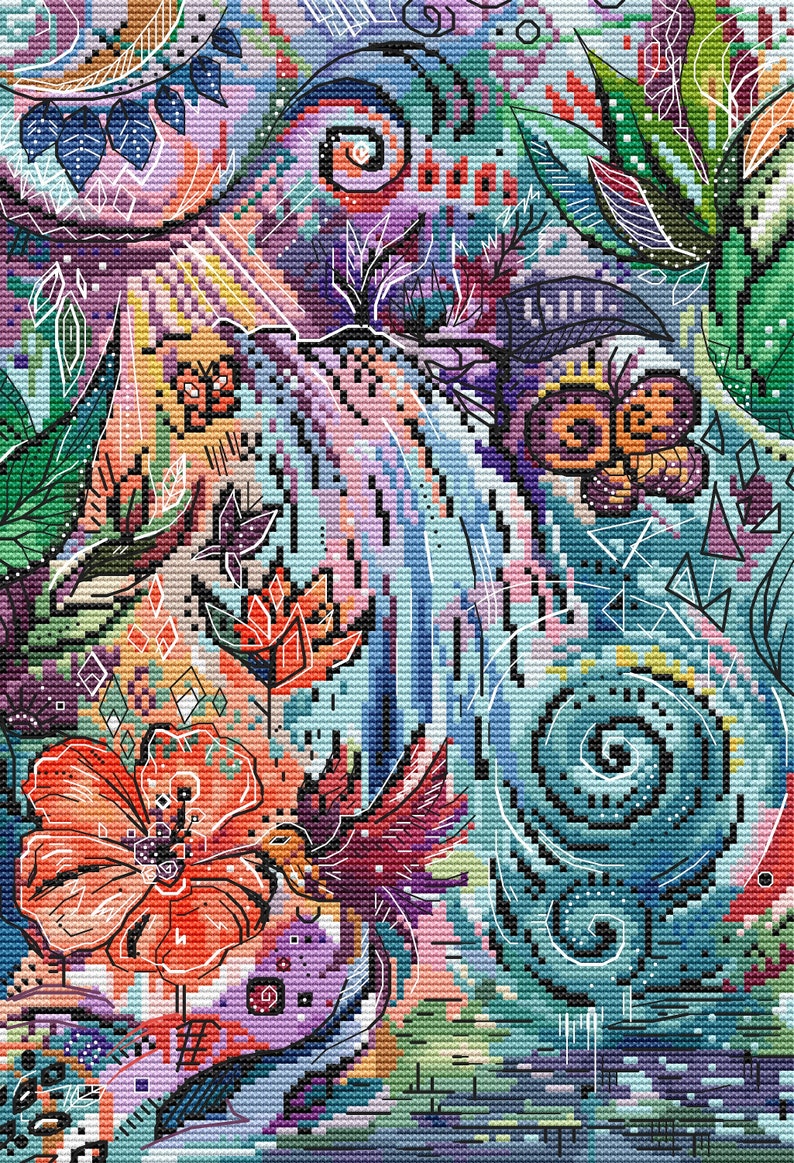
Imagine transforming threads into breathtaking scenes, each stitch a tiny brushstroke building towards a vibrant tapestry. The process is a journey of patience and precision, where simple X shapes coalesce into intricate landscapes and ethereal figures. A finished piece is more than just fabric and thread; it is a testament to dedication, a tangible representation of imagination brought to life.
This art form has traveled through time and across continents, with roots tracing back to ancient embroidery techniques found in various cultures. From simple samplers used for educational purposes to elaborate works of art adorning royal chambers, the enduring appeal lies in its versatility and the ability to capture diverse artistic expressions. It’s a craft with a rich heritage, continually adapted and reimagined by artisans across generations.
The beauty of this needlecraft resides in its accessibility. Whether a novice venturing into the world of thread and needle or an experienced crafter seeking a new challenge, it offers a rewarding experience for all skill levels. With a readily available array of patterns, fabrics, and threads, embarking on a new project is easy. The act of stitching can also be a deeply calming and meditative practice, providing an escape from the everyday stresses and a pathway to mindful creativity.
Contemporary variations showcase a wide spectrum of styles, from traditional depictions of nature and religious iconography to modern abstract designs and personalized portraits. The rise of digital pattern creation has further expanded the possibilities, allowing stitchers to translate photographs, paintings, and even graphic designs into intricate stitched masterpieces. The boundaries of this art are constantly being pushed, resulting in innovative and visually stunning works.
The following sections will delve deeper into the techniques, tools, and inspirations behind creating impressive works of needlecraft. Readers will discover tips for selecting the right materials, mastering essential stitches, and finding the perfect patterns to ignite their creativity and embark on their own artistic adventures.
Massive Chart Size
The sheer magnitude of a chart often defines the essence of a “heaven and earth cross stitch” project. These charts, unlike their smaller counterparts, are not mere guidelines; they are blueprints for epic creations, demanding dedication and rewarding perseverance with astonishingly detailed results. The canvas becomes a world unto itself, teeming with countless opportunities for the stitcher to lose themselves in the art.
-
Unveiling Grand Vistas
A large chart allows for the recreation of sweeping landscapes and complex celestial arrangements. This is crucial in capturing the essence of “heaven and earth,” as the scenes often depict expansive skies, rolling landscapes, and intricate natural elements. The increased canvas space accommodates a greater level of detail, bringing depth and realism to the image.
-
Intricate Detail Amplification
The expansive nature of these charts is not just about size, but also about detail. A massive chart allows for the inclusion of finer nuances that would be impossible in smaller designs. Subtle shading, intricate patterns, and delicate textures can be accurately replicated, resulting in a truly lifelike representation of the subject matter. For example, individual leaves on a tree or the subtle gradations of color in a sunset become possible.
-
Extended Project Commitment
A substantial chart dictates a considerable time investment. These are not weekend projects; they are long-term endeavors that require patience, commitment, and a deep love for the craft. The extended duration allows the stitcher to fully immerse themselves in the process, finding a sense of peace and accomplishment as they steadily bring the image to life. This commitment often results in a profound personal connection with the finished piece.
-
Organizational Strategies Imperative
Managing a large chart requires meticulous organization. Techniques such as gridding the fabric, marking progress, and carefully tracking thread colors are essential to prevent errors and maintain momentum. Successful navigation of these complex charts fosters a sense of control and satisfaction, reinforcing the stitcher’s confidence and skill.
In essence, the “Massive Chart Size” is an integral aspect of “heaven and earth cross stitch,” enabling the creation of breathtaking works of art that capture the beauty and complexity of the world around us. While demanding significant time and effort, the rewards are immeasurable, culminating in a finished piece that is both a personal triumph and a stunning visual masterpiece.
Extensive Color Palette
The expansive spectrum of colors found in a “heaven and earth cross stitch” chart is not merely a decorative element; it is the lifeblood that breathes realism and depth into these elaborate creations. Where simpler designs may employ a limited range, these ambitious projects often boast hundreds of distinct shades. This vast array allows the stitcher to render subtle gradations of light and shadow, capture the intricate textures of natural forms, and evoke the emotional resonance of the depicted scene. Consider the delicate transition from dawn to midday in a landscape, requiring countless hues to accurately portray the gradual shift in light. Without a richly varied palette, such nuances would be lost, resulting in a flat and uninspired image.
The practical impact of an extensive color palette is evident in the final outcome. Look at depictions of water, for example. A limited palette might represent water with a single shade of blue, whereas an extensive palette can capture the rippling reflections, the interplay of light and dark, and the subtle shifts in color caused by depth and movement. Each thread color acts as a painter’s pigment, allowing the stitcher to blend and layer shades to achieve a level of realism that would otherwise be unattainable. The ability to precisely replicate the color variations found in nature or in artistic masterpieces is what elevates these needlework projects from simple crafts to genuine works of art. Patterns derived from famous paintings or photorealistic scenes rely especially on a precise and large palette.
In summary, the extensive color palette is an indispensable ingredient in “heaven and earth cross stitch,” acting as the conduit through which artistic vision is translated into tangible reality. While the sheer number of colors may present organizational challenges, the resulting depth, realism, and emotional impact are well worth the effort. Understanding the importance of color and how it interacts within the design is crucial for any stitcher seeking to embark on these ambitious and rewarding projects. The careful selection and placement of each color are what ultimately transform a pattern into a breathtaking textile masterpiece.
High Stitch Count
The very essence of a breathtaking “heaven and earth cross stitch” design lies inextricably linked to its prodigious stitch count. This element, more than just a numerical value, determines the level of detail, realism, and overall visual impact achievable in the finished piece. A high stitch count effectively translates to a higher resolution image, allowing for finer gradations in color, smoother transitions between shades, and the capture of minute details that would be impossible with fewer stitches. Consider the intricate rendering of a human face, the delicate feathers of a bird, or the shimmering surface of water; all demand a density of stitches to accurately portray their complexity. This dedication to detail is what elevates these projects from mere crafts to genuine works of art, capable of captivating the viewer with their realism and depth.
The effect of a high stitch count is also palpable in the textures that can be created. In a landscape scene, for example, a greater number of stitches allows for the simulation of rough bark on trees, the soft texture of clouds, or the individual blades of grass in a field. This tactile quality draws the viewer in, inviting them to explore the scene and appreciate the artist’s meticulous attention to detail. Practically, the increase in stitch count means a project will be more time-consuming and require greater precision. However, the outcome speaks for itself, rewarding the dedicated stitcher with a finished piece that far surpasses the quality and impact of lower-stitch-count designs. The creation time can be considerable, often taking months or even years, but the final result is a testament to patience, skill, and a passion for the craft.
In conclusion, the high stitch count is not merely a characteristic of “heaven and earth cross stitch;” it is a fundamental element that underpins its aesthetic appeal and artistic merit. While it presents challenges in terms of time and complexity, it is precisely this density of stitches that allows for the creation of truly stunning and lifelike images. The rewards for embracing this aspect of the craft are immeasurable, culminating in a finished piece that is both a personal achievement and a lasting testament to the power of needlework as an art form. Understanding this connection is essential for anyone seeking to embark on the journey of creating a masterpiece in thread.
Detailed Imagery
The profound connection between detailed imagery and “heaven and earth cross stitch” is immediately apparent; it is the very foundation upon which these elaborate designs are built. Without a commitment to intricate detail, the vast landscapes, celestial vistas, and complex narratives that characterize this art form would be rendered lifeless and uninspired. Consider the challenge of capturing the luminosity of a star-filled sky or the subtle textures of a forest canopy. Such ambitious subjects demand a fidelity to detail that goes far beyond simple outlines and broad strokes. The goal is not merely to represent a scene, but to recreate it with such accuracy and nuance that it evokes a sense of wonder and immersion. For instance, a pattern might depict a flock of birds taking flight, each bird possessing individually defined feathers and unique posture.
The inclusion of minute details is not simply an aesthetic choice; it is a technical necessity. Each stitch contributes to the overall clarity and precision of the image. A single misplaced or poorly defined stitch can disrupt the flow of the design and diminish its impact. Therefore, the stitcher must possess a keen eye for detail and a unwavering commitment to accuracy. This necessitates careful attention to the chart, precise placement of each stitch, and a willingness to correct errors along the way. Many designs source inspiration from well-known paintings, requiring the stitchwork to faithfully recapture the texture and brushstrokes, allowing these famous art pieces to be recreated using cross stitch techniques. The detailed nature of the imagery pushes the boundaries of the craft, challenging the capabilities of the stitcher and showcasing the artistry possible with needle and thread.
In essence, detailed imagery is both the driving force behind and the defining characteristic of “heaven and earth cross stitch.” It requires a deep understanding of perspective, shading, and color theory, as well as a mastery of stitching techniques. The challenges are significant, but the rewards are immeasurable. A completed project is not merely a piece of needlework; it is a testament to the power of art to transport, inspire, and connect us to the beauty and complexity of the world around us. This meticulous and attentive pursuit brings the scene from canvas into life, offering a new appreciation for art and a celebration of patient craftsmanship.
What You’ll Need
- Pattern: The “heaven and earth cross stitch” pattern. These are typically very large and printed across multiple pages.
- Aida Cloth: This is the foundation of your project. Choose a count (stitches per inch) that suits your eyesight and desired level of detail. Lower counts (like 14-count) mean larger stitches and a bigger finished piece, while higher counts (like 18-count or 22-count) result in finer detail but smaller stitches.
- Embroidery Floss: With hundreds of colors in some patterns, organizing your floss is key. DMC floss is a popular and widely available choice.
- Needles: Tapestry needles with blunt ends are ideal for cross stitch. The blunt end helps you avoid splitting the fabric threads. Have several on hand!
- Embroidery Hoop or Frame: These keep your fabric taut while you stitch, making it easier to create even stitches. A large floor stand frame may be necessary for very large projects.
- Scissors: Small, sharp embroidery scissors are perfect for snipping floss.
- Needle Threader: This little tool can save your eyes and fingers!
- Good Lighting: Essential for seeing the small stitches and differentiating between similar colors. A daylight lamp is a great investment.
- Magnifier (Optional): If you’re working with a high-count fabric or have vision challenges, a magnifying glass or lighted magnifier can be a lifesaver.
- Chart Keeper/Organizer: A way to keep your pattern pages organized and easily accessible. Magnetic boards or binders work well.
- Floss Organizer: To keep your many thread colors neat and tangle-free. Floss bobbins and storage boxes are common choices.
Preparation Tips
Before you even think about stitching, prepare your Aida cloth. Consider serging or taping the edges to prevent fraying. Then, find the center of your fabric and the center of your pattern – this is where you’ll start stitching. Gridding your fabric using a water-soluble marker or monofilament thread can also make following the pattern much easier, especially with such complex designs.
Comfort is key! Set up your workspace in a well-lit area and ensure you have a comfortable chair. Take frequent breaks to stretch and rest your eyes. Good posture will help prevent aches and pains. And remember, this is a marathon, not a sprint. Don’t feel pressured to stitch for hours on end. Enjoy the process!
Step-by-Step Instructions
Step 1
Begin by finding the center of your Aida cloth. Fold it in half lengthwise and then widthwise, gently pressing the folds to mark the center point. This intersection is your starting point. Secure the edges of your fabric to prevent fraying, either by serging, using masking tape, or applying fray check liquid. Mount the fabric onto your hoop or frame, ensuring it is taut but not overly stretched. A smooth, even surface is essential for consistent stitches.
Step 2
Heaven and Earth designs use many colors. Sorting and organizing the embroidery floss before you begin stitching is critical. Use floss bobbins and label each with the corresponding DMC color number from your pattern. Place the bobbins in a floss organizer box. This will prevent tangles and make it easy to find the correct color when you need it. Keep a copy of your pattern’s color key nearby for quick reference.
Step 3
Most “heaven and earth cross stitch” patterns indicate a starting point, often near the center. Locate this designated point on your chart. The chart is a grid, with each square representing one cross stitch. Match the symbols and colors on the chart to the floss colors you’ve organized. Some patterns include a larger scale view of the starting area, which can be helpful.
Step 4
Cut a length of embroidery floss about 18 inches long too long and it will tangle, too short and you’ll be constantly re-threading. Separate the floss into the required number of strands (usually two, but check your pattern). Thread your tapestry needle, using a needle threader if needed. Bring the needle up through the Aida cloth at the designated starting point, leaving a small tail on the back. Secure this tail by holding it in place as you make your first few stitches, stitching over it to anchor it down.
Step 5
The basic cross stitch consists of two diagonal stitches that cross each other. Bring the needle up through one corner of the square and down through the opposite corner. Then, bring the needle up through another corner and down through the remaining corner, crossing the first stitch. Ensure all your top stitches go in the same direction for a neat and uniform appearance. This is usually from bottom-left to top-right, then bottom-right to top-left, but ensure you are consistent across the whole design.
Step 6
Work row by row, or in small sections, carefully following the symbols and colors on the chart. Count your stitches frequently to avoid errors. Use a highlighter or pen to mark off the stitches you’ve completed on the chart. If you make a mistake, gently remove the stitches with a seam ripper or the tip of your needle. It’s better to correct errors early than to have to unravel a large section later.
Step 7
When changing colors, avoid carrying the floss across large distances on the back of the fabric. This can create bulk and make your stitching uneven. Instead, end the thread and start a new one. When stitching a section of the same color, you can carry the thread a short distance (no more than about half an inch) behind the stitches. Make sure the carried thread doesn’t show through to the front.
Step 8
To end a thread, run the needle under several stitches on the back of your work to secure it. Trim the excess floss close to the fabric.
Step 9
Continue working through the pattern, section by section, until the entire design is complete. Remember to take frequent breaks to rest your eyes and hands. Large cross stitch projects can take a long time to complete, so pacing yourself is important. Enjoy the process and celebrate your progress along the way!
Step 10
Once finished, gently hand-wash the finished piece in cool water with a mild detergent to remove any oils or dirt from handling. Roll it in a towel to remove excess water, then lay it flat to dry, away from direct sunlight. Iron the back of the fabric on a low setting to remove any wrinkles. Finally, frame your completed masterpiece and display it with pride!
Taking on a “heaven and earth cross stitch” project might seem daunting at first, but trust us, the journey is just as rewarding as the destination! It’s a chance to immerse yourself in a world of color and detail, creating a stunning piece of art that reflects your patience and dedication. It’s also an opportunity to practice mindfulness and find a sense of calm amidst the busyness of daily life. Plus, when you’re done, you’ll have a beautiful, handmade treasure to cherish for years to come.
The beauty of this craft lies in its ability to transform simple threads into intricate scenes and captivating imagery. It’s a creative outlet that allows you to express yourself, hone your skills, and connect with a long and storied tradition of needlework. The results of careful stitching are truly beautiful.
So, what are you waiting for? Grab a pattern, gather your supplies, and embark on your own “heaven and earth cross stitch” adventure! We’d absolutely love to see what you create, so please share photos of your progress or finished projects. And if you have any questions or tips to share, feel free to leave a comment below we’re all here to support each other!
Happy stitching!
Images References :
Image used for illustration purposes only. All rights belong to their respective owners.



