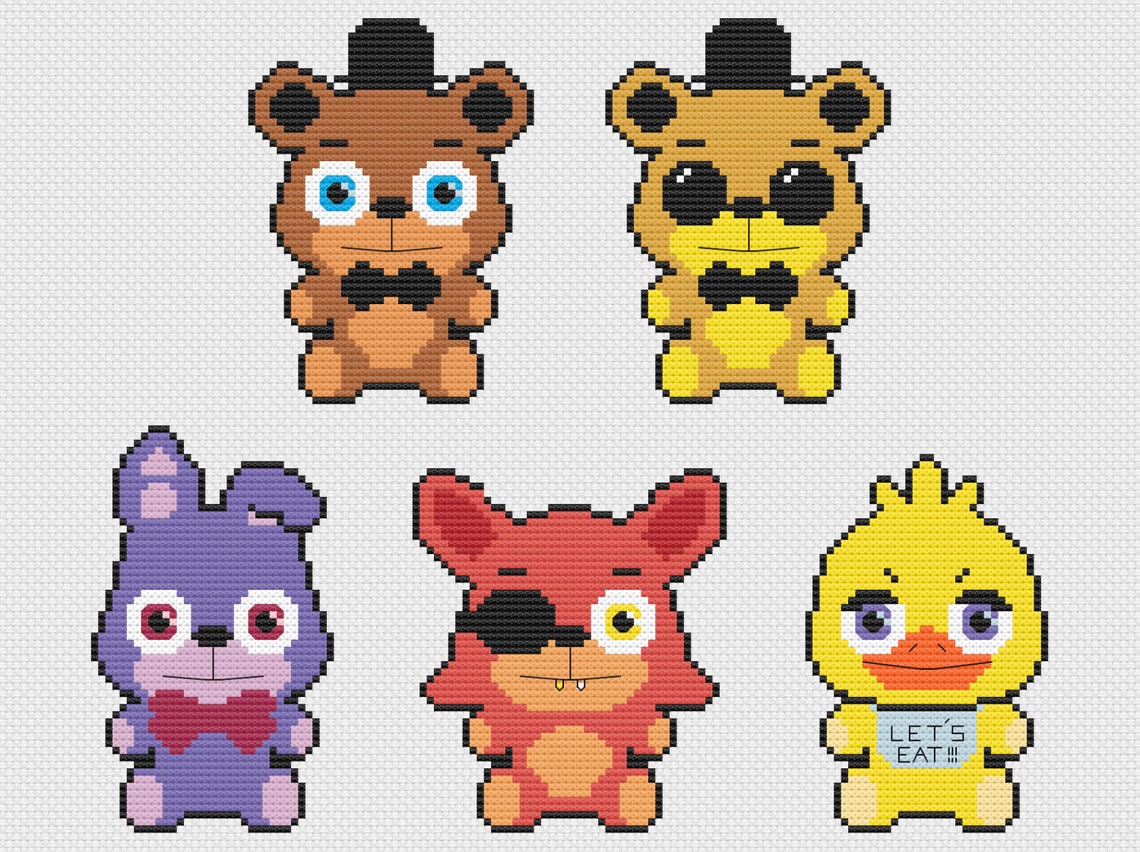
Imagine threads of vibrant colors dancing across a canvas of Aida cloth, slowly bringing to life a beloved character from the digital world. Each ‘X’ meticulously stitched contributes to a larger, captivating image, a testament to patience and precision. The satisfaction derived from transforming a blank slate into a detailed piece of art is a reward in itself, a quiet victory celebrated with every completed stitch.
Cross stitch, an art form with roots stretching back centuries, has graced tapestries, samplers, and countless household linens. From ancient Egypt to medieval Europe, its enduring appeal lies in its versatility and its ability to convey stories and sentiments through simple, geometric forms. The enduring presence of cross stitch in cultures across the globe speaks to its universal appeal and its capacity to evolve with the times, adapting to contemporary themes and artistic expressions.
This crafts accessibility makes it a delightful pursuit for both seasoned artisans and eager beginners. With readily available materials and a wealth of online tutorials, anyone can embark on a cross-stitch journey. The rhythmic, repetitive nature of the stitching process fosters a sense of calm and focus, offering a welcome respite from the hustle and bustle of modern life. It’s a portable hobby, easily tucked into a bag for stitching on the go, during travels, or quiet moments at home.
The world of counted thread embroidery is ever-evolving. While traditional floral motifs and alphabets remain timeless favorites, contemporary designs embrace pop culture icons, intricate landscapes, and abstract art. The rise of fan art has fueled a surge in creative patterns inspired by games, movies, and books, allowing stitchers to express their passions and connect with like-minded individuals through their handcrafted creations.
This exploration delves into the specifics of creating themed needlework, offering inspiration and guidance for those seeking to merge their love for specific subject matter with the timeless art of cross stitch. From selecting the right materials to mastering essential techniques, this guide provides a starting point for embarking on personalized crafting adventure.
Character Detail
The essence of crafting a compelling cross stitch pattern, particularly when depicting a character as iconic as Foxy from the FNAF book series, rests heavily on capturing the nuanced details that make the character recognizable and beloved. These details transform a simple collection of stitches into a vivid representation, breathing life into the character within the confines of a gridded design.
-
Facial Features & Expression
A successful Foxy cross stitch pattern must accurately portray his distinct facial features, including his prominent snout, sharp teeth, and piercing eyes. The expression, whether mischievous or menacing, should be clearly conveyed through the arrangement of stitches. Attention to shading and highlighting around these features adds depth and dimension, contributing to a more realistic portrayal. The proper placement and proportion of facial elements are crucial in preventing the character from appearing distorted or unrecognizable.
-
Costume and Accessories
Beyond the basic animatronic structure, Foxy’s signature costume elements, such as his hook hand, eyepatch, and tattered clothing, are essential details. The pattern should meticulously account for these accessories, capturing their texture and placement with precision. Small touches, such as the shine on the hook or the frayed edges of his attire, elevate the design and contribute to a richer, more engaging visual experience. The accurate representation of these costume elements ties the cross stitch design specifically to Foxy.
-
Color Palette
The choice of colors is paramount in conveying the essence of the character. Selecting shades that closely resemble Foxy’s color scheme in the FNAF books is essential for achieving accuracy. Furthermore, incorporating subtle variations in tone and hue creates depth and prevents the design from appearing flat. Careful consideration of color also influences the overall mood and atmosphere of the finished piece, contributing to the character’s presence and impact.
-
Positional Accuracy and Context
How Foxy is presented within the cross-stitch design impacts the story being told. Is the pattern a close up or a scene from the books? Does it convey tension or a quiet moment? These considerations guide detail prioritization to create a visual connection with the book’s narrative. It ensures the stitched piece isn’t just an image but a distilled moment from the literary universe.
In summation, a successful Foxy cross stitch pattern hinges on the meticulous rendering of character details. By carefully considering facial features, costume elements, color palette, and positional context, the design can transcend a simple craft project and become a true artistic representation of the beloved character from the FNAF books. The more attention paid to these aspects, the more captivating and recognizable the final product will be, delighting both the stitcher and the viewer.
Book Adaptation
When translating the essence of Foxy from the FNAF book series into a cross stitch pattern, a key consideration emerges: how faithfully does the design capture the character’s portrayal as depicted in print? This aspect, known as “Book Adaptation,” goes beyond merely referencing the video game counterpart and dives deeper into the specific nuances and interpretations presented within the literary works.
-
Visual Interpretation of Textual Descriptions
The FNAF books often provide rich, descriptive passages about Foxy’s appearance, demeanor, and environment. A successful book adaptation pattern visually interprets these descriptions, translating literary cues into stitchable elements. For example, if the book emphasizes Foxy’s worn and weathered appearance, the pattern might utilize specific color choices or stitching techniques to create a sense of age and decay. This facet ensures the cross stitch reflects the author’s vision, not just the game’s aesthetic.
-
Emotional Resonance and Character Portrayal
More than just physical appearance, the books delve into Foxy’s personality and emotional state. A book adaptation pattern aims to capture this emotional depth through subtle design choices. The tilt of the head, the expression in the eyes (represented by a few carefully placed stitches), or the overall pose can all convey a sense of menace, sorrow, or even a hint of playfulness, mirroring the character’s portrayal in the book. This emotional resonance adds layers of meaning to the finished cross stitch.
-
Contextual Accuracy and Scene Recreation
The books often place Foxy within specific settings or scenarios. A faithful adaptation might attempt to recreate elements of these scenes, providing context and narrative depth to the cross stitch. For instance, a pattern could depict Foxy lurking in the shadows of a particular room from the book, complete with recognizable details like peeling paint or scattered props. This contextual accuracy enhances the storytelling aspect of the craft, allowing the stitcher to bring a specific moment from the book to life.
-
Divergence from Game Representation
A crucial aspect of book adaptation is acknowledging and potentially embracing divergence from Foxy’s portrayal in the video games. The books might present a subtly different interpretation of the character’s design, history, or motivations. A pattern designed with book adaptation in mind might deliberately incorporate these differences, creating a unique and distinctive cross stitch that stands apart from generic FNAF imagery. This offers an opportunity for fans to explore alternative interpretations of a well-known character.
In essence, a Foxy cross stitch pattern that prioritizes book adaptation offers a deeper, more nuanced crafting experience. It invites the stitcher to engage with the source material on a literary level, translating words into visual representations and capturing the essence of the character as envisioned by the author. This approach transforms the cross stitch from a simple fan art project into a thoughtful exploration of character and narrative.
Stitch Complexity
The term “Stitch Complexity,” when applied to a “fnaf boock foxy cross stitch pattern,” dictates not only the technical skill required to complete the project, but also profoundly shapes the entire crafting experience. It acts as a filter, determining accessibility for different skill levels and influencing the final visual outcome. A pattern’s stitch complexity is intrinsically linked to its level of detail, the time commitment needed, and the overall aesthetic impact of the finished piece.
-
Number of Colors and Blends
A simple pattern might employ a limited palette of solid colors, making it easier for beginners to manage. A complex pattern, however, might utilize a vast array of hues, including blended threads, to achieve subtle shading, realistic textures, and intricate details. The more colors involved, the greater the challenge in accurately matching shades, managing thread ends, and creating smooth transitions. In the context of a “fnaf boock foxy cross stitch pattern,” a higher color count could be used to capture the character’s weathering and texture or to replicate nuanced lighting effects from the book’s illustrations.
-
Stitch Types and Techniques
Basic cross stitch projects often rely solely on the standard full cross stitch. Increased complexity introduces fractional stitches (like half and quarter stitches) to create curves and finer details, backstitches to define outlines, and potentially even specialty stitches for texture. Mastering these techniques requires greater precision and control. A “fnaf boock foxy cross stitch pattern” could employ backstitching to emphasize Foxy’s sharp teeth and hook or use fractional stitches to round out facial features and give a more lifelike appearance.
-
Pattern Density and Size
The density of stitches per square inch, coupled with the overall size of the finished piece, significantly impacts the difficulty level. A small, low-density pattern can be completed relatively quickly, even by a novice. Conversely, a large, high-density pattern demands a considerable time investment and requires unwavering focus to prevent errors. For a “fnaf boock foxy cross stitch pattern,” a larger size allows for greater detail in capturing the character’s features and attire, but also increases the risk of stitch fatigue and potential mistakes.
-
Chart Readability and Symbol Clarity
Even the most intricate design can be manageable if the pattern chart is clear, well-organized, and uses distinct symbols for each color. Conversely, a poorly designed chart with ambiguous symbols or overlapping lines can transform a simple pattern into a frustrating ordeal. When selecting a “fnaf boock foxy cross stitch pattern,” the quality of the chart is just as crucial as the design itself. A clear chart ensures a smoother stitching process and reduces the likelihood of errors, regardless of the pattern’s overall complexity.
Ultimately, the “Stitch Complexity” of a “fnaf boock foxy cross stitch pattern” should align with the stitcher’s skill level and desired level of challenge. A beginner might opt for a simpler pattern with fewer colors and basic techniques, while an experienced stitcher might relish the opportunity to tackle a more intricate design that truly captures the character’s essence from the FNAF books. The key lies in finding a balance between complexity and enjoyment, transforming the act of stitching into a rewarding creative endeavor.
What You’ll Need to Stitch Foxy
Embarking on your Foxy cross stitch journey requires a few essential tools and materials. Gathering these beforehand will ensure a smooth and enjoyable crafting experience!
- The “fnaf boock foxy cross stitch pattern”: This is your roadmap! Ensure it’s clear, easy to read, and includes a color key. Digital or printed versions work equally well.
- Aida Cloth: This is the foundation of your cross stitch. It’s a fabric with evenly spaced holes, making it easy to create neat stitches. The count (e.g., 14-count, 16-count) refers to the number of stitches per inch. A lower count means larger stitches and a quicker project. For a good balance of detail and manageability, a 14 or 16-count Aida cloth is recommended. Choose a color that complements your pattern; white or cream are versatile options.
- Embroidery Hoop or Frame: This helps keep your Aida cloth taut, making stitching easier and preventing puckering. Hoops come in various sizes and materials (wood, plastic). A frame provides a larger, more stable surface, especially for larger projects. Choose whichever feels most comfortable for you.
- Embroidery Floss: This is the thread you’ll use to create your stitches. DMC is a popular brand, known for its wide color range and quality. Your pattern will specify the DMC color numbers you’ll need. It’s always a good idea to have a little extra of each color, just in case!
- Embroidery Needle: These needles have a large eye to easily thread embroidery floss and a blunt tip to avoid splitting the Aida cloth threads. Size 24 or 26 needles are generally suitable for 14 or 16-count Aida.
- Scissors: Small, sharp scissors are essential for snipping floss ends neatly. Embroidery scissors are specifically designed for this purpose, but any small pair of scissors will do.
- Thread Organizer: Keeping your floss organized is crucial, especially with multi-colored patterns. Thread organizers come in various forms: bobbins, floss cards, or plastic containers with compartments. Label each with the corresponding DMC color number.
- Good Lighting: Proper lighting is essential for comfortable and accurate stitching. A bright, adjustable lamp is ideal.
- Optional: Magnifier: If you find it difficult to see the Aida cloth holes, a magnifier can be a lifesaver.
Preparation Tips for a Smooth Start
Before you dive into stitching, a little preparation goes a long way:
Preparing Your Fabric: Find the center of your Aida cloth by folding it in half both ways and lightly creasing the folds. This will help you center your design. Consider serging or taping the edges of your Aida cloth to prevent fraying.
Organizing Your Threads: Separate your embroidery floss into individual strands (most floss is made up of six strands). Typically, you’ll use two or three strands for cross stitch, depending on the Aida cloth count and desired coverage. Wind each color onto its corresponding bobbin or card, labeling it clearly.
Setting Up Your Hoop: Loosen the screw on your embroidery hoop, place the inner ring under your Aida cloth, and then press the outer ring over the top. Adjust the fabric so it’s taut and even, then tighten the screw. Avoid overtightening, as this can distort the fabric.
Comfort and Safety: Choose a comfortable chair with good back support. Ensure you have adequate lighting to prevent eye strain. Take frequent breaks to stretch your hands and neck. Proper posture and breaks are crucial for long-term crafting enjoyment!
Step-by-Step Instructions
Step 1
Locate the center of your Aida cloth by gently folding it in half lengthwise and then in half widthwise, pressing lightly at the folds to create a temporary crease. This point will serve as your design’s starting center, allowing for even placement. Secure the fabric within your embroidery hoop, ensuring it’s taut like a drum. The fabric should be smooth and free from wrinkles to facilitate easier and more consistent stitching.
Step 2
Cut a manageable length of embroidery floss about 18 inches is ideal to prevent tangling. Separate the floss into its individual strands. Most embroidery floss consists of six strands; your pattern instructions will specify the number of strands to use (typically two or three for 14-count Aida). Thread the needle with the correct number of strands, pulling them evenly through the eye. To secure the thread, use a loop start: fold the strands in half, insert the open ends through the needle eye, and then bring the needle over the looped end before pulling it tight. This eliminates knots on the back of your work.
Step 3
Refer to your “fnaf boock foxy cross stitch pattern” and locate the center stitch. Bring the needle up from the back of the Aida cloth at the bottom left corner of that stitch location. Pull the thread through, leaving a small tail (if not using the loop method, secure the tail under subsequent stitches on the back of the fabric). Insert the needle down through the top right corner of the same stitch, completing the first half of your cross. This should create a diagonal line from the bottom left to the top right. Do not pull the thread too tightly, as this will distort the fabric. Consistency is key!
Step 4
Bring the needle up from the back of the Aida cloth at the bottom right corner of the stitch you’re working on. Insert the needle down through the top left corner of the same stitch, completing the cross. This second diagonal line should cross the first, forming a complete ‘X’. Ensure that all of your top stitches run in the same direction for a uniform and professional look. This consistency adds to the visual appeal of your finished cross stitch.
Step 5
Many patterns involve stitching rows of the same color. Instead of cutting the thread after each stitch, use the “stitching in rows” technique. Work all the bottom halves of the crosses in a row first, and then return, completing the top halves as you go. This method saves time and thread. Ensure the top stitches still face the same direction as previous stitches.
Step 6
When you need to switch to a new color, secure the thread by running it under a few stitches on the back of your work. Trim the excess thread close to the fabric. Then, thread your needle with the new color and repeat steps 3-5. Avoid carrying threads across large gaps on the back of your work, as this can create bulkiness and shadows on the front. Instead, start and end each color section separately.
Step 7
Once the main cross stitching is complete, most patterns include backstitching to define outlines and add details. Backstitch is a simple straight stitch worked along the lines indicated on your pattern. Bring the needle up at one end of the line, insert it down one stitch length away, and repeat. Backstitching adds definition and highlights key features, bringing Foxy to life. Refer to your “fnaf boock foxy cross stitch pattern” and add all backstitches after the main design is complete.
Step 8
Once all stitching is complete, carefully remove the fabric from the hoop. Gently hand wash the finished piece in cool water with a mild detergent. Rinse thoroughly and lay flat to dry on a clean towel. Once dry, iron the fabric on the back side on a low setting, placing a soft cloth between the fabric and the iron. This will remove any wrinkles and give your Foxy cross stitch a professional finish. Now, you can frame your artwork or display it as you wish!
Bringing Foxy from the pages of the FNAF books to life with cross stitch is a wonderfully engaging project. It blends the satisfaction of crafting with the joy of celebrating a beloved character. You’ll find yourself drawn into the rhythmic stitching, the gradual unveiling of the image, and the sheer pleasure of creating something unique with your own hands.
The beauty of this cross stitch endeavor lies not just in the finished product, but also in the creative journey itself. It’s an opportunity to hone your skills, express your passion, and connect with a vibrant community of fellow crafters. Each stitch is a testament to your dedication and imagination.
So, what are you waiting for? Grab your Aida cloth, thread your needle, and embark on this exciting cross stitch adventure! We’d absolutely love to see your finished Foxy creation. Please share your photos and stories with us in the comments below. Your inspiration could spark creativity in others!
Happy stitching!
Images References :
Image used for illustration purposes only. All rights belong to their respective owners.



