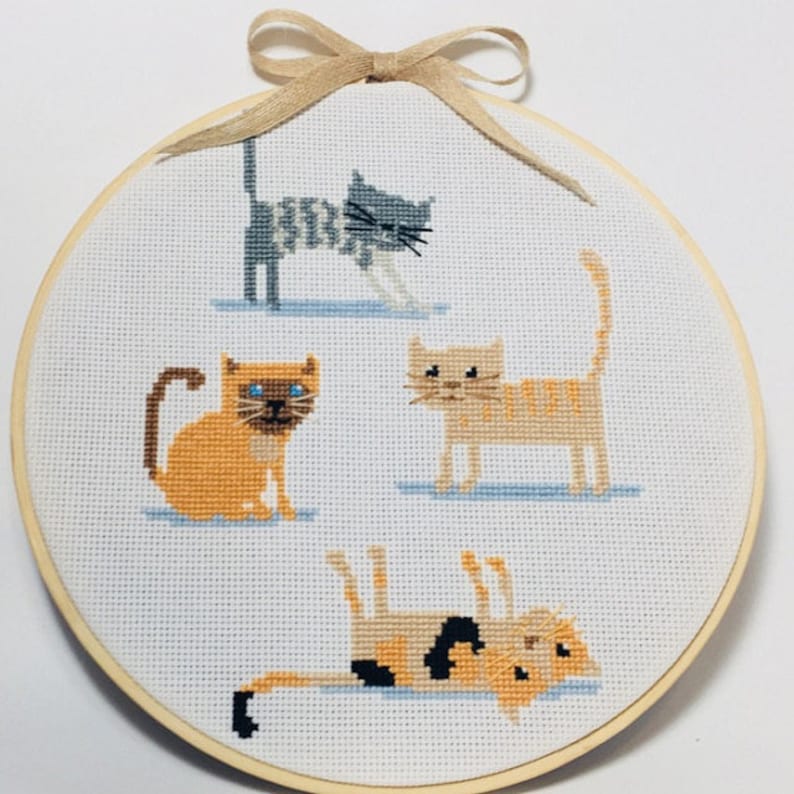
Imagine the quiet contentment of bringing a feline friend to life, stitch by careful stitch. Each ‘X’ meticulously placed on the fabric transforms a blank canvas into a charming portrait, capturing the unique personality and allure of a beloved cat. The rhythmic motion, the subtle color shifts, and the gradual emergence of the design offer a uniquely satisfying creative experience. The finished piece is more than just a decorative item; it’s a testament to patience, skill, and a genuine affection for our feline companions.
This art form possesses a rich history, tracing its roots back centuries. Samplers adorned with delicate motifs served as both exercises in skill and cherished keepsakes. The discipline and precision inherent in the craft have resonated across cultures, evolving from simple geometric designs to intricate, lifelike representations. Today, it continues to thrive as a beloved pastime, connecting crafters to a tradition of artistry and meticulous handwork.
One of the most appealing aspects of this craft is its accessibility. Whether a complete beginner or a seasoned stitcher, there are projects suited to every skill level. The required tools are minimal, the materials readily available, and the techniques easy to learn. Its adaptability makes it an ideal hobby for those seeking a relaxing yet engaging activity. A small, manageable project can be completed in short bursts, offering a sense of accomplishment with each finished section.
The world of feline-inspired needlework is incredibly diverse. From whimsical cartoon cats to realistic portraits bursting with detail, the options are limitless. Designs range from classic tabby patterns to exotic breeds, capturing the essence of each feline subject. Modern interpretations often incorporate vibrant colors, playful motifs, and personalized details, reflecting the unique bond between crafter and muse.
Ready to embark on a journey to create your own purr-fect masterpiece? The following guide explores a variety of techniques, tips, and inspirations to help you craft a captivating and memorable tribute to the captivating world of cats, one stitch at a time.
Design Complexity
The world of feline-inspired needlework presents a spectrum of possibilities, each design offering a unique journey for the crafter. The complexity of a pattern dictates the level of skill required, the time commitment involved, and ultimately, the artistic expression achieved in capturing the essence of a cat.
-
Skill Level and Stitch Count
The number of stitches and the intricacy of color changes directly correlate with the skill level required. Beginner-friendly patterns often feature large blocks of color and simple outlines, whereas advanced designs incorporate subtle shading, intricate details, and a broader palette to create realistic or stylized cat portraits. The time commitment escalates proportionally, with elaborate designs requiring dedicated hours of patient stitching.
-
Color Palette and Shading
A limited color palette simplifies the process, making it easier to manage thread changes and maintain a consistent appearance. More complex designs employ a wide range of hues and subtle gradations to create depth, dimension, and realistic fur textures. Mastering color blending and shading techniques is essential for achieving a lifelike representation of the feline subject.
-
Background and Embellishments
Simple designs may focus solely on the cat itself, presented against a plain or minimal background. Intricate patterns often incorporate elaborate backgrounds, such as floral motifs, scenic landscapes, or personalized elements, adding context and visual interest. Embellishments like beads, metallic threads, or specialty stitches can further enhance the design, creating a unique and eye-catching piece.
-
Realism vs. Stylization
Some patterns aim for photorealistic depictions, capturing every detail of the cat’s features and fur. Others embrace stylized or whimsical interpretations, using simplified shapes, bold colors, and exaggerated expressions. The choice between realism and stylization is a matter of personal preference and artistic intent, influencing the overall aesthetic of the finished piece.
In essence, the “Design Complexity” facet provides a roadmap for choosing and executing counted cross stitch cat patterns. Whether seeking a quick and satisfying project or a challenging artistic endeavor, understanding the nuances of design complexity empowers the crafter to create a truly unique and captivating feline portrait. Careful consideration of skill level, color palette, background elements, and desired aesthetic ensures a fulfilling and rewarding stitching experience.
Material Selection
The success of any counted cross stitch project, particularly those depicting beloved felines, hinges significantly on the careful selection of materials. This extends beyond simply choosing aesthetically pleasing threads; it encompasses understanding how fabric weave, thread composition, and needle size interact to create a lasting and visually compelling piece. The wrong combination can lead to frustration, uneven stitching, and a final product that falls short of expectations. Conversely, a thoughtful approach to material selection unlocks the full potential of the design, allowing the unique character of the cat to truly shine.
For instance, consider the effect of fabric choice. Aida cloth, with its clearly defined squares, provides a straightforward grid for beginners, ideal for simpler cat designs. However, more experienced stitchers might opt for linen or evenweave fabrics, which offer a finer weave and a more refined appearance. This choice allows for more intricate detailing and subtle shading, bringing a realistic feline portrait to life. Similarly, thread selection can dramatically alter the finished piece. Cotton floss, the most common choice, offers a wide range of colors and a soft matte finish. Silk threads, on the other hand, impart a luxurious sheen, perfect for accentuating the glossy fur of a black cat or adding a touch of elegance to a stylized design. Even the needle’s size plays a crucial role; a needle too large can distort the fabric, while one too small can make stitching difficult and uneven. Careful attention to these seemingly small details transforms a simple pattern into a work of art.
In summary, material selection is not merely a preliminary step but an integral part of the creative process when crafting counted cross stitch cat patterns. It’s the foundation upon which the entire project is built, influencing everything from the stitching experience to the final appearance. Understanding the interplay between fabric, thread, and needle empowers the stitcher to make informed choices, overcome potential challenges, and ultimately, create a cherished piece that captures the unique spirit and beauty of the feline world. By thoughtfully considering these elements, each stitcher can elevate their craft and produce a truly exceptional testament to the enduring appeal of cats.
Stitching Technique
The artistry of counted cross stitch cat patterns blossoms through the mastery of stitching technique. It’s more than just following a chart; it’s about infusing each ‘X’ with intention, creating a cohesive tapestry that captures the feline essence. The consistency of the stitch, the tension applied to the thread, and the strategic use of specialized stitches all contribute to the overall aesthetic and longevity of the finished piece. A well-executed cross stitch is the bedrock upon which a stunning cat portrait is built, guaranteeing both visual appeal and lasting durability.
Consider the simple full cross stitch; its uniformity across the entire pattern creates a smooth, even surface. By maintaining consistent tension, the individual stitches align harmoniously, preventing distortion and ensuring the design’s clarity. Backstitch, often employed to define outlines and add finer details like whiskers or fur texture, adds dimension and sharpness. Strategic use of fractional stitches, such as quarter or three-quarter stitches, allows for smoother curves and more nuanced shading, essential for capturing the subtle contours of a cat’s face. Employing these techniques with precision brings the feline form to life with remarkable realism and depth. Furthermore, knotless starts and finishes contribute to a clean, professional back, preventing unraveling and ensuring the longevity of the completed artwork. The very choice of needle and its correct usage becomes paramount in executing these methods.
In essence, mastering stitching technique elevates the creation of counted cross stitch cat patterns from a simple craft to a refined art form. It’s a journey of continuous learning and refinement, where each stitch is a deliberate choice, contributing to the overall harmony and visual impact. By embracing precision, consistency, and a willingness to explore advanced techniques, crafters unlock the full potential of their patterns, creating timeless tributes to the captivating charm of cats. The lasting beauty of these projects resides not only in the design but also in the skillful execution of each and every stitch.
What You’ll Need
- Embroidery Hoop or Frame: This keeps your fabric taut, making stitching easier and more consistent. Choose a size that comfortably fits the area you’re working on. Circular hoops are common, but square frames are great for larger projects.
- Aida Cloth or Fabric: Aida cloth is the most popular choice for beginners because of its evenly spaced holes, making counting stitches a breeze. Linen or evenweave fabrics offer a more refined look but require a bit more experience. Count refers to the number of stitches per inch. A higher count means smaller stitches and a more detailed image.
- Embroidery Floss: This is the thread you’ll use to create your design. It’s typically made of cotton and comes in a wide array of colors. Many patterns specify DMC or Anchor floss, which are well-known brands.
- Embroidery Needle: Choose a needle with a blunt tip and a large eye that’s easy to thread. The size of the needle should correspond to the count of your fabric. A size 24 or 26 needle is generally suitable for Aida cloth.
- Pattern: Whether printed or digital, your pattern is your roadmap. Most patterns use symbols to represent different colors of floss. Make sure your pattern is clear and easy to read.
- Scissors: Small, sharp scissors are essential for snipping threads neatly.
-
Optional but Helpful:
- Needle Threader: Makes threading needles much easier, especially with multiple strands of floss.
- Thread Organizer: Keeps your floss colors separated and prevents tangles. Cardboard bobbins or plastic organizers are popular choices.
- Good Lighting: Essential for seeing your stitches clearly and preventing eye strain. A well-lit workspace will make your project much more enjoyable.
Preparation Tips
Before you start stitching, prepare your fabric by securing the edges to prevent fraying. You can use masking tape or a serger, or simply fold and stitch the edges. Find the center of your fabric and your pattern this is usually where you begin. Marking the center with a pin or a light fabric marker can be helpful.
Organize your floss before you begin. Separate each color and label it with the corresponding symbol from your pattern. Winding the floss onto bobbins or using a thread organizer will prevent tangles and keep your workspace tidy. Remember to take breaks! Cross stitch can be time-consuming, so stretch your hands and eyes periodically. Good posture and adequate lighting will also contribute to a more comfortable and enjoyable stitching experience.
Step-by-Step Instructions
Step 1
Begin by preparing your Aida cloth. Cut a piece larger than the finished design size, allowing a few inches of extra fabric on all sides for finishing. Secure the edges using masking tape or a zig-zag stitch on your sewing machine to prevent fraying. Find the center of your fabric by folding it in half lengthwise and widthwise, then mark the intersection point with a pin or fabric marker. This will serve as your starting point.
Step 2
Select your first floss color according to the pattern. Embroidery floss typically consists of six strands. Separate these into smaller groups, usually two or three strands, depending on your fabric count and desired coverage. Thread your needle with the appropriate number of strands. A needle threader can be helpful for this step.
Step 3
Starting from the marked center point, locate the first stitch on your pattern. Bring the needle up through the back of the fabric at the lower-left corner of the square you’re stitching. Then, bring the needle down through the upper-right corner, completing the first leg of the cross stitch. Leave a small tail of floss on the back of the fabric. This tail will be secured later as you stitch over it.
Step 4
Now, bring the needle up through the back of the fabric at the lower-right corner of the same square. Then, bring the needle down through the upper-left corner, completing the second leg of the cross stitch. This finishes the ‘X’ shape. Ensure all your cross stitches slant in the same direction for a neat and uniform look.
Step 5
Continue stitching the first color according to your pattern, following the grid of the Aida cloth. If you run out of thread, or need to change colors, secure the end by weaving the needle through the back of several completed stitches. Trim the excess thread closely. Start your new thread using the same knotless method, weaving the tail through the back of existing stitches.
Step 6
Once you’ve completed the cross stitching, you can add backstitches to define outlines and details. Backstitch involves creating straight stitches, following the lines on your pattern. Insert the needle one stitch length behind the existing stitch and bring it up one stitch length ahead. This creates a continuous line. Backstitch is often used to outline the cat’s features, such as the eyes, nose, and whiskers.
Step 7
Once all stitching is complete, remove your project from the hoop. Gently hand wash your piece in lukewarm water with a mild detergent, if needed. Lay it flat to dry. Once dry, iron the back of the fabric on a low setting to remove any creases. Finally, trim the excess fabric, leaving enough to frame or mount your completed cross stitch cat.
Isn’t it wonderful how a few simple stitches can bring such joy? Creating your own counted cross stitch cat pattern is more than just a craft; it’s a relaxing escape, a chance to express your creativity, and a way to capture the charm and personality of our beloved feline friends. From selecting the perfect design to that final finishing stitch, the journey is filled with quiet satisfaction and the anticipation of creating something truly special.
There’s a timeless beauty in handmade crafts, and each cross-stitched cat becomes a unique piece of art, reflecting your personal touch and skill. Whether you choose a realistic portrait or a whimsical design, the finished piece will undoubtedly bring a smile to your face and warmth to your home.
So, why not give it a try? Download a pattern, gather your supplies, and embark on this delightful crafting adventure. We’d absolutely love to see your creations! Please share your finished projects with us post a picture on social media or leave a comment below and tell us about your experience. We’re always excited to see what you’re working on!
Happy stitching!
Images References :
Image used for illustration purposes only. All rights belong to their respective owners.



