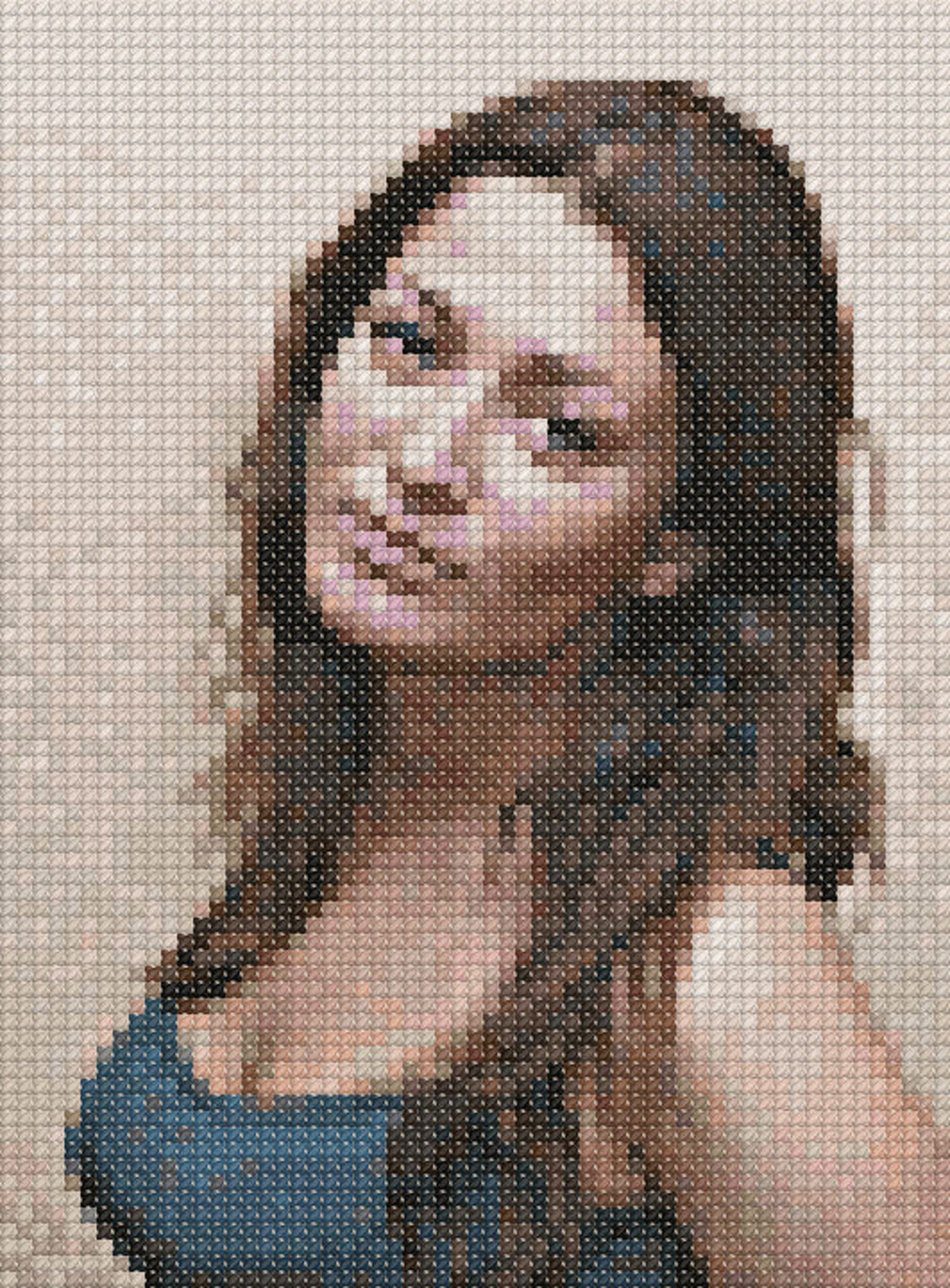
Imagine transforming cherished memories, beloved portraits, or inspiring landscapes into meticulously crafted works of art. The needle becomes the brush, and the fabric the canvas, as vibrant threads intertwine to recreate images with remarkable detail and texture. This art form offers a unique blend of creativity and precision, resulting in personalized keepsakes that capture not only the likeness of an image but also the dedication and passion of the artisan.
From humble beginnings as a form of mending and embellishment, this needlework has evolved into a global phenomenon, adorning textiles and treasured objects across cultures. Ancient examples, hinting at its presence in various civilizations, demonstrate the enduring human desire to personalize and beautify the world through thread. Passing down skills and designs through generations has enriched this craft with cultural significance, making each piece a testament to both individual artistry and collective heritage.
The process allows for a gentle entry point for beginners with simple designs, while offering complexity and challenge for seasoned crafters. Whether seeking a mindful, meditative activity or a rewarding artistic outlet, this craft provides diverse avenues for creative expression. Its accessibility is amplified with readily available materials, adaptable tools, and an enthusiastic community of stitchers eager to share knowledge and inspiration.
The world of needlework continues to evolve, embracing modern techniques and artistic influences. From traditional floral motifs to contemporary abstract designs, the possibilities are endless. Digital tools expand the scope of design, allowing individuals to customize patterns and incorporate intricate details with ease. This fusion of heritage and innovation ensures that the craft remains relevant and vibrant for generations to come.
This enduring art form invites exploration of turning favorite photographs into stunning handcrafted treasures. The following guide illuminates a simple approach, ensuring the process is enjoyable, achievable, and ultimately, deeply rewarding. Let’s embark on a journey of transforming pixels into stitches, creating cherished heirlooms one cross at a time.
Image Selection
The initial selection of an image sets the stage for the entire crafting process. This decision profoundly influences the ease, enjoyment, and ultimate success of turning a photo into a counted cross stitch pattern. A thoughtful choice lays the foundation for a rewarding creative experience.
-
Resolution and Clarity
The image’s resolution dictates the level of detail preserved in the converted pattern. A high-resolution image allows for capturing finer nuances, resulting in a more realistic and intricate cross stitch design. Conversely, low-resolution images may appear pixelated when translated into a pattern, potentially losing essential details and requiring manual adjustments to smooth rough edges. Images should be clear, not blurry.
-
Color Complexity
The range and subtlety of colors within an image directly impact the complexity of the resulting cross stitch pattern. Images with fewer distinct colors generally translate more easily into cross stitch, requiring a smaller palette of threads. Photographs with intricate gradients or a multitude of hues demand a larger and more nuanced color palette, potentially increasing the difficulty and cost of the project. Consider simplifying complex color gradients for an easier pattern.
-
Subject and Composition
The subject matter and composition of the original photograph play a crucial role in the final cross stitch design. Images with a clear focal point and balanced composition often translate more effectively. Overly cluttered or complex scenes can result in patterns that are difficult to stitch and visually overwhelming. Portraits, landscapes with clear horizons, and subjects with defined outlines tend to be ideal starting points.
-
Contrast and Lighting
Adequate contrast and balanced lighting enhance the visibility of details within an image, ultimately contributing to a more defined cross stitch pattern. Well-lit images with distinct shadows and highlights provide clearer information for pattern generation software or manual charting. Photographs with poor lighting or washed-out colors may require adjustments to enhance contrast and definition before conversion. Ensure the lighting shows off the design of the selected image.
Selecting the appropriate photograph is more than a preliminary step; it’s an investment in the creative journey. A well-chosen image provides a solid foundation for transforming cherished memories into beautifully stitched works of art, showcasing the intricate interplay between photographic detail and the art of counted cross stitch. The care put into selecting an image will show in the resulting cross stitch pattern.
Pattern Generation
Pattern generation stands as the pivotal process in transforming a photograph into a counted cross stitch design. It is the bridge that connects the initial image with the tangible act of stitching. Without accurate and effective pattern generation, the dream of converting a cherished photograph into a handcrafted piece would remain unrealized. This process effectively translates visual informationcolors, shapes, and detailsinto a stitch-by-stitch blueprint ready for the needle and thread. The pattern serves as a comprehensive roadmap, guiding the stitcher through the intricate process of recreating the image on fabric.
Consider the task of converting a family portrait. The pattern generation software meticulously analyzes the photo, breaking it down into a grid of individual squares, each corresponding to a single cross stitch. The software then assigns a specific color of embroidery floss to each square based on the dominant color in the original image. A well-generated pattern accurately represents the nuances of skin tones, clothing textures, and background details, ensuring the final cross stitch project closely resembles the original photograph. Conversely, a poorly generated pattern can result in a distorted, pixelated, or inaccurate representation, leading to frustration and an unsatisfactory final product. The quality of pattern generation software has a huge impact on the result.
Pattern generation’s effective utilization is key to a successful photo conversion to cross stitch. The process demands attention to detail, accuracy, and the right tools. While challenges may arise, mastering the art of pattern generation unlocks a world of creative possibilities, allowing anyone to preserve memories and express artistic vision through the timeless craft of counted cross stitch. The process can be challenging to master, but the beauty of the final product makes it worth the journey.
Color Palette
In the journey of converting a photograph into a counted cross stitch pattern, the color palette emerges as more than just a selection of threads; it’s the very soul of the piece. The careful curation and thoughtful application of color breathe life into the stitched image, transforming a grid of Xs into a vibrant tapestry of memories and artistry. The color choices shape the aesthetic of the final piece.
-
Thread Selection and Matching
Choosing the right thread colors is essential for accurately representing the tones and hues of the original photograph. This process often involves carefully matching thread colors to those present in the image, using color charts and visual comparisons. The closer the match, the more realistic and lifelike the final cross stitch piece will appear. Subtle variations in thread color can also be used to create depth and dimension, enhancing the overall visual impact. Careful consideration should be given to lightfastness and color consistency across different dye lots to ensure the longevity and beauty of the finished work.
-
Limited Palettes and Artistic Interpretation
While realistic color matching is a common goal, a deliberate limitation of the color palette can yield stunning artistic effects. By reducing the number of colors used, the stitcher can create a stylized or graphic representation of the photograph. This approach can emphasize certain features, create a sense of nostalgia, or add a unique artistic flair. The choice of colors, even within a limited palette, greatly influences the mood and overall impact of the finished cross stitch design. Color choice is crucial to an artful final product.
-
Dithering and Color Blending
When the available thread colors cannot perfectly match the subtle gradations in a photograph, techniques like dithering and color blending become invaluable. Dithering involves strategically placing stitches of different colors adjacent to each other, creating the illusion of a new color or shade. Color blending involves using multiple strands of different colored threads within a single stitch, effectively mixing the colors at a microscopic level. These techniques allow the stitcher to achieve smoother transitions and more realistic color representation, even with a limited palette. Blending adds to the image’s realism.
-
Software-Assisted Palette Generation
Modern software provides assistance in generating optimal color palettes for cross stitch conversion. These tools analyze the photograph and automatically suggest a selection of thread colors that closely match the original image. The software can also offer options for reducing the number of colors, adjusting color saturation, and creating custom palettes based on specific artistic preferences. This technological assistance streamlines the color selection process, making it easier for stitchers to achieve professional-looking results. With digital assistance, color choices can be simplified.
The “Color Palette,” therefore, is not just a detail but a cornerstone of the process. It directly influences the visual impact and emotional resonance of the final product. Whether aiming for photorealistic accuracy or embracing artistic license, the color palette acts as a powerful tool in transforming a photograph into a treasured cross stitch masterpiece. Consider that the wrong palette can ruin the piece and right one will help it sing!
Stitch Density
Stitch density, in the context of converting photographs into counted cross stitch patterns, acts as a critical regulator between detail and practicality. It defines the number of individual stitches packed into a given area, directly influencing the resolution and visual fidelity of the final stitched piece. A higher stitch density translates to greater detail, capturing finer nuances and subtle gradations of color within the original photograph. Conversely, a lower stitch density simplifies the stitching process but at the cost of reduced detail, potentially leading to a more stylized or abstract representation. The art lies in finding the optimal balance, achieving a level of detail that honors the essence of the original image while remaining manageable and enjoyable to stitch.
Consider the transformation of a landscape photograph. A high stitch density would allow for the subtle rendering of cloud formations, the intricate texture of foliage, and the nuanced reflections in a body of water. Each individual stitch contributes to the overall realism, creating a captivating scene that closely mirrors the original photograph. Conversely, a lower stitch density might simplify these elements, portraying the clouds as broad swathes of color, the foliage as generalized shapes, and the water as a flat expanse. While the overall scene would still be recognizable, the finer details and realistic qualities would be significantly diminished. The selection of stitch density must therefore be made judiciously, informed by the complexity of the image and the desired level of realism.
Understanding stitch density holds significant practical implications for both pattern designers and stitchers. A pattern generated with excessively high stitch density may prove overwhelming to stitch, particularly for beginners or those with limited time. The sheer number of stitches required can be daunting, potentially leading to fatigue and a diminished appreciation for the craft. Conversely, a pattern with too low a stitch density may fail to capture the essence of the original image, resulting in a disappointing or unrecognizable representation. The key insight is that stitch density must be carefully considered as part of the initial setup and pattern generation. Selecting and applying the appropriate density will create patterns that are both beautiful and feasible, transforming cherished photographs into enduring works of art.
What Youll Need
- Aida Cloth: This is the foundation of your cross stitch. Aida cloth is an even-weave fabric with clearly defined holes that make stitching uniform crosses easy. Choose a count (holes per inch) that matches your desired stitch density; higher counts result in smaller stitches and finer detail.
- Embroidery Floss: Made from cotton, or other materials, embroidery floss comes in a wide variety of colors and is what you’ll use to create the stitches. Select floss colors based on your generated pattern’s color palette. DMC and Anchor are popular brands known for their quality and vast color ranges.
- Embroidery Needle: A blunt-tipped needle with a large eye is essential for cross stitch. The blunt tip helps slide between the fabric threads without splitting them, and the large eye accommodates multiple strands of floss. Size 24 or 26 needles are commonly used for Aida cloth.
- Embroidery Hoop or Frame: While not strictly necessary, an embroidery hoop or frame helps keep the fabric taut, preventing puckering and making it easier to stitch. Choose a size that comfortably fits the area you are working on.
- Scissors: Small, sharp scissors are handy for trimming floss ends neatly.
- Pattern: Your converted photo pattern, printed or displayed digitally. The pattern will show a grid representing the Aida cloth and symbols indicating which color floss to use for each stitch.
- Needle Threader (Optional): This small tool can be very helpful for threading floss through the eye of the needle, especially when using multiple strands.
- Good Lighting: Proper lighting is crucial to prevent eye strain and ensure you can clearly see the fabric and pattern.
Preparation Tips
Preparing Your Fabric: Before starting, consider serging or taping the edges of your Aida cloth to prevent fraying. You can also wash and iron the fabric if desired, but be sure to pre-wash both your fabric and floss if you plan to wash the finished piece later to avoid any shrinking or color bleeding.
Organizing Your Threads: Keeping your floss organized will save you time and frustration. You can use a floss organizer box with individual compartments or wind the floss onto bobbins labeled with their corresponding color numbers. Having everything neatly organized before you begin stitching makes the whole process much smoother. Start to convert photo to counted cross stitch pattern today!
Comfort and Safety: Choose a comfortable and well-lit space to work in. Good posture is essential to prevent back and neck strain. Take frequent breaks to rest your eyes and stretch your hands. Consider using a floor stand for your hoop or frame to free up your hands.
Step-by-Step Instructions
Step 1
Begin by securing the Aida cloth within your embroidery hoop or frame, ensuring the fabric is taut but not overly stretched. If your fabric edges are prone to fraying, consider serging, using masking tape, or applying fabric glue along the edges to prevent unraveling during the stitching process. This sets a stable and neat foundation for your cross stitch project.
Step 2
Locate the center of both your Aida cloth and your cross stitch pattern. Folding the fabric in half vertically and then horizontally can easily identify the center point. Mark this center point on your fabric with a temporary fabric marker or a pin. This will serve as your starting point, ensuring the design is centered within the fabric.
Step 3
Cut a length of embroidery floss, typically around 18 inches to prevent tangling. Separate the strands of floss according to your pattern instructions; most patterns use two strands for stitching. Thread the needle with the appropriate number of strands, using a needle threader if needed. Secure the floss by creating a loop at the end or using an away waste knot (waste knot will be cut off when the piece is done).
Step 4
Following your pattern, start stitching from the center point you marked earlier. Each square on the pattern corresponds to a single cross stitch on the Aida cloth. Bring the needle up through the bottom left corner of a square and down through the top right corner, creating the first half of the cross stitch (a diagonal line). Then, bring the needle up through the bottom right corner and down through the top left corner, completing the “X” shape of the cross stitch. Ensure all your stitches face the same direction for a uniform and professional look.
Step 5
Continue stitching, carefully following the symbols and colors indicated on your pattern. Work row by row or section by section, keeping track of your progress and referring to the pattern frequently. When changing colors, secure the ends of the old floss by weaving them under several stitches on the back of the fabric, and then begin stitching with the new color.
Step 6
As you complete sections or run out of floss, secure the ends by weaving them under several stitches on the back of your work. Trim any excess floss close to the fabric. Avoid making knots that will bulk up the back of the piece. The back of a finished cross stitch piece should be relatively flat, with threads neatly tucked away.
Step 7
Once you’ve completed all the stitching according to your pattern, remove the fabric from the hoop or frame. Gently press the finished piece from the back side with a warm iron if needed. Consider washing the piece in lukewarm water with a mild detergent, being careful not to stretch or distort the stitches. Once dry, your completed project is ready for display in a frame or as part of a larger project.
Isn’t it amazing how you can transform a simple photo into a beautiful, handcrafted piece of art? From choosing the perfect image to stitching the final “X,” this journey lets you create something truly special and personal. It’s a fantastic way to relax, get creative, and make a unique keepsake all at once!
There’s something truly magical about watching a picture come to life, stitch by stitch. This blend of photography and needlework creates a timeless and treasured memento, offering a unique way to celebrate memories and express your artistic side.
We hope you’re inspired to give it a try! Don’t be afraid to experiment, get creative, and most importantly, have fun. We’d absolutely love to see your finished cross stitch pieces! Share your photos or leave a comment below we can’t wait to admire your creations and hear about your experience.
Happy stitching!
Images References :
Image used for illustration purposes only. All rights belong to their respective owners.



