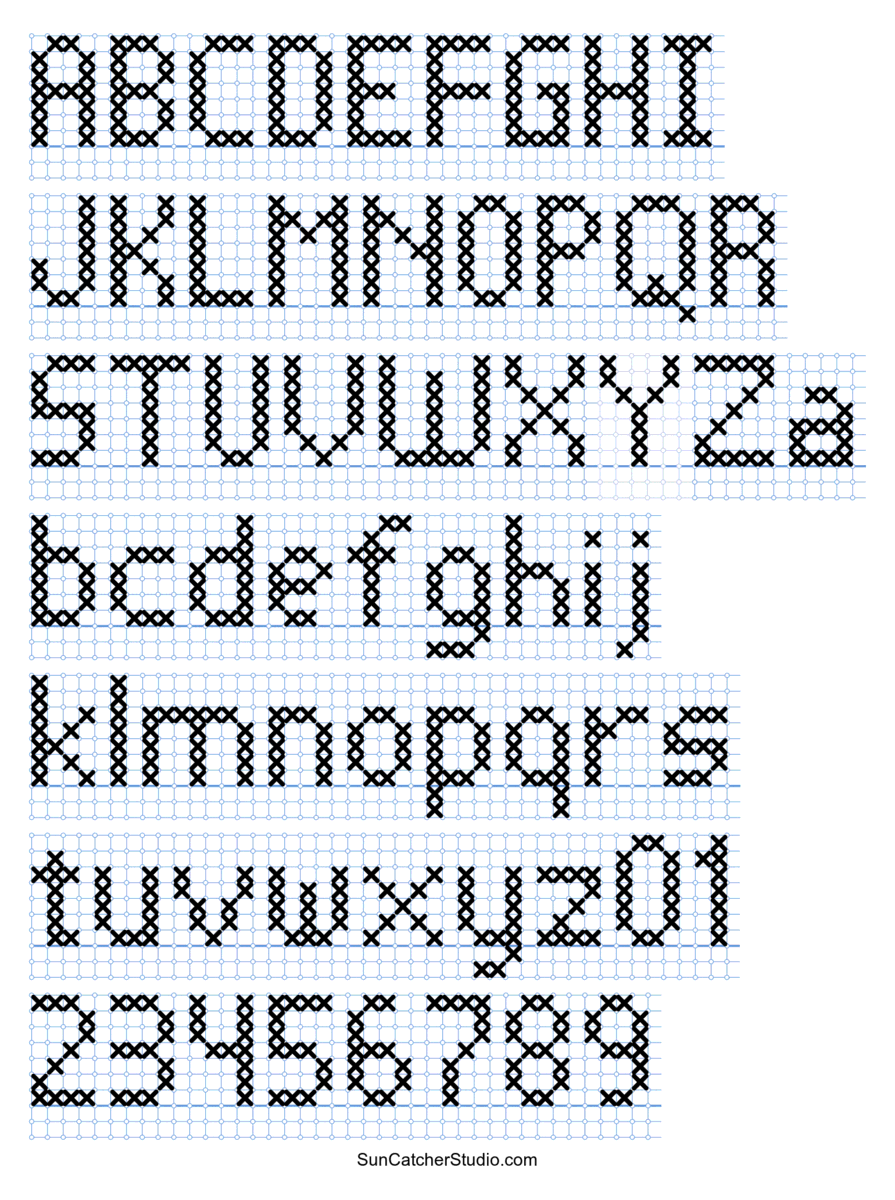
Imagine the satisfaction of transforming simple fabric into a personalized tapestry, each tiny ‘x’ a deliberate brushstroke in a symphony of color. A carefully chosen palette breathes life into elegant curves and bold strokes, crafting personalized monograms, inspirational sayings, or whimsical decorations. The charm lies not just in the finished piece, but in the meditative process of creation the rhythmic dance of needle and thread, a tangible manifestation of patience and artistic vision.
This art form, like many needlecrafts, boasts a rich history woven through centuries and cultures. From samplers meticulously stitched by young women to demonstrate their skills, to intricate designs adorning household linens across continents, it has served as both a practical skill and a means of artistic expression. These enduring crafts offer tangible connections to generations past, each stitch echoing stories of diligence, creativity, and the human desire to embellish the everyday.
One of the most appealing aspects is its inherent accessibility. With minimal materials and a straightforward technique, beginners can quickly embark on their creative journey. Yet, the simplicity belies the potential for complexity and artistry. Seasoned crafters can explore intricate shading, elaborate patterns, and a diverse range of fabrics and threads, continually pushing the boundaries of their skill and imagination.
Contemporary interpretations of this classic pastime are blossoming. From minimalist, modern fonts to elaborate, vintage-inspired alphabets, a vibrant online community shares patterns, techniques, and inspiration. The possibilities are endless, ranging from adorning baby blankets with precious initials to creating personalized gifts and adding a handcrafted touch to home dcor.
This article will delve into the process of bringing typographical designs to life with thread and needle. We will explore the essential materials, basic techniques, and inspiring ideas to empower any crafter to embark on a stitching adventure. Prepare to discover the joy of creating unique and personalized designs, one stitch at a time.
Font Selection
The selection of a font serves as the cornerstone in crafting expressive stitched monograms, quotes, or personalized artwork. The chosen letter style dictates the overall impression, imbuing the design with a sense of timeless elegance, playful charm, or modern simplicity. It is important to note that the selected font needs to be digitized so it can be converted into a stitching design.
-
Serif vs. Sans-Serif
Serif fonts, characterized by their small decorative strokes at the end of each letterform, often convey a sense of tradition and formality. Conversely, sans-serif fonts, lacking these embellishments, offer a cleaner, more contemporary aesthetic. The choice between the two depends heavily on the desired tone of the finished piece.
-
Script and Calligraphic Styles
Script and calligraphic fonts introduce a touch of artistry and fluidity to stitched designs. These styles, inspired by handwriting, often feature flowing lines and elegant curves, making them ideal for creating personalized gifts, romantic sentiments, or adding a distinctive flair to home decor projects. Due to their detail, they must be appropriately sized to avoid distortion when stitched.
-
Novelty and Decorative Fonts
Novelty or decorative fonts inject whimsy and playfulness into any cross-stitch project. Characterized by unique shapes, embellishments, and themes, they work wonderfully in children’s rooms, seasonal decorations, or projects that seek to convey a lighthearted message. Consideration of the individual elements of the font, such as thickness and size, needs to be taken to ensure it translates to stitching well.
-
Font Weight and Spacing
The weight (thickness) of the font impacts the boldness of the stitched text, while letter spacing significantly affects legibility. Experimenting with variations in these attributes can alter the overall visual impact and ensure that the message is conveyed clearly. For cross stitch, simpler, blockier fonts are generally easier to execute.
Ultimately, the font selection should complement the overall theme and intended use of the cross-stitch project. Whether it is a heartfelt message, a playful nameplate, or a sophisticated monogram, the chosen typeface is a key element in transforming a simple pattern into a cherished creation. By understanding the nuances of different letter styles, any stitcher can infuse their work with personality and artistic expression.
Grid Adaptability
In the realm of cross-stitch lettering, “Grid Adaptability” becomes the bridge between the intended design and the tangible outcome. It represents the art of translating flowing curves and sharp angles onto the rigid framework of the Aida cloth, ensuring clarity and precision in every stitched letter. It’s the key to harmonious execution, where the designers vision meets the practical constraints of the grid.
-
Pixelation and Letter Integrity
The inherent nature of cross-stitch involves approximating curves and diagonals using a series of squares, which can lead to a “pixelated” appearance. Successful grid adaptability minimizes this effect, preserving the letter’s intended form as much as possible. Careful consideration of how each stroke translates to individual stitches prevents distortion and maintains legibility. For instance, when stitching a cursive font, strategic placement of fractional stitches can soften harsh edges and emulate the smooth flow of handwriting.
-
Scaling and Proportionality
Altering the size of letters inevitably affects their proportions. A font designed for a larger scale may appear cramped or distorted when reduced. Grid adaptability necessitates adjusting the design to ensure consistent stroke widths and adequate negative space within each letter, regardless of size. This often involves manual adjustments to the pattern, such as adding or removing individual stitches to maintain visual balance.
-
Negative Space Management
The unstitched areas surrounding and within each letter are just as important as the stitched portions. These “negative spaces” define the letter’s shape and contribute to its overall readability. Grid adaptability requires careful planning of these spaces to prevent letters from appearing crowded or blending into one another. For example, in closely spaced words, a single row of unstitched squares between letters can significantly improve clarity.
-
Pattern Optimization
Efficient grid adaptation can also minimize the number of stitches required to create a particular letter. Streamlining the pattern by removing unnecessary stitches not only speeds up the stitching process but also reduces bulk and enhances the overall neatness of the finished piece. This might involve simplifying complex curves or consolidating individual stitches into larger blocks, while still maintaining the essence of the original design.
The interplay of pixelation, scaling, negative space, and pattern optimization highlights the critical role of grid adaptability in realizing successful stitched alphabets. Mastering this skill empowers the crafter to translate virtually any font into a stunning cross-stitch design, transforming simple squares into personalized expressions of creativity and artistry. Without this careful adjustment, the best intended typography risks appearing ill-defined or simply illegible.
Color Harmony
Color is a language, capable of evoking emotions, establishing a mood, and enhancing the visual impact of any artistic endeavor. In the context of stitched lettering, it is not merely an aesthetic choice, but a vital element that can elevate a simple alphabet into a captivating work of art. The skillful application of color harmony transforms the mundane into the memorable, imbuing each stitch with purpose and personality.
-
Monochromatic Palettes
A monochromatic palette utilizes variations of a single hue, creating a sense of unity and sophistication. Within stitched alphabets, this approach might involve using different shades of blue for a calming, nautical theme or gradients of gray for a sleek, modern design. Subtle shifts in tone can add depth and dimension to each letter, creating visual interest without overwhelming the eye. These are suited to formal or minimalist pieces, or when a unifying visual theme is needed.
-
Complementary Color Schemes
Complementary colors, those that sit opposite each other on the color wheel, create a vibrant contrast that can energize a design. Imagine pairing a bold, stitched alphabet in deep red with accents of emerald green, or using sunshine yellow letters against a background of royal blue. This approach is ideal for projects intended to capture attention and create a sense of excitement, although careful consideration must be given to the relative intensity of each color to maintain visual balance. Overuse can make it appear gaudy, so selective application is the key to success.
-
Analogous Color Harmonies
Analogous colors, grouped together on the color wheel, offer a harmonious and balanced aesthetic. Stitched alphabets employing this approach might feature shades of green, blue-green, and blue, creating a sense of serenity and natural beauty. Analogous color schemes are especially well-suited for designs intended to evoke feelings of peace, tranquility, and connection to the natural world, so are often used for nature related motifs.
-
Textural Contrast Through Thread Choice
Beyond the color itself, the texture of the thread plays a role in visual harmony. Matte cotton threads offer a muted, understated look, while shimmering silk or metallic threads can add a touch of luxury and dimension. Consider contrasting textures within the alphabet itself or between the letters and their background to create visual interest and highlight specific elements. A matte background allows metallic lettering to truly shine, whereas a subtly shimmering background can highlight cotton lettering.
In conclusion, color harmony in stitched alphabets is far more than simple decoration. It’s the careful orchestration of hues, tones, and textures to evoke a specific feeling or convey a message. Whether opting for the subtle elegance of a monochromatic scheme, the vibrant energy of complementary colors, or the serene balance of analogous hues, the thoughtful application of color transforms simple lettering into a powerful and personal artistic expression.
What Youll Need
- Aida Cloth: This is your canvas! Aida cloth is a specialized fabric with evenly spaced holes that make cross-stitching a breeze. The “count” refers to the number of stitches per inch; a lower count (like 11-count) means larger holes and a quicker project, while a higher count (like 14-count) results in a finer, more detailed design.
- Embroidery Floss: These are the colorful threads you’ll use to create your letters. Cotton embroidery floss is the most common and comes in a wide range of colors. Each floss strand is made up of multiple thinner strands; you can separate these to adjust the thickness of your stitches.
- Embroidery Needle: Look for a needle with a blunt tip and a large eye. The blunt tip slides easily between the fibers of the Aida cloth without snagging, and the large eye makes threading the floss much easier.
- Embroidery Hoop (Optional): This helps to keep your fabric taut while you’re stitching, preventing puckering and making it easier to create even stitches. Choose a size that’s comfortable for you to hold.
- Scissors: Small, sharp scissors are essential for trimming your floss ends neatly.
- Pattern: You’ll need a pattern to guide your stitching. You can find free patterns online, purchase patterns from craft stores, or even create your own! The pattern will show you which colors to use and where to place each stitch.
- Needle Threader (Optional): If you have trouble threading your needle, a needle threader can be a lifesaver.
- Good Lighting: Cross-stitching involves working with small details, so good lighting is essential to prevent eye strain.
- Magnifying Glass (Optional): If you have trouble seeing the holes in the Aida cloth, a magnifying glass can be helpful.
Preparation Tips
Before you start, it’s a good idea to prepare your Aida cloth. If you’re using an embroidery hoop, center the fabric within the hoop and tighten the screw to ensure it’s taut. You can also serge or tape the edges of the fabric to prevent fraying. Organize your embroidery floss by color and keep them in a floss organizer or small baggies to prevent tangling. Cut manageable lengths of floss (about 18 inches) to make them easier to work with.
To make your stitching experience more enjoyable, find a comfortable place to work with good lighting. Take breaks to stretch your hands and neck to prevent stiffness. If you are doing a large project, consider using a floor stand hoop. Remember, cross-stitching should be a relaxing and rewarding hobby, so don’t be afraid to experiment and find what works best for you. With a little preparation, you’ll be ready to create beautiful, personalized alphabets that you can cherish for years to come!
Step-by-Step Instructions
Step 1
Begin by securing your Aida cloth in an embroidery hoop, ensuring it is taut like a drum. This tension will simplify stitching and prevent puckering. If you are not using a hoop, ensure you have a smooth, flat surface to work on. If desired, use masking or painter’s tape along the edges to prevent fraying as you work.
Step 2
Cut a length of embroidery floss approximately 18 inches long. Separate the floss into the number of strands indicated by your pattern (usually 2 or 3 for 14-count Aida). Thread your needle with the appropriate number of strands, then bring the two ends of the floss together and knot them. This creates a loop at the end of your thread, which can be used with the loop start method.
Step 3
For the loop start, bring the needle up from the back of the fabric through the bottom left corner of the square you want to stitch. When bringing the needle down again to complete the first half of the stitch diagonally in the top right, thread it through the loop at the back of the fabric to secure the thread without a knot. For the traditional method, leave a short tail of floss at the back of the fabric. Secure it in place by stitching over it as you make your first few stitches. Then, create your first half-stitch by bringing the needle up through one corner of the square and down through the opposite diagonal corner.
Step 4
To complete the cross-stitch, bring the needle up through one of the remaining empty corners of the square and down through the final empty corner, crossing your first stitch to form an “X.” Ensure that all your top stitches lie in the same direction to achieve a neat, uniform appearance.
Step 5
Work a row of stitches by completing either the bottom or the top half of each “X” first. Then, work back along the row, completing the crosses. This technique is faster and more efficient than completing each “X” individually.
Step 6
When you need to change colors, finish your current stitch by running the needle under 3-4 stitches on the back of your work to secure the thread. Then, trim the excess floss close to the fabric. Thread your needle with the new color and begin stitching, following the same steps as before, tucking the start of the new thread under stitches to secure it.
Step 7
Refer to your pattern to determine the placement of each stitch and the colors to use. Work systematically, one section at a time, to avoid errors. Use a highlighter or marker to mark off the stitches you have already completed on your printed pattern.
Step 8
Once all stitching is complete, remove your work from the hoop. Gently hand-wash the fabric in cool water with a mild detergent to remove any oils or dirt. Lay it flat on a clean towel to dry, or iron it on a low setting, placing it face down on a towel. Then secure the backing material to the project.
Step 9
Consider framing your finished alphabet design to protect it and enhance its visual appeal. Alternatively, it can be used to embellish clothing, cushions, or other home dcor items. The possibilities are endless!
Creating alphabet letters in cross stitch is a wonderfully rewarding experience. Not only do you get to personalize your projects with unique messages and monograms, but you also enjoy the therapeutic rhythm of needle and thread. It’s a chance to slow down, focus, and create something beautiful with your own two hands.
This isn’t just a craft; it’s a way to connect with a rich history of needlework, adding your own unique chapter to the story. Each stitch is a testament to your creativity and patience, resulting in a cherished keepsake or a thoughtful gift.
So, why not give it a try? Download a pattern, gather your supplies, and let your imagination run wild. We’d absolutely love to see what you create! Share your finished projects with us online, or leave a comment below we’re eager to hear about your stitching journey.
Happy stitching!
Images References :
Image used for illustration purposes only. All rights belong to their respective owners.



