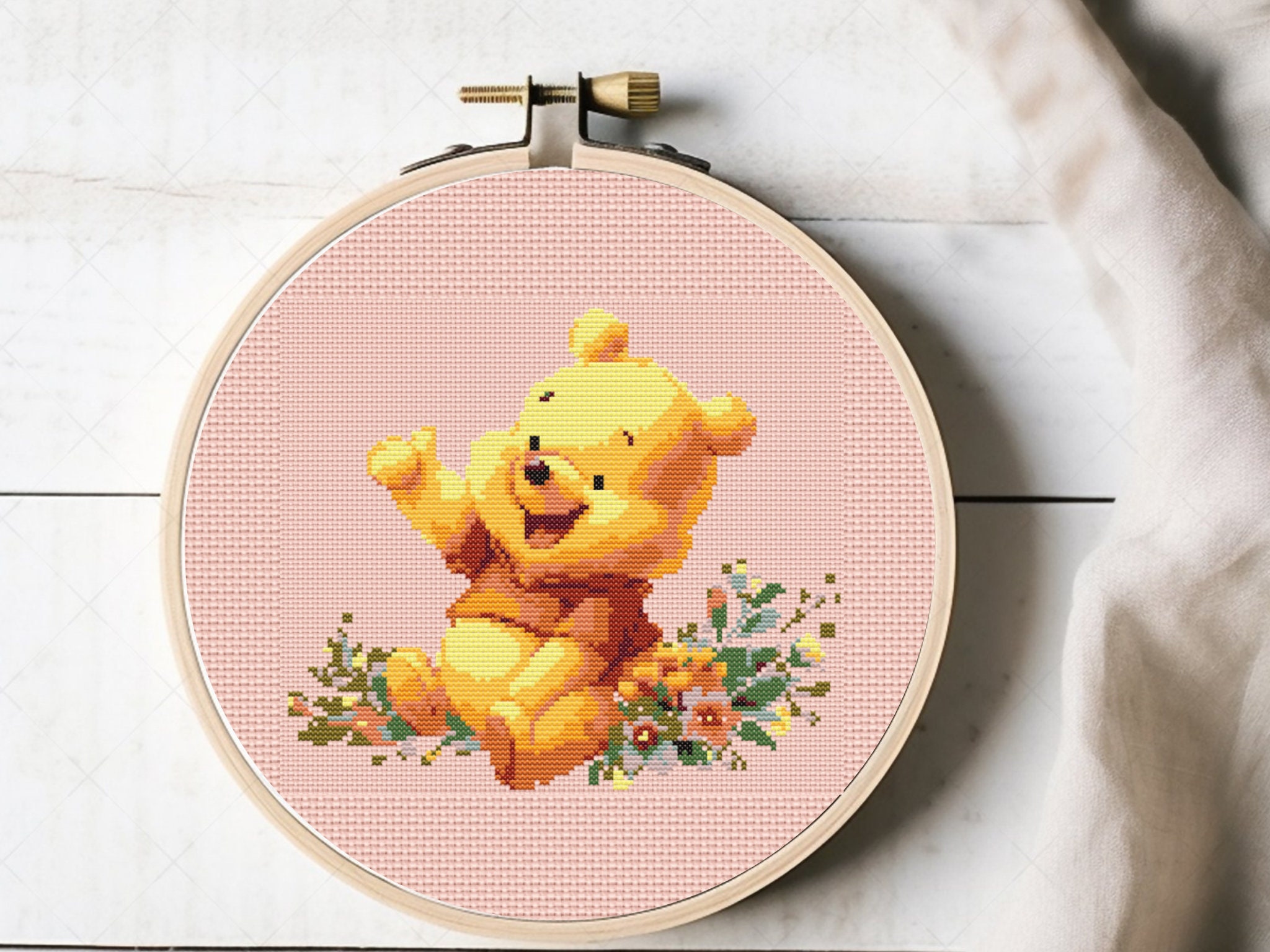
Imagine the gentle satisfaction of guiding a needle, colors blooming on fabric like a garden coming to life. Each tiny ‘x’ is a brushstroke, carefully placed to form a charming scene, a beloved character emerging stitch by stitch. The process is meditative, a quiet escape where focus sharpens and worries fade, leaving behind a tangible expression of creativity and skill.
Needlework, in its many forms, has a rich and storied past, woven into the fabric of cultures around the world. From ancient tapestries depicting epic tales to delicate samplers preserving family history, embroidery has long served as both artistic outlet and historical record. This particular form allows crafters to connect with time-honored techniques while imbuing them with contemporary charm.
The beauty of this craft lies in its accessibility. Whether a complete novice eager to learn the basics or an experienced stitcher seeking a new project, the supplies are readily available and the learning curve is gentle. It’s a craft that rewards patience, yet offers quick gratification as the design steadily takes shape, offering a sense of accomplishment with every completed section.
Traditional designs often feature intricate floral motifs and geometric patterns, but modern adaptations embrace everything from minimalist line art to vibrant pop culture icons. The possibilities are endless, limited only by imagination and the desire to create something truly unique. The current trend leans toward personalized creations, reflecting individual tastes and celebrating cherished characters.
Embarking on a new project promises not only a beautiful finished piece, but also a journey of artistic discovery and mindful relaxation. The following sections will provide guidance and inspiration to begin crafting, helping to transform a blank canvas into a treasured heirloom.
Character Selection
The selection of a particular character from the Hundred Acre Wood serves as the very heart of any “winnie the pooh cross stitch pattern”. It dictates the mood, the story being told, and the personal connection the stitcher feels with the finished piece. Careful consideration of which character to depict can transform a simple craft project into a deeply meaningful work of art.
-
Pooh’s Endearing Optimism
Choosing Winnie the Pooh himself immediately infuses the project with warmth and innocent joy. His simple pleasures honey, friendship, and a sunny day translate beautifully into a cross stitch design. A scene of Pooh reaching for a honey pot or strolling through the woods with Piglet evokes a feeling of contentment and nostalgia, making it a perfect choice for a nursery or a gift for someone needing a little cheer.
-
Eeyore’s Quiet Reflection
In contrast, selecting Eeyore offers a more introspective theme. Depicting the lovable donkey with his signature gloomy expression can be surprisingly comforting. An Eeyore cross stitch subtly acknowledges life’s little disappointments while reminding us of the importance of self-acceptance. It’s a poignant choice for someone who appreciates a touch of melancholy and the beauty of quiet moments.
-
Piglet’s Courageous Heart
Piglet, despite his small stature and timid nature, embodies bravery and loyalty. A “winnie the pooh cross stitch pattern” featuring Piglet often captures his unwavering support for Pooh and his willingness to face his fears alongside his friends. Such a piece serves as a gentle reminder that even the smallest among us can possess immense strength and courage. It is a meaningful subject matter to put on a wall that provides empowerment and motivation for all.
-
The Group Dynamic
Opting for a pattern that includes multiple characters allows for a richer narrative. A scene of Pooh, Piglet, Tigger, and Eeyore embarking on an adventure captures the essence of friendship and the joy of shared experiences. These complex patterns require more time and skill, but the resulting tapestry offers a vibrant celebration of the interconnectedness of the Hundred Acre Wood and the enduring power of camaraderie.
Ultimately, the choice of character(s) for a “winnie the pooh cross stitch pattern” transforms the project from a simple crafting exercise to a personal expression of values, memories, and affection. Each stitch becomes infused with the spirit of the chosen character, creating a unique and treasured piece that resonates long after the final knot is tied. By paying close attention to the nuances of each character, the crafter creates a truly captivating piece.
Pattern Complexity
The delightful world of “winnie the pooh cross stitch pattern” offers a spectrum of designs, each distinguished by its level of intricacy. Pattern complexity determines the project’s duration, the skill level required, and the overall visual impact of the finished piece. Understanding these variations allows crafters to choose patterns that align with their experience and desired outcome.
-
Beginner-Friendly Outlines
Simple patterns, often featuring a single character in a basic pose, serve as an excellent starting point for novice stitchers. These designs typically utilize a limited color palette and avoid intricate shading or detail, focusing instead on clean lines and easily manageable areas. A silhouette of Pooh or a simple depiction of Piglet holding a balloon exemplifies this category. The implication here is immediate gratification, fostering confidence and encouraging further exploration of the craft. These entry-level patterns make great kids project and beginner friendly introduction for those with limited time.
-
Intermediate Shading and Detail
Patterns of medium complexity introduce subtle shading techniques and more detailed character features. These designs require a greater understanding of color blending and stitch placement, challenging the crafter to create depth and dimension within the image. Consider a scene of Pooh sitting on a log, with varying shades of brown and green to create a realistic woodland setting. These patterns provides a rewarding balance of challenge and accomplishment, appealing to those seeking to refine their skills without becoming overwhelmed.
-
Advanced Scenic Compositions
Complex “winnie the pooh cross stitch pattern” often portray elaborate scenes from the Hundred Acre Wood, featuring multiple characters, intricate backgrounds, and nuanced color gradients. These designs demand patience, precision, and a mastery of various stitching techniques. A detailed rendition of Pooh’s house, complete with overflowing honey pots and a lush surrounding landscape, exemplifies this category. This is best for experienced stitchers looking for large impressive pieces.
-
Personalized and Custom Designs
Beyond pre-designed patterns, opportunities exist to create personalized “winnie the pooh cross stitch pattern”. Converting photographs or sketches into cross stitch charts allows for the incorporation of unique elements, such as a child’s name alongside their favorite character or a rendition of a special family moment set within the Hundred Acre Wood. These custom patterns represent the pinnacle of complexity, requiring advanced charting software skills or the expertise of a professional designer. With the advance of AI this is now easier to acomplish.
In essence, the choice of pattern complexity for a “winnie the pooh cross stitch pattern” is a deeply personal one, reflecting the crafter’s skill level, available time, and desired level of challenge. Whether opting for a simple silhouette or an elaborate scene, each stitch contributes to a unique and cherished piece, celebrating the enduring appeal of Winnie the Pooh and his beloved friends. Exploring the various pattern choices will help you achieve the best outcome.
Color Palette
The selection of a color palette exerts a profound influence on the final aesthetic and emotional impact of a “winnie the pooh cross stitch pattern”. Colors are not merely decorative; they are the lifeblood of the design, breathing vitality into the characters and setting the tone for the entire piece. The careful curation of hues can transform a simple pattern into a captivating work of art, imbuing it with warmth, nostalgia, or a touch of whimsy. For instance, muted earth tones evoke a sense of vintage charm, reminiscent of the original illustrations, while brighter, more saturated colors create a contemporary and playful feel. The choice directly affects how the viewer connects with the finished product and the narrative it conveys.
Consider a “winnie the pooh cross stitch pattern” depicting Pooh Bear reaching for a honey pot. A palette dominated by golden yellows, warm browns, and honeyed oranges immediately conveys the sweetness and comforting nature associated with Pooh’s favorite treat. Conversely, a rendition of Eeyore in a palette of cool grays, muted blues, and desaturated purples perfectly captures his characteristic melancholy. A vibrant scene featuring Tigger could incorporate bold oranges, sunny yellows, and energetic stripes, reflecting his boundless enthusiasm. The practical application of this understanding allows crafters to tailor the color scheme to their desired aesthetic, ensuring that the finished piece aligns perfectly with their vision.
In summary, the color palette is not merely a superficial element of a “winnie the pooh cross stitch pattern” but rather an integral component that shapes its overall meaning and visual appeal. Thoughtful consideration of color choices, coupled with an understanding of color theory and the emotional associations they evoke, empowers crafters to create truly exceptional pieces that resonate with warmth, charm, and lasting beauty. Mastering the impact of color brings the pattern to life.
Fabric Choice
The foundation upon which any “winnie the pooh cross stitch pattern” is built rests squarely on the chosen fabric. Far from a mere backdrop, the fabric profoundly influences the clarity of the design, the ease of stitching, and the overall longevity of the finished piece. A thoughtful selection elevates the project from a simple craft to a cherished work of art.
-
Aida Cloth: The Beginner’s Embrace
Aida cloth, with its distinct, evenly spaced squares, stands as the quintessential choice for those new to cross stitch. Its readily identifiable weave provides a clear grid, simplifying stitch placement and minimizing errors. For a “winnie the pooh cross stitch pattern” featuring bold outlines and simpler color blocks, Aida offers an ideal canvas, particularly for younger stitchers or those seeking a quick and satisfying project. The inherent structure of Aida ensures that each ‘x’ stitch sits uniformly, creating a clean and consistent appearance, a valuable asset for building confidence in the craft. The structured pattern is also easy for the eyes.
-
Evenweave Linen: A Touch of Refinement
Evenweave linen, characterized by its finer, more subtle weave, presents a more sophisticated option for experienced stitchers. Its lack of a pronounced grid demands greater precision and attention to detail but rewards the effort with a refined and elegant result. A “winnie the pooh cross stitch pattern” rendered on evenweave linen gains a delicate, almost painterly quality, particularly when employing intricate shading techniques. The tighter weave also lends itself well to more complex designs with finer details, such as the delicate features of Piglet or the intricate patterns on Tigger’s stripes. Evenweave provides a less structured aesthetic when complete.
-
Linen’s Thread Count: Defining Detail
Within the realm of linen lies a spectrum of thread counts, each dictating the density of the weave and, consequently, the level of detail achievable in the finished piece. A higher thread count allows for finer, more intricate designs, ideal for capturing the subtle nuances of a “winnie the pooh cross stitch pattern” featuring detailed facial expressions or intricate background elements. Conversely, a lower thread count is suitable for simpler patterns with bolder elements, providing a more rustic and textured appearance. It’s a critical aspect to consider to avoid muddling up details.
-
Color Considerations: Setting the Mood
Beyond the weave, the color of the fabric also plays a crucial role in setting the mood and enhancing the overall aesthetic of the “winnie the pooh cross stitch pattern”. A warm, cream-colored fabric evokes a sense of vintage charm, reminiscent of the original illustrations, while a crisp white background provides a clean and contemporary feel. Darker fabrics, such as navy or charcoal, can create a striking contrast, particularly for patterns featuring bright and cheerful characters like Winnie the Pooh and Tigger. A pale blue or green fabric complements patterns depicting scenes from the Hundred Acre Wood, enhancing the natural and whimsical atmosphere.
Ultimately, the choice of fabric for a “winnie the pooh cross stitch pattern” is a deeply personal one, influenced by the crafter’s skill level, aesthetic preferences, and the desired outcome of the project. Careful consideration of the fabric’s weave, thread count, and color ensures that each stitch contributes to a harmonious and visually stunning piece, celebrating the timeless appeal of Winnie the Pooh and his beloved friends.
What You’ll Need
- Embroidery Hoop or Frame: This holds your fabric taut, making stitching much easier. Sizes typically range from 4 to 10 inches in diameter. A plastic or wooden hoop will work. A frame can be used for larger pieces.
- Aida Cloth or Evenweave Fabric: Aida is great for beginners because of its easy-to-see grid. Evenweave is a finer fabric for more experienced stitchers. Choose the size and count (number of squares per inch) based on your pattern.
- Cross Stitch Pattern: This guide shows you where to stitch each color. You can find printed patterns or digital patterns online. Look for a “winnie the pooh cross stitch pattern” that suits your skill level.
- Embroidery Floss (Thread): DMC is a popular brand. The pattern will tell you which colors and how much of each you need. It’s helpful to organize your floss.
- Embroidery Needle: These needles have a large eye to easily thread the floss and a blunt tip to avoid snagging the fabric. Size 24 or 26 are commonly used.
- Scissors: Small, sharp scissors are essential for cutting the floss.
- Needle Threader (Optional): This little tool makes threading the needle much easier, especially for those with vision challenges.
- Good Lighting: Proper lighting is crucial to avoid eye strain. A daylight lamp or a well-lit room is ideal.
Preparation Tips
Before you start, wash and iron your fabric to prevent shrinkage and wrinkles later. Find the center of your fabric by folding it in half lengthwise and then widthwise; mark the center point lightly with a fabric pen or a pin. This is usually where you start stitching.
Organize your embroidery floss. Many stitchers like to use a floss organizer, which is a plastic container with numbered compartments. You can wind the floss around bobbins and label them with the corresponding color number from your pattern. This prevents tangles and makes it easy to find the colors you need.
Find a comfortable place to stitch with good lighting. Make sure your posture is good to avoid back and neck pain. Take breaks often to rest your eyes and stretch your hands. Listen to music or an audiobook to enhance your relaxation. Remember it’s all about fun, so don’t rush and enjoy the process of making something you will cherish.
Step-by-Step Instructions
Step 1
Begin by securing your chosen fabric (Aida cloth is ideal for beginners) in an embroidery hoop or frame. Ensure the fabric is taut but not overly stretched. This provides a stable surface for stitching and prevents puckering. If the fabric is wrinkled, iron it lightly before placing it in the hoop.
Step 2
Most cross stitch patterns start from the center. To find the center of your fabric, fold it in half lengthwise, then widthwise. Crease lightly at the fold lines to mark the center point. A removable fabric marker or a pin can be used to indicate this point.
Step 3
Cut a length of embroidery floss about 18 inches long. Separate the floss into the number of strands specified in your pattern (often 2 strands for 14-count Aida cloth). Thread the needle, using a needle threader if needed, and tie a knot at one end of the floss.
Step 4
Consult your “winnie the pooh cross stitch pattern”. Locate the center stitch on the pattern and match it to the center point on your fabric. Bring the needle up from the back of the fabric at the bottom-left corner of the square, and then down into the top-right corner, forming the first half of your ‘x’. Next, bring the needle up from the back at the bottom-right corner of the square, and then down into the top-left corner, completing the ‘x’. This forms one complete cross stitch.
Step 5
Continue stitching, following the pattern closely. Each square on the pattern corresponds to one cross stitch on the fabric. Pay attention to the color key, ensuring you’re using the correct embroidery floss for each area. Work in rows or sections, completing all stitches of one color before moving on to the next. It is preferable to complete the same color in a cluster.
Step 6
When you reach the end of a length of floss or need to change colors, weave the needle through several stitches on the back of the fabric to secure the end. Trim the excess floss close to the fabric. Avoid making large knots, as they can create bulk and distort the design.
Step 7
Some “winnie the pooh cross stitch pattern” may include backstitching to define outlines and add detail. Backstitch is a simple straight stitch that follows the lines on the pattern. Use a single strand of floss for backstitching unless otherwise specified. This defines the details for the subjects in the work.
Step 8
Once all the cross stitches are complete, remove the fabric from the hoop or frame. Gently wash the finished piece with mild soap and water, if necessary. Allow it to air dry completely. Iron the fabric on a low setting, placing a clean cloth between the iron and the design to protect the stitches. Finally, frame your completed “winnie the pooh cross stitch pattern” or display it as desired, celebrating your accomplishment.
Creating a “winnie the pooh cross stitch pattern” isn’t just about making something beautiful; it’s about embracing a relaxing, rewarding hobby that connects you to cherished characters and memories. It’s a chance to slow down, focus your mind, and bring a touch of whimsy to your surroundings.
Each stitch is a testament to your creativity and patience, transforming a simple piece of fabric into a treasured heirloom. Whether you choose a simple outline or a complex scene, the finished piece will be a reflection of your unique artistic expression, celebrating the enduring charm of Winnie the Pooh and his friends.
So, why not give it a try? We encourage you to explore the world of “winnie the pooh cross stitch pattern” and discover the joy of creating something special with your own hands. Share your finished projects with uswe’d love to see what you create! Feel free to leave a comment below and tell us about your experience.
Happy Stitching!
Images References :
Image used for illustration purposes only. All rights belong to their respective owners.



