Imagine a canvas slowly blossoming with color, each tiny ‘x’ a deliberate stroke building texture and depth. The practice is a journey of transformation, where simple threads converge to create intricate scenes, personalized messages, or vibrant abstract designs. The rhythmic motion and gradual unveiling of the artwork provide a uniquely absorbing and deeply satisfying creative experience.
The origins of needlework artistry are deeply intertwined with human history. From ancient samplers meticulously documenting patterns and alphabets to the decorative embellishments adorning royal garments, this technique has served both functional and artistic purposes across diverse cultures. It represents a tangible link to past generations, carrying forward time-honored traditions with each completed project.
The allure lies in its accessibility and adaptability. Requiring minimal initial investment and easily portable, anyone can embark on the creation of a unique stitched piece. Whether seeking a meditative pastime, a personalized gift idea, or a challenging artistic endeavor, the craft offers a rewarding path for both beginners and seasoned artisans.
Beyond traditional motifs, contemporary interpretations are continually pushing the boundaries of this craft. From minimalist geometric patterns to elaborate, photo-realistic portraits, modern practitioners are embracing new materials, techniques, and design aesthetics, ensuring that needlework remains a vibrant and evolving art form.
Ready to embark on this creative journey? The following guide will illuminate the fundamental techniques, empowering readers to confidently create their own beautiful, handcrafted designs. Prepare to learn how do you cross stitch.
Fabric and Thread
The foundation of every successful piece resides in the thoughtful selection of fabric and thread. These core components dictate not only the aesthetic outcome but also the workability and longevity of the finished piece. A harmonious pairing is essential for achieving the desired visual effect and ensuring the stitching process is both enjoyable and rewarding.
-
Aida Cloth: The Beginner’s Canvas
Aida cloth, with its easily discernible square weave, is a popular starting point. Its evenly spaced holes clearly define where each stitch should be placed, simplifying the process and minimizing errors. This makes Aida an ideal choice for newcomers as they develop their skills and build confidence. For example, a simple floral design on Aida can be a satisfying introductory project.
-
Linen and Evenweave: Embracing the Finer Details
Linen and evenweave fabrics present a more refined texture and a higher thread count. These fabrics demand greater precision, as the stitcher must count the threads to ensure proper placement. They are preferred for intricate designs that require a smoother, more detailed appearance. A complex landscape or a detailed portrait often benefits from the subtle elegance of linen.
-
Thread Varieties: A Spectrum of Colors and Textures
Embroidery floss, typically made of cotton, is the most common thread choice. It is available in a vast array of colors and finishes, including variegated and metallic options. The selection of thread color is paramount in mirroring the design pattern. Wool or silk threads, while less common, add a unique texture and visual richness to the work.
-
Thread Count and Fabric Compatibility
The thread count of the fabric, measured in stitches per inch, dictates the thickness of the thread required. A higher thread count necessitates finer threads to avoid overcrowding the fabric. Conversely, coarser fabrics benefit from thicker threads to ensure adequate coverage. The overall goal is a balanced aesthetic, where the fabric and thread complement each other without overwhelming one another.
Ultimately, the journey of is a deeply personal one, influenced by the artist’s preferences and the demands of the chosen pattern. The interplay between the fabric and the thread creates a tactile experience that is as individual as the artwork itself. The careful consideration of these elements elevates the craft from a simple pastime to a truly expressive art form.
Basic Stitching Technique
At the heart of every intricately detailed piece lies the mastery of fundamental stitching techniques. This skill is the cornerstone upon which complex designs are built, influencing the texture, clarity, and overall visual appeal of the finished artwork. Understanding these basics is essential for turning a blank canvas into a tapestry of color and texture.
-
The ‘X’ Formation: Creating the Perfect Stitch
The essence of this art form lies in the creation of a consistent ‘X’. Each stitch is formed by two diagonal lines that intersect at their midpoint. Achieving uniformity requires maintaining consistent tension and ensuring each diagonal line lies smoothly against the fabric. A well-formed ‘X’ contributes to a clean, professional aesthetic. For instance, imagine a row of stitches, each one perfectly mirroring its neighbor, creating a sense of harmony and precision within the design.
-
The Importance of Direction: Top to Bottom Consistency
While seemingly minor, the direction of the stitches significantly impacts the final appearance. Maintaining consistency always crossing the top thread in the same direction (e.g., from top-right to bottom-left) creates a uniform texture and enhances the overall visual appeal. Inconsistency can result in a slightly skewed or uneven surface, detracting from the clarity of the design.
-
Starting and Ending Threads: The Invisible Art of Securing
Properly securing the threads at the beginning and end of a row is crucial for preventing unraveling and ensuring the longevity of the piece. Avoid knots, which can create bulkiness and distort the fabric. Instead, weave the thread through the back of existing stitches, concealing the ends for a clean, professional finish. Securing threads adeptly contributes to the overall durability and visual integrity of the piece.
-
Tension Control: Balancing Tightness and Looseness
Maintaining even tension is pivotal for achieving a uniform and appealing texture. Stitches that are too tight can pucker the fabric, while stitches that are too loose can appear sloppy. Finding the right balance a tension that allows the threads to lie flat without distorting the fabric requires practice and a delicate touch. Balanced tension ensures the stitches lie neatly and contribute to the overall beauty of the piece.
These seemingly simple techniques, when mastered, unlock a world of creative possibilities. It transforms the act into a relaxing and rewarding art form, allowing the crafter to bring intricate designs to life with precision and skill. Each perfectly formed ‘X’ is a testament to the dedication and artistry involved in how do you cross stitch, turning a simple craft into a cherished work of art.
Reading the pattern
Deciphering the pattern is akin to unlocking the blueprint of a masterpiece. This crucial skill transforms a seemingly complex chart into a clear roadmap, guiding the needle through a landscape of color and texture. Without the ability to interpret the pattern, the journey of creation is akin to navigating uncharted waters. Understanding the pattern is essential for translating a design concept into a tangible and beautiful piece.
-
Symbol Decoding: The Language of Stitches
Each symbol within a pattern represents a specific color of thread. Understanding this visual language is the first step in accurately recreating the design. Some charts employ a combination of symbols and color keys, allowing for a precise understanding of each stitch placement. For instance, a small square containing an asterisk might denote a particular shade of red, while a circle indicates blue. Mistaking one symbol for another can lead to unexpected color variations and a deviation from the original design.
-
Grid Navigation: Mapping the Stitched Landscape
Patterns are typically presented on a grid, corresponding to the fabric’s weave. Each square on the grid represents a single stitch, allowing for accurate placement and scaling of the design. Following the grid meticulously is crucial for maintaining the proportions and symmetry of the final piece. Consider a complex geometric pattern where even a slight misplacement can disrupt the overall harmony of the design. Accurate grid navigation ensures that each element aligns as intended, creating a cohesive and visually pleasing result.
-
Color Key Interpretation: Bringing the Palette to Life
The color key translates the symbols into specific thread colors, providing a comprehensive palette for the design. Often, patterns provide thread codes from major manufacturers such as DMC or Anchor, ensuring that the correct shades are selected. Deviating from the color key can alter the mood and visual impact of the finished piece. Imagine a scene originally designed with pastel shades rendered in bold, vibrant colors; the entire effect would be dramatically different. The color key is the artist’s carefully chosen palette, and adhering to it is essential for replicating the intended aesthetic.
-
Pattern Adaptation: Scaling and Customization
Experienced artisans often adapt patterns to suit their personal preferences or to fit a specific project. Scaling a pattern involves adjusting the size to accommodate different fabric counts or to create a larger or smaller finished piece. Customization might include altering colors or adding personal touches to the design. While pattern adaptation allows for creative expression, it requires a thorough understanding of the design principles and a careful consideration of how changes will affect the overall appearance. It demonstrates a deeper understanding of “how do you cross stitch” and allows you to personalize the creation.
In essence, the ability to read a pattern is the bridge that connects the artist’s vision with the tangible act of stitching. It empowers the artisan to translate complex designs with accuracy and confidence, transforming a simple piece of fabric into a beautiful and personalized work of art. Pattern interpretation is a vital element in transforming a blank piece of cloth to be stitched.
What You’ll Need
- Embroidery Hoop: This keeps your fabric taut, making it easier to create even stitches. Sizes range from small (3-4 inches) for tiny projects to larger ones (8+ inches) for more expansive designs. Choose a size that comfortably fits your project.
- Aida Cloth: This is the most common fabric for beginners. Its evenly spaced holes make it simple to count stitches. You can find it at most craft stores in various sizes and thread counts (the number of stitches per inch).
- Embroidery Floss: This is the thread you’ll use to create your design. It comes in a vast array of colors. A typical pattern will specify the colors you’ll need by a number code (e.g., DMC 310 for black).
- Embroidery Needles: These needles have a larger eye to accommodate embroidery floss and a blunt tip that slides easily through Aida cloth. A size 24 or 26 needle is a good starting point.
- Scissors: Small, sharp scissors are essential for trimming threads neatly. Embroidery scissors are ideal, but any small scissors with a fine point will do.
- Pattern: This is your guide! Patterns usually come printed on paper or as a digital download. They use symbols to represent different colors of floss.
- Optional: Thread Organizer: This is helpful for keeping your floss tidy and preventing tangles. You can use floss bobbins, plastic organizers, or even just a ziplock bag.
- Optional: Light: Good lighting is very important. If you are having difficulty seeing the small holes in the Aida cloth, a light source may help.
Preparation Tips
Before you start, wash and iron your Aida cloth to prevent shrinkage or wrinkles. Cut your fabric a few inches larger than your finished design to allow for framing or finishing. Find the center of your fabric and your pattern, then begin stitching from the center outwards to ensure your design is properly positioned.
Good lighting is essential to avoid eye strain. Take breaks often to prevent hand fatigue or stiffness. Try to cross stitch in a well-lit area or invest in a dedicated craft light. Also, be sure to sit in a comfortable chair and maintain good posture.
Step-by-Step Instructions
Step 1
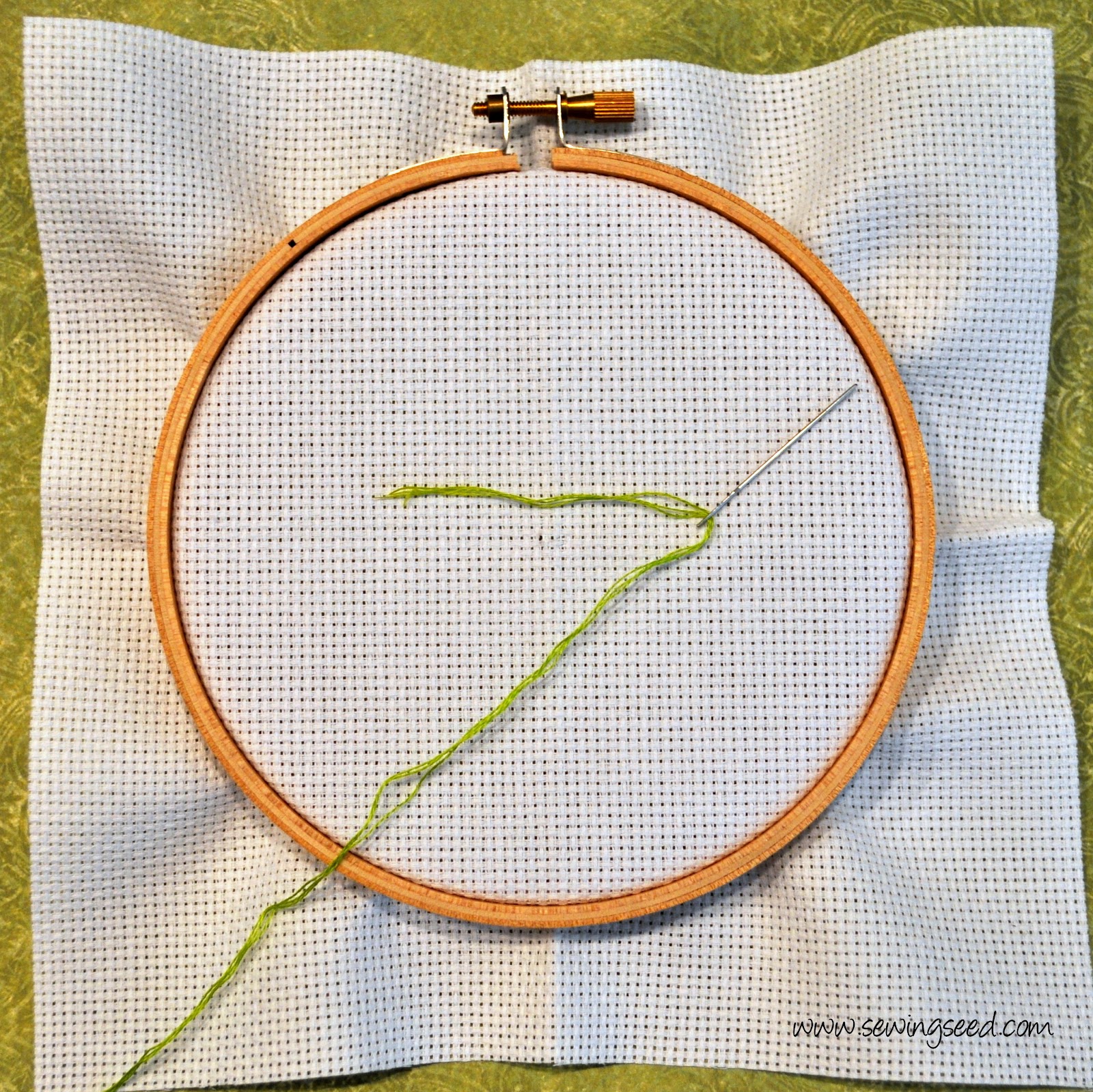
Begin by securing the Aida cloth within the embroidery hoop. Ensure the fabric is taut but not overly stretched. This provides a stable surface for stitching and prevents puckering. The fabric should be drum-tight.
Step 2
Cut a length of embroidery floss approximately 18 inches long. Separate two strands of floss from the six-strand skein. Thread the two strands through the eye of the embroidery needle. A needle threader can be helpful for this step.
Step 3
Instead of using a knot (which can create bulk), begin by holding the tail of the thread against the back of the fabric. Stitch over the tail with your first few stitches to secure it. This creates a neat and hidden starting point.
Step 4
Following your pattern, bring the needle up through one of the holes in the Aida cloth. Then, insert the needle diagonally across to the opposite corner of the square to create the first half of the ‘X’ stitch. Refer to your pattern to confirm you are using the correct color thread.
Step 5
Bring the needle up through the remaining empty corner of the square. Then, insert it down through the final empty corner, completing the ‘X’ shape. Ensure the top thread of the ‘X’ lies in the same direction for all stitches for a uniform look.
Step 6
Continue creating stitches, following the pattern’s color key and grid. Work in rows or sections, completing all stitches of one color before moving on to the next. Maintain consistent tension to keep your stitches neat and even. If you prefer to stitch all the bottom halves (or top halves) of the stitch first, before returning to complete the X, that is known as the Danish method and is perfectly acceptable.
Step 7
When you run out of thread or need to change colors, weave the needle through the back of several existing stitches to secure the end. Trim the excess thread close to the fabric, ensuring it’s hidden. Avoid tying knots, as they can create bumps and distort the finished piece. Again, the aim is to make these loose thread invisible from the front of the work.
Step 8
Once you’ve completed your design, remove the fabric from the embroidery hoop. Lightly press the piece from the back with a cool iron if necessary. Your finished piece can be framed, used to embellish clothing, or incorporated into other craft projects.
So, you’ve journeyed through the fundamentals of needlework from selecting your fabric and thread to mastering the essential stitch and decoding intricate patterns. Isn’t it amazing how a simple ‘X’ can transform into something so beautiful and personal? The process is meditative, the results are rewarding, and the creative possibilities are virtually endless. Whether you’re looking for a calming hobby, a way to express your artistic side, or a thoughtful handmade gift idea, this project ticks all the boxes.
Beyond the joy of creating, it’s a chance to connect with a craft that spans generations. Every piece tells a story, not just of the image it portrays, but also of the time and care you invested in it. That’s a special kind of magic, a tangible expression of creativity that you can hold in your hands.
Now it’s your turn to pick up a needle and give it a try! Don’t be afraid to experiment with colors, patterns, and techniques. We’d absolutely love to see what you create please share your photos and projects in the comments below. Your creativity might just inspire someone else to pick up this delightful craft.
Happy stitching!
Images References :
Image used for illustration purposes only. All rights belong to their respective owners.


