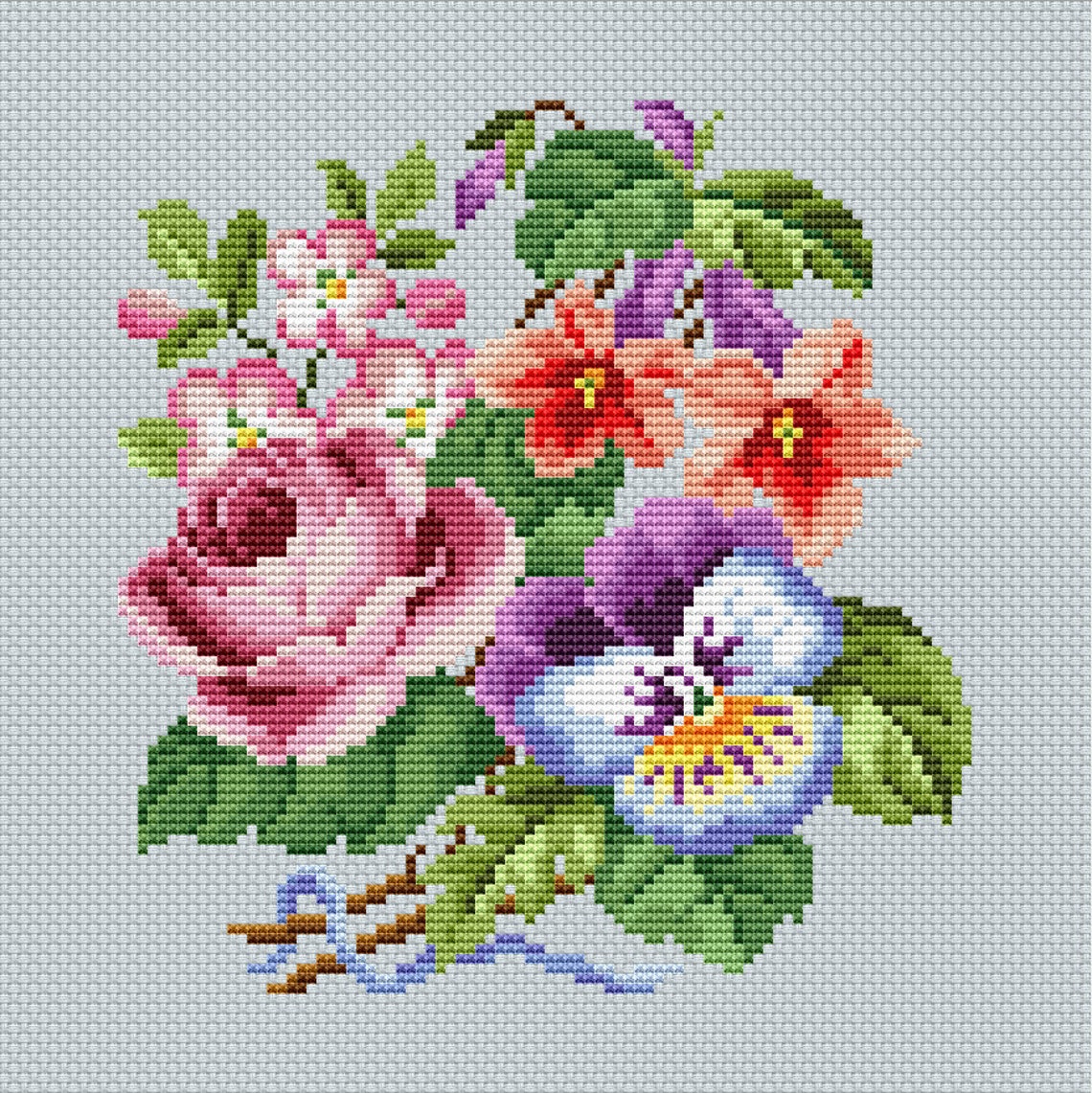
Imagine transforming simple fabric into a vibrant garden, each tiny ‘x’ a brushstroke of color blooming beneath skillful hands. The art of needlework offers a unique canvas for self-expression, where intricate designs come alive with every carefully placed stitch. It’s a process that yields not just a finished piece, but a sense of accomplishment and quiet joy.
From ancient samplers that documented family histories to the elaborate tapestries of royal courts, the art of decorative stitching holds a cherished place in human culture. Throughout history, the meditative act of creating with needle and thread has provided solace, fostered community, and preserved artistic traditions. These enduring methods offer a tangible link to generations past.
One of the many beautiful aspects of this craft is its accessibility. It welcomes both the absolute beginner and the seasoned artisan. Simple projects offer a gentle introduction, while more complex patterns provide satisfying challenges for those seeking to hone their skills. With minimal tools and a wide range of available designs, it’s a craft easily adaptable to individual tastes and skill levels.
The world of stitching designs is rich with variety, from classic country garden scenes to modern geometric abstractions. Whether one prefers delicate pastel hues or bold, saturated colors, there exists an endless spectrum of possibilities. Contemporary designers are constantly pushing boundaries, incorporating new techniques and innovative color palettes to keep the craft fresh and relevant.
This guide explores a specific area of charted needlework, offering insights into design selection, essential techniques, and inspirational ideas to spark your own creative journey. Prepare to embark on a rewarding adventure, one stitch at a time, and discover the magic of bringing beautiful, timeless art to life.
Color Palette Harmony
The selection of colors in floral counted cross stitch elevates a simple design into a captivating work of art. Harmony in color brings depth, realism, and emotional resonance to the stitched garden, transforming thread into a vibrant tapestry.
-
Analogous Color Schemes
Analogous color schemes, utilizing hues adjacent to each other on the color wheel, create a sense of serenity and cohesion. A design featuring various shades of blues, greens, and purples can evoke the tranquil beauty of a field of lavender. This approach is particularly effective for achieving a realistic, natural look in botanical designs.
-
Complementary Color Schemes
Complementary color schemes, pairing colors directly opposite each other on the color wheel, generate visual excitement and contrast. The classic combination of red and green, for instance, can bring a poinsettia design to life, while a pairing of yellow and purple can highlight the regal splendor of irises. Used judiciously, these schemes can add dramatic flair to floral compositions.
-
Monochromatic Color Schemes
Monochromatic schemes employ variations of a single color, creating a sophisticated and subtle effect. A cross stitch pattern featuring various shades of pink, from blush to magenta, can depict the delicate beauty of cherry blossoms with remarkable nuance. This approach emphasizes texture and form, allowing the stitchwork itself to become a focal point.
-
Tonal Value Considerations
Beyond the specific hues, the interplay of tonal valuesthe lightness or darkness of colorsis crucial for creating depth and dimension. Skillful use of light and shadow can make petals appear to curve and foliage seem to recede, giving the stitched flowers a three-dimensional quality. A well-balanced range of tonal values enhances the realism and visual impact of any floral design.
Whether seeking a vibrant burst of contrasting colors or a serene wash of analogous hues, the careful selection and skillful application of a harmonious color palette is essential for bringing floral counted cross stitch patterns to their full potential. The right color choices allow the artistry of each stitch to blossom into a truly stunning creation.
Design Complexity Scale
The “Design Complexity Scale” in the context of floral counted cross stitch patterns serves as a crucial compass, guiding enthusiasts from simple, introductory projects to elaborate masterpieces. It categorizes designs based on the intricacy of the pattern, the number of colors involved, and the density of stitches, enabling stitchers to choose projects aligned with their current skill level and desired challenge.
-
Beginner-Friendly Designs: Simple Motifs
These patterns typically feature large, uncluttered designs with a limited number of colors and minimal fractional stitches. Think of a single, stylized sunflower or a small cluster of daisies against a plain background. These are perfect for newcomers to learn basic techniques, familiarize themselves with reading charts, and gain confidence before tackling more ambitious projects.
-
Intermediate Designs: Layered Florals
Intermediate patterns introduce more complexity, with multiple layers of petals, leaves, and background elements, along with a wider color palette. A bouquet of mixed wildflowers or a detailed rose with shading and highlights would fall into this category. Stitchers at this level develop their skills in color blending, backstitching for outlining, and managing more intricate stitch sequences.
-
Advanced Designs: Realistic Botanical Studies
These patterns push the boundaries of counted cross stitch, often mimicking the detail and nuance of fine art. They involve intricate shading, a vast array of colors, fractional stitches for smooth curves, and complex backstitching to define intricate details. A lifelike rendition of a Victorian floral arrangement or a detailed botanical illustration of exotic orchids exemplifies this level. Achieving these patterns demands patience, precision, and a deep understanding of stitching techniques.
-
Master-Level Designs: Panoramic Floral Scenes
The apex of floral cross stitch artistry, these projects are characterized by incredibly detailed, expansive designs, often encompassing entire landscapes with intricate floral foregrounds. Such patterns may feature multiple types of flowers, complex background elements, and advanced shading techniques that push the boundaries of color blending and detail. These designs demand not only an advanced skill set but also significant time commitment, offering a rewarding but challenging endeavor for experienced stitchers.
Understanding and appreciating the design complexity scale empowers stitchers to make informed choices, ensuring that their projects are both enjoyable and achievable. Whether one is captivated by the simplicity of a single blossom or drawn to the challenge of a sprawling garden scene, the world of floral counted cross stitch offers an endless array of creative possibilities.
Fabric Count Choice
The fabric count in floral counted cross stitch patterns significantly impacts the final appearance and level of detail within the design. Fabric count, measured as the number of threads per inch (TPI), dictates the size of each stitch. A lower count (e.g., 11-count) results in larger stitches and a quicker project completion, while a higher count (e.g., 18-count or higher) produces smaller, finer stitches and a more detailed image. Choosing the right fabric count is therefore a critical decision, influencing the overall aesthetic and the time commitment required. For instance, a delicate lavender sprig pattern may benefit from a higher count fabric to capture the intricate details of its florets, whereas a bolder, more graphic floral design may suit a lower count fabric for a more pronounced effect.
The selection of fabric count also has practical implications for the size of the finished piece. A pattern stitched on 14-count Aida cloth will result in a larger image compared to the same pattern stitched on 18-count Aida. This is a crucial consideration when planning the final display of the finished work. Furthermore, the complexity of the pattern should also guide fabric count choice. Highly detailed floral designs with intricate shading often require higher fabric counts to accommodate the necessary stitches and color variations. Conversely, simpler floral motifs with fewer colors may be effectively rendered on lower count fabrics without sacrificing visual appeal. The stitcher should therefore carefully evaluate the pattern’s complexity and the desired final size before making a fabric selection.
In summary, the fabric count is not merely a technical specification but an integral design element that profoundly affects the outcome of a floral counted cross stitch project. It determines the level of detail, the size of the finished piece, and the overall aesthetic impact. While a higher count allows for greater intricacy, it also demands more time and precision. Conversely, a lower count simplifies the stitching process but may sacrifice some of the finer details. A thoughtful consideration of these factors ensures that the chosen fabric count complements the design and enhances the beauty of the finished floral masterpiece.
What Youll Need to Begin Your Floral Cross Stitch Journey
Embarking on a floral counted cross stitch project is easier than you might think! Here’s a rundown of the essential tools and materials to get you started, ensuring a smooth and enjoyable stitching experience:
- Aida Cloth: This is your canvas! Aida cloth is a woven fabric with evenly spaced holes, making it easy to create neat, uniform stitches. It comes in various “counts” (threads per inch), such as 14-count, 16-count, or 18-count. Beginners often find 14-count Aida the easiest to work with.
- Embroidery Hoop or Frame: This helps to keep your fabric taut, preventing puckering and making stitching much easier. Hoops come in different sizes and materials (wood, plastic), so choose one that comfortably fits your project. A frame is useful for larger projects.
- Embroidery Floss (Thread): The heart of your floral design! Embroidery floss is made of cotton or other materials and comes in a vast array of colors. Your chosen pattern will specify the DMC (or other brand) floss colors needed.
- Embroidery Needles: These needles have a blunt tip and a large eye to easily accommodate embroidery floss without snagging the Aida cloth. Choose a needle size appropriate for your fabric count (e.g., size 24 or 26 for 14-count Aida).
- Cross Stitch Pattern: This is your guide! Patterns are typically presented as charts with symbols representing different colors of floss. You can find free patterns online, purchase printed patterns, or use digital patterns on a tablet.
- Scissors: Small, sharp embroidery scissors are essential for snipping threads cleanly.
- Needle Threader (Optional): This handy tool makes threading the needle much easier, especially for those with visual impairments or when working with multiple strands of floss.
- Good Lighting: Proper lighting is crucial for preventing eye strain and ensuring accurate stitching. A bright, adjustable lamp is highly recommended.
Preparation Tips for a Stitching Success
A little preparation goes a long way in ensuring a stress-free and enjoyable cross stitch experience. Here are a few tips to get you started:
Prepare Your Fabric: Before you begin, consider overlocking or taping the edges of your Aida cloth with masking tape to prevent fraying. Find the center of your fabric by folding it in half lengthwise and widthwise, then mark the center point with a pin or a fabric marker.
Organize Your Threads: Separate your embroidery floss colors and organize them on a thread organizer (floss bobbins or a thread box) to keep them tangle-free and easily accessible. Label each section with the corresponding symbol from your pattern.
Familiarize Yourself with the Pattern: Before starting to stitch, take some time to carefully study your pattern. Understand the symbols, the color key, and the overall design. Consider making a copy of the pattern and marking off stitches as you complete them.
Comfort and Safety First: Choose a comfortable chair and ensure good posture to prevent back pain. Take frequent breaks to stretch your hands and eyes. Work in a well-lit area to reduce eye strain.
With these tools, materials, and preparation tips, you’re now ready to embark on your floral counted cross stitch adventure! Happy stitching!
Step-by-Step Instructions
Step 1
Begin by cutting a piece of Aida cloth slightly larger than the intended finished size of your daisy design. A good starting size is 6×6 inches for a small flower. To prevent fraying, fold over and stitch or use masking tape around the edges of the fabric.
Step 2
Fold the Aida cloth in half lengthwise, then in half widthwise. Gently press the folds to create creases. The point where the creases intersect marks the center of your fabric. This is usually where you’ll start stitching the daisy. You can mark the center with a fabric-safe marker or a pin.
Step 3
Select the embroidery floss color for the center of your daisy (typically yellow or gold). Cut a length of floss about 18 inches long. Separate two strands of floss from the six-strand skein. Thread your needle with the two strands, and tie a knot at the end.
Step 4
Refer to your pattern chart for the center of the daisy. Starting from the back of the Aida cloth, bring your needle up through the hole at the starting point. Stitch the first leg of your cross stitch (from bottom left to top right), then stitch the second leg (from bottom right to top left) to complete the cross. Continue following the pattern chart, filling in the entire center of the daisy with cross stitches. Be sure to keep your stitches uniform in direction.
Step 5
Once the center is complete, carefully weave the thread under several stitches on the back of your work to secure it. Trim the excess floss close to the fabric. Now, thread your needle with the floss color for the daisy petals (typically white or a light color). Repeat the two-strand separation as in step 3. Tie a knot and start stitching the petals.
Step 6
Following the pattern chart, stitch the petals one by one, using the same cross stitch technique as before. Maintain consistent tension as you stitch to ensure your petals are neat and even. You can choose to do all the first legs of your cross stitches, and then go back and complete the second legs, or you can complete each cross stitch individually as you go.
Step 7
For a more defined look, you can backstitch the outline of the daisy. Use a darker shade of the petal color or black floss. Backstitching involves creating straight stitches along the edges of the design, following the pattern chart. This step adds depth and clarity to your floral design.
Step 8
Once you’ve completed all the stitching, carefully weave the thread under several stitches on the back of your work to secure it. Trim any excess floss. Remove your work from the hoop or frame. Gently hand wash the fabric with mild soap and water if needed, and lay it flat to dry. Once dry, iron the back of the fabric on a low setting to remove any wrinkles.
Step 9
Now that your beautiful daisy is complete, frame it in a hoop, mount it in a picture frame, or incorporate it into another crafting project. Enjoy the satisfaction of your creative accomplishment!
From the simplest daisy to the most elaborate garden scene, floral counted cross stitch offers a unique way to express your creativity and bring a touch of nature into your home. It’s a craft that’s both relaxing and rewarding, allowing you to slow down, focus, and create something beautiful with your own two hands.
Theres a profound satisfaction that comes from transforming a blank piece of fabric into a vibrant work of art, stitch by stitch. Its a journey of patience, skill, and personal expression, and the results are often treasured for years to come.
We encourage you to dive into the world of floral counted cross stitch and discover the joy it brings! Don’t be afraid to experiment with different patterns, colors, and techniques. If you create something you love, we’d be thrilled if you share your photos with us! Feel free to leave a comment below and let us know about your experience, or if you have any questions.
Happy stitching!
Images References :
Image used for illustration purposes only. All rights belong to their respective owners.


