Imagine transforming a simple piece of fabric into a vibrant tapestry of color and texture, stitch by painstaking stitch. A finished piece evokes a sense of accomplishment and artistic expression. The rhythmic motion, the gradual emergence of a design, and the sheer beauty of the final creation offer a unique blend of mindfulness and creativity.
This particular needlework art boasts a rich history, tracing its roots back centuries across various cultures. From ancient burial cloths to elaborate samplers meticulously crafted by young women, it has served as both a practical skill and a powerful medium for storytelling and personal expression. Each carefully placed x whispers tales of tradition, patience, and artistic heritage.
What distinguishes this craft from many others is its remarkable accessibility. Requiring only a few basic materials fabric, thread, needle, and a pattern it’s a pursuit easily embraced by both beginners and seasoned artisans. Its adaptability allows for the creation of small, personal keepsakes or grand, intricate artworks, catering to all skill levels and creative visions.
Though traditionally associated with counted patterns, the technique continues to evolve, with contemporary designs incorporating bold colors, abstract motifs, and mixed media elements. From the classic charm of floral arrangements to the modern appeal of geometric patterns and personalized portraits, the possibilities are as boundless as imagination itself. New styles emerge regularly with fresh creative approaches.
Whether seeking a relaxing hobby, a means of artistic expression, or simply a way to create unique and personalized gifts, delving into this needlework unlocks a world of creative potential. The following guide will provide a clear, step-by-step journey, equipping individuals with the knowledge and skills necessary to embark on their own stitching adventure.
Fabric Selection
The foundation upon which every design comes to life is the chosen fabric. Its quality, texture, and weave profoundly affect the ease of stitching, the clarity of the design, and the overall aesthetic of the finished creation. Careful attention to fabric selection ensures a satisfying and successful stitching experience. It influences the very essence of work.
-
Aida Cloth: The Beginner’s Best Friend
Aida cloth, characterized by its distinct, evenly spaced holes, is often the first choice for those new to stitching. This grid-like structure simplifies the process of creating uniform crosses, allowing stitches to align precisely. Its availability in various counts, referring to the number of stitches per inch, offers flexibility for different design sizes and skill levels. High counts are for advanced users.
-
Evenweave Fabric: A Touch of Elegance
For a more refined and delicate appearance, evenweave fabrics present an alternative. Unlike Aida, evenweave does not have pre-defined holes, requiring careful counting of threads to ensure consistent stitch placement. The tighter weave results in a smoother, more fluid look, ideal for intricate patterns and heirloom-quality projects. Linen and similar materials give the project additional beauty.
-
Fabric Count: Determining Design Size
The fabric count, measured in stitches per inch, dictates the final size of the stitched design. A higher count results in smaller stitches and a more detailed image, while a lower count produces larger stitches and a more prominent, bolder effect. Considering the desired dimensions and level of detail is essential when selecting a fabric count. Some designs won’t be as they seem if dimensions are off.
-
Color and Fiber: Complementing the Design
Beyond weave and count, the color and fiber content of the fabric contribute significantly to the overall look and feel. Choosing a fabric color that complements the thread colors enhances the visual impact of the design. Natural fibers like cotton and linen offer a soft, traditional aesthetic, while synthetic blends provide increased durability and resistance to wrinkles and fading. The choice of color enhances the mood of the piece.
Ultimately, the selection of fabric is a personal one, influenced by the design, skill level, and desired aesthetic. Understanding the nuances of different fabrics empowers crafters to make informed choices, ensuring that each creation is a reflection of individual style and artistry. This selection will impact the overall finish product.
Thread Tension
In the realm of stitching, thread tension serves as the invisible force that binds a piece together, determining the uniformity, texture, and overall quality of the finished work. It’s a delicate balance, a subtle art that transforms individual stitches into a cohesive and visually appealing tapestry. Mastering thread tension is the key to achieving professional-looking projects.
-
The Goldilocks Zone: Not Too Tight, Not Too Loose
Ideal thread tension creates stitches that lie flat and even on the fabric, without puckering or appearing overly taut. Too little tension results in loose, loopy stitches that lack definition, while excessive tension distorts the fabric and creates a tight, cramped appearance. The aim is to find the “just right” tension that allows the thread to settle comfortably into the fabric without stress.
-
The Two-Finger Test: A Quick Gauge
A helpful way to assess thread tension is the “two-finger test.” After completing a few stitches, gently pull the thread taut. If the fabric puckers or the stitches appear strained, the tension is too tight. Conversely, if the stitches feel loose and easily slide, the tension is too loose. Adjustments can then be made by carefully controlling the pulling force on the thread as stitches are formed.
-
Consistent Pressure: Maintaining Uniformity
Maintaining consistent thread tension throughout a project ensures a uniform appearance. Erratic tension can result in noticeable variations in stitch size and shape, detracting from the overall aesthetic. Practicing consistent hand movements and paying close attention to the feel of the thread helps to achieve this uniformity. Consistent technique is key to quality.
-
Thread Thickness and Fabric: Adapting to Materials
Different thread thicknesses and fabric types may require adjustments to thread tension. Thicker threads generally require looser tension to prevent bulkiness, while finer threads may benefit from slightly tighter tension to ensure adequate coverage. Experimenting with different combinations helps to determine the optimal tension for each project.
Ultimately, achieving optimal thread tension is a skill honed through practice and observation. By understanding the interplay between thread, fabric, and technique, individuals can transform their needlework from simple crafts into cherished works of art. The subtle nuances of thread tension elevate the craft.
Following Patterns
Embarking on the creative journey of needlework is akin to navigating a map; patterns serve as that vital guide, transforming a blank canvas into a vibrant tapestry of color and form. Understanding and adhering to these guides is paramount for achieving the desired outcome and unlocking the full potential of this craft.
-
Deciphering Symbols: The Language of the Craft
Patterns often utilize a system of symbols, each representing a specific color of thread. Mastering this visual language is fundamental. These symbols are usually found on a color key, and understanding what colors they represent allows for faithful reproduction of the intended design. These symbols can range from simple shapes to intricate icons, demanding careful attention to detail to avoid errors in color placement.
-
Grid Navigation: Mapping the Stitches
The pattern mirrors the grid-like structure of the fabric. Each square on the pattern corresponds to a stitch on the fabric. This one-to-one relationship simplifies the process of placing stitches accurately. By meticulously following the grid, intricate designs can be built stitch by stitch, transforming a seemingly complex image into a manageable series of individual actions. Careful counting becomes the navigator’s art.
-
Color Placement: Bringing the Design to Life
Patterns meticulously indicate the color of thread to be used in each location, allowing for the creation of depth, dimension, and visual interest. Correct color placement ensures that the design accurately reflects the intended artwork. A slight misstep in color selection can alter the mood and impact of the piece, highlighting the importance of precise adherence to the color key.
-
Pattern Size and Scale: Adapting to the Canvas
Patterns come in various sizes and scales, dictating the final dimensions of the stitched design. Understanding how the pattern’s scale relates to the fabric count is crucial for achieving the desired size. Adjustments may be necessary to accommodate different fabric counts or to create larger or smaller versions of the design. This adaptation is essential for customizing projects and achieving personalized results.
The ability to interpret and follow patterns is not merely a technical skill; it’s a gateway to creative expression. By mastering this aspect, individuals can transform simple fabrics and threads into stunning works of art, reflecting their unique style and vision. The pattern is more than a guide; it’s a collaborator in the creative process, helping stitchers to bring their artistic ideas to life.
What Youll Need
- Embroidery Hoop: This helpful tool keeps your fabric taut, making stitching easier. Choose a size that comfortably fits your design.
- Aida Cloth: The gridded fabric is ideal for beginners because it has clearly defined holes to guide your stitches.
- Embroidery Floss: Stranded cotton floss is common. Pick your colors based on the pattern you want to stitch.
- Embroidery Needle: blunt-tipped needle with a large eye to accommodate embroidery floss.
- Scissors: Small, sharp scissors are essential for snipping threads neatly.
- Pattern: Your guide! This can be a printed chart or a digital file.
- Optional: Thread Organizer: To keep your floss tangle-free and easily accessible.
- Optional: Light: Good lighting is essential to see the little holes in the fabric and avoid eye strain.
Preparation Tips
Before you start, find the center of your Aida cloth by folding it in half both ways and finger-pressing the creases. This will help you center your design. You can also use a fabric marker to lightly mark the center point.
Sort your embroidery floss and assign each color a number or symbol matching your pattern. Then, you can wind your threads onto bobbins or organize them in a thread organizer to keep everything tidy.
Ensure you have plenty of light and a comfortable chair. Good posture will help you avoid back and neck pain during long stitching sessions. Take breaks often to stretch and rest your eyes.
Step-by-Step Instructions
Step 1
Cut a length of embroidery floss, approximately 18 inches long. Separate two or three strands from the six-strand floss, depending on the pattern’s recommendation and the fabric count. Moisten the end of the floss and thread it through the eye of the embroidery needle. Securing the end with a small knot is optional for starting, as a waste knot method can be used.
Step 2
Bring the needle up from the back of the fabric, leaving a short tail of floss on the back. This tail will be secured as you stitch. Position your needle in the bottom left corner of the square where your first stitch should be. Bring the needle up through this hole.
Step 3
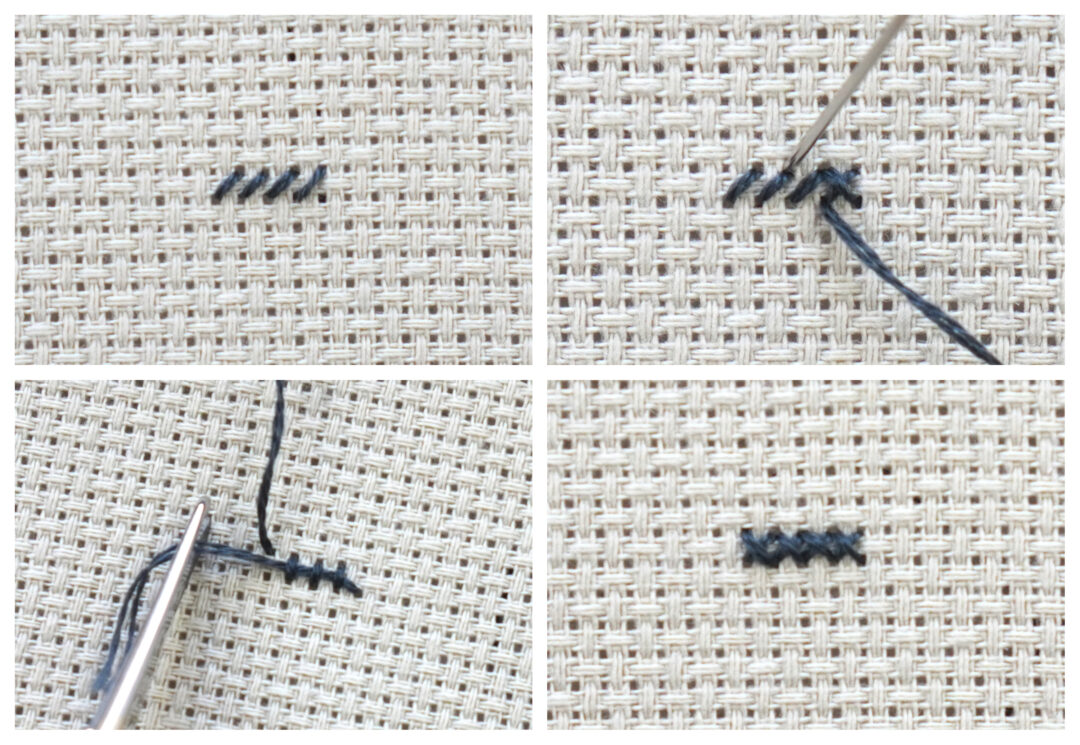
Now, insert the needle diagonally into the top right corner of the same square. Pull the thread gently but firmly, ensuring it lies flat on the fabric. The first half of your cross-stitch is now complete.
Step 4
Bring the needle up from the back of the fabric again, this time in the bottom right corner of the same square. Insert the needle diagonally into the top left corner of the square. Pull the thread gently but firmly. You have now completed one full cross-stitch.
Step 5
Follow the pattern, creating each cross-stitch in the same direction. For example, if your pattern has a row of stitches, complete the bottom left to top right diagonal for each stitch first. Then, return, completing the opposite diagonal (bottom right to top left) to finish each cross.
Step 6
When you run out of thread or need to change colors, turn the fabric over. Weave the needle under several completed stitches on the back to secure the thread end. Trim any excess floss close to the stitches. Avoid making large knots.
Step 7
If you make a mistake, gently use the tip of your needle to lift the incorrect stitches. Carefully pull the thread free and correct the stitch. A seam ripper can also be helpful, but use it cautiously to avoid damaging the fabric.
Step 8
Once your stitching is complete, remove the fabric from the hoop. Hand-wash the piece with a mild detergent if needed, and iron it face down on a soft towel to remove any creases. Your finished piece can be framed, displayed in the hoop, or used to create other decorative items.
So, you’ve journeyed through the basics of cross stitch! It might seem intricate at first, but it’s actually a wonderfully relaxing and rewarding craft. From choosing your fabric to those satisfying final stitches, it’s an opportunity to slow down, focus, and create something beautiful with your own hands.
The true beauty of this needlework lies not only in the finished product but also in the creative expression it allows. Each project tells a story, reflecting personal style, patience, and artistic vision. It’s a tradition passed down through generations, a craft that connects us to a rich history of human creativity.
Now it’s your turn! Pick up a needle, choose a pattern that inspires you, and give it a try. We’d absolutely love to see what you create! Share your photos, ask questions, or leave a comment let’s build a vibrant community of stitchers together.
Happy stitching!
Images References :
Image used for illustration purposes only. All rights belong to their respective owners.


