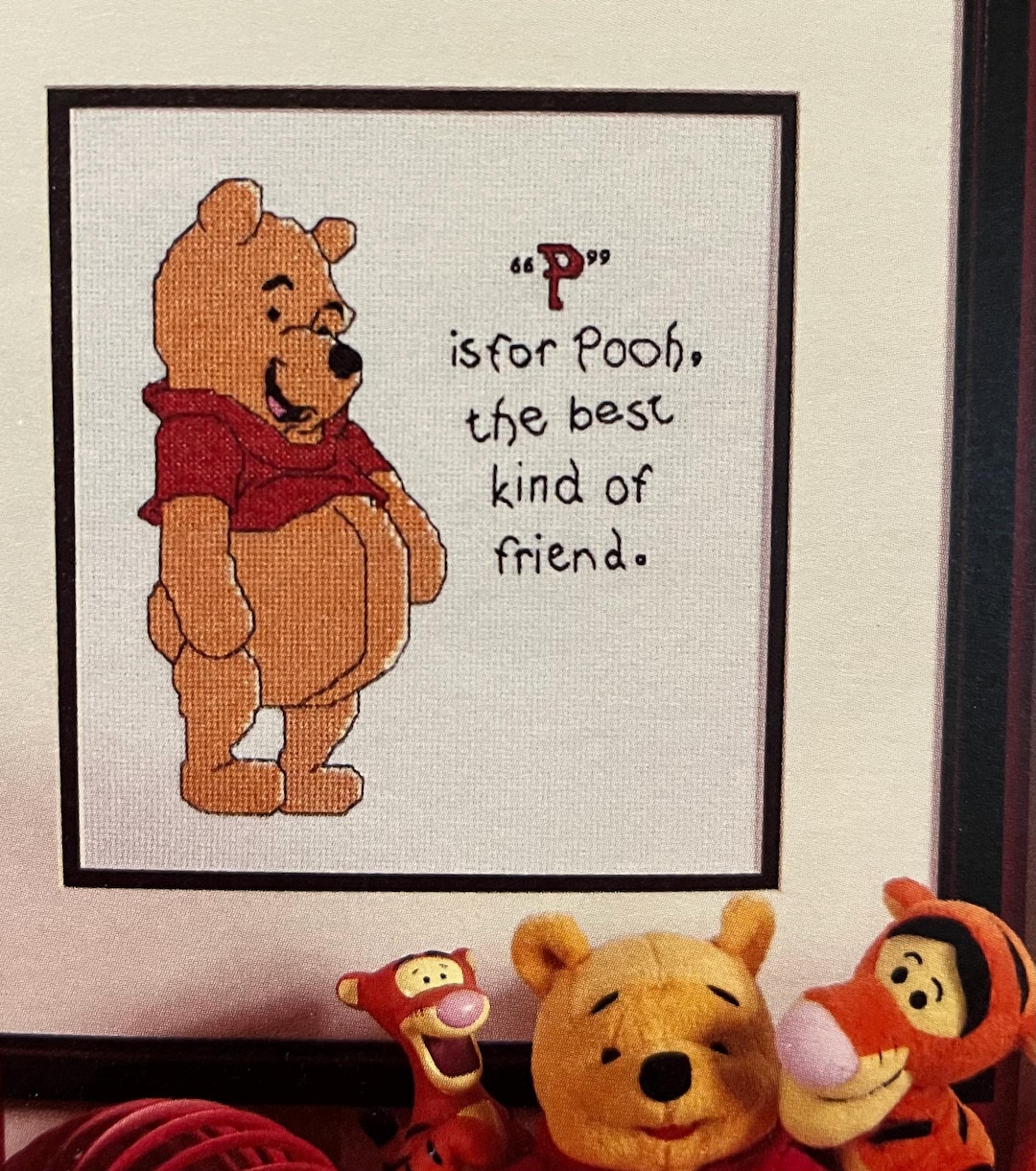
Imagine the soft glow of lamplight illuminating intricate stitches, gradually revealing the familiar face of a beloved honey-loving bear. The act of transforming a simple fabric grid into a heartwarming tableau, a piece of art that captures the innocence and charm of childhood, offers a unique form of artistic fulfillment. The process is meditative, a gentle rhythm of needle and thread that calms the mind and sparks the imagination.
Needlework traditions stretch back centuries, with cross stitch holding a special place in domestic artistry. Historically, samplers served as vital educational tools and expressions of personal skill. This craft, in its modern iteration, allows for the preservation of cherished characters and stories, embedding them within a tangible medium that can be passed down through generations as heirlooms.
The beauty of this particular form of crafting lies in its accessibility. Whether a seasoned stitcher or a complete novice, the straightforward nature of counted cross stitch makes it easy to learn and immensely rewarding to master. The necessary supplies are readily available, and the patterns themselves range from delightfully simple to impressively elaborate, catering to a spectrum of skill levels and creative ambitions.
From quaint, vintage-inspired designs to modern, stylized interpretations, countless variations capture the essence of the Hundred Acre Wood and its endearing inhabitants. Some artists embellish their work with beads, metallic threads, or other decorative elements, adding texture and depth to the finished piece. Others explore different fabric counts and thread types, experimenting with shading and detail to create truly unique works of art.
The following exploration delves into the world of bringing these delightful scenes to life, offering guidance and inspiration for creating captivating cross stitch pieces that celebrate the timeless appeal of Winnie the Pooh and his friends.
Character Selection
The choice of character is paramount when embarking on a “winnie the pooh counted cross stitch patterns” project, profoundly influencing the project’s scope, emotional resonance, and ultimate aesthetic impact. Each character from the Hundred Acre Wood carries distinct visual cues and personality traits, which, when rendered in thread, evoke specific feelings and memories. For instance, depicting Eeyore, the perpetually melancholic donkey, requires a subdued color palette and a focus on capturing his droopy posture. Conversely, a design featuring Tigger demands vibrant hues and a dynamic composition that reflects his exuberant energy. The selection, therefore, dictates not only the technical demands of the stitching process but also the overall mood and narrative conveyed by the finished piece. A series of smaller projects, each focusing on an individual character, might be a suitable starting point before tackling a more ambitious ensemble piece. This approach allows for a focused exploration of each character’s unique features and personality.
Consider the practical implications of character selection for a nursery decoration versus a more sophisticated wall hanging. A nursery piece might benefit from the inclusion of Pooh Bear and Piglet, their gentle friendship and comforting presence creating a soothing atmosphere. A piece intended for a living room or study, on the other hand, could feature Christopher Robin engaged in a thoughtful activity with Pooh, offering a more nuanced and contemplative image. Furthermore, the choice of character can be tailored to reflect the stitcher’s personal affinity. Someone with a penchant for wisdom and introspection might gravitate towards Owl, while a more playful individual might prefer the mischievous antics of Rabbit. The creative possibilities are truly endless.
In essence, character selection acts as the foundational layer of any “winnie the pooh counted cross stitch patterns” endeavor. It is a decision laden with creative potential, influencing the technical aspects of the project as much as its emotional impact. By carefully considering the unique attributes of each character and aligning them with the intended purpose and personal preferences, the stitcher can transform a simple pattern into a cherished work of art that celebrates the enduring magic of the Hundred Acre Wood.
Pattern Complexity
The level of intricacy within “winnie the pooh counted cross stitch patterns” serves as a crucial determinant of the overall crafting experience and the final visual impact. Pattern complexity acts as a bridge between initial inspiration and tangible creation, influencing both the time investment required and the technical skill needed to bring a beloved character to life in thread.
-
Stitch Count and Detail
Higher stitch counts directly correlate to increased detail, allowing for nuanced shading, intricate backgrounds, and more realistic portrayals of the characters. A simpler pattern might render Pooh with bold, easily defined outlines, while a complex one could capture the subtle variations in his fur, the gentle curves of his smile, or the folds in his well-worn shirt. This facet heavily impacts the time required to complete a project, making it a vital consideration for those with limited availability.
-
Color Palette and Blending
The number of colors involved in a pattern, and how they are blended, dramatically alters the visual richness and depth of the finished piece. Simple patterns often utilize a limited palette with minimal blending, resulting in a charmingly cartoonish aesthetic. More complex patterns, on the other hand, employ a wider spectrum of colors and sophisticated blending techniques to create realistic shading and tonal transitions, bringing the characters to life with remarkable fidelity.
-
Specialty Stitches and Techniques
Beyond the basic cross stitch, some patterns incorporate specialty stitches like fractional stitches, backstitches, or French knots to add texture, definition, and intricate detail. While these stitches can enhance the visual appeal, they also demand a greater level of skill and patience. For example, using fractional stitches to create a softly rounded edge on Pooh’s honey pot or employing backstitches to define the individual hairs on Tigger’s stripes can significantly elevate the overall quality of the piece.
-
Background and Environmental Elements
The complexity of the background elements, such as trees, flowers, or the familiar setting of the Hundred Acre Wood, plays a significant role in the overall visual impact and time investment. A minimalist pattern might feature a simple, solid-color background that allows the characters to take center stage. In contrast, a more complex pattern could incorporate intricate foliage, a detailed rendering of Pooh’s house, or a panoramic view of the surrounding landscape, adding depth and context to the scene.
Ultimately, the chosen level of pattern complexity serves as a testament to the individual stitcher’s skill, ambition, and available time. Whether opting for a simple, quick-to-complete design or a more challenging and intricate masterpiece, the joy of transforming a “winnie the pooh counted cross stitch patterns” into a tangible expression of fondness for these timeless characters remains at the heart of the crafting experience.
Thread Palette
The selection of a thread palette for “winnie the pooh counted cross stitch patterns” transcends mere color choice; it breathes life into the characters and their world. Colors act as emotional cues, shaping the viewer’s perception and connection to the scene. A carefully curated palette evokes nostalgia, warmth, and the gentle spirit of the Hundred Acre Wood. For instance, a muted honey-gold for Pooh’s fur immediately establishes his iconic status, while soft pinks and gentle greens capture Piglet’s endearing timidity and the lushness of their surroundings. Neglecting the nuances of color can result in a flat, lifeless image, failing to capture the essence of these beloved characters. Conversely, a thoughtful palette transforms a simple pattern into a vibrant tapestry of emotion, enriching the entire crafting experience. A well-chosen thread palette is the key to unlocking the pattern’s full potential.
Consider the practical applications of understanding color theory when selecting threads. For example, using complementary colors, such as a warm yellow-orange for Pooh against a cool blue-green background, creates visual contrast, making the character pop. Employing analogous colors, like various shades of green and brown for the forest setting, fosters a sense of harmony and tranquility. Recognizing the interplay between light and shadow is also crucial. Using slightly darker shades of thread to create shadows and highlights enhances the three-dimensionality of the characters, adding depth and realism to the finished piece. Imagine a cross stitch of Pooh reaching for a honey pot; a skillful blend of light and dark browns can bring the pot to life, making it almost tangible. These color techniques provide the realistic view.
In summary, the thread palette forms the soul of any “winnie the pooh counted cross stitch patterns” project. It is not merely a collection of colors but a carefully constructed symphony of hues that brings the characters, their emotions, and their world to life. While challenges may arise in matching colors precisely to the pattern’s recommendations, or in finding suitable substitutes when necessary, the rewards of a well-considered thread palette are immeasurable. It elevates the craft from a simple act of stitching to a heartfelt expression of creativity and admiration for these timeless stories. This skill provides the artistic work with perfect result.
Fabric Choice
The foundation upon which every stitch rests, the fabric choice fundamentally shapes the outcome of “winnie the pooh counted cross stitch patterns.” It influences not only the visual texture and structural integrity of the finished piece but also the overall ease and enjoyment of the stitching process. Selecting the appropriate fabric transforms a simple pattern into a treasured work of art, reflecting the stitcher’s attention to detail and commitment to quality.
-
Aida Cloth and its Versatility
Aida cloth, with its evenly spaced, easily identifiable squares, stands as a cornerstone for counted cross stitch, particularly for beginners. Its grid-like structure simplifies the process of accurately placing each stitch, making it ideal for translating “winnie the pooh counted cross stitch patterns” into tangible creations. From simple character outlines to more elaborate scenes, Aida cloth provides a reliable and forgiving surface for stitching. Its availability in various colors and counts allows stitchers to tailor their fabric choice to the specific aesthetic of the pattern and their personal preferences.
-
Linen’s Elegant Texture
Linen offers a more refined and textured alternative to Aida cloth. While requiring a bit more experience due to its less defined weave, linen imparts a unique elegance to “winnie the pooh counted cross stitch patterns.” The subtle variations in the fabric’s texture add depth and visual interest, enhancing the overall artistic impact of the piece. Linen is particularly well-suited for projects aiming to achieve a vintage or heirloom quality, lending a timeless appeal to the beloved characters of the Hundred Acre Wood.
-
Fabric Count and Detail
The fabric count, measured in stitches per inch, directly affects the size and level of detail achievable in “winnie the pooh counted cross stitch patterns.” Higher fabric counts, such as 18 or 20, allow for finer details and more intricate shading, resulting in a more realistic and sophisticated portrayal of Pooh and his friends. Lower fabric counts, such as 14 or 16, create larger, more simplified images, suitable for beginners or for projects intended for display from a distance. The choice of fabric count should align with the complexity of the pattern and the desired aesthetic outcome.
-
Color Considerations
The color of the fabric serves as a backdrop that influences the perceived vibrancy and contrast of the stitched design. Neutral tones, such as white, cream, or beige, allow the colors of the threads to shine, creating a clean and classic look for “winnie the pooh counted cross stitch patterns.” Colored fabrics, on the other hand, can add depth and personality to the piece, complementing the colors of the threads and enhancing the overall mood. A light blue fabric, for example, might evoke the clear skies of the Hundred Acre Wood, while a warm brown fabric could suggest the cozy atmosphere of Pooh’s house.
Ultimately, the selection of fabric represents a crucial step in transforming “winnie the pooh counted cross stitch patterns” into cherished works of art. Whether choosing the reliable versatility of Aida cloth or the refined elegance of linen, carefully considering the fabric count and color ensures a satisfying stitching experience and a visually stunning finished piece that captures the timeless charm of Pooh and his friends.
What Youll Need
- Embroidery Hoop or Frame: This holds your fabric taut, making it easier to stitch. Sizes vary, so choose one that comfortably accommodates the size of your pattern. A 6-inch hoop is a good starting point for smaller projects.
- Aida Cloth, Linen, or Evenweave Fabric: This is your canvas! Aida is great for beginners because it has clearly defined holes. Choose a fabric count (holes per inch) appropriate for your pattern. 14-count Aida is a common and easy-to-use option.
- Cross Stitch Needles: These have a blunt tip and a large eye for easy threading. Size 24 or 26 needles work well with 14-count Aida.
- Embroidery Floss (Thread): This comes in a rainbow of colors! The pattern will specify which colors you need, often using DMC or Anchor color codes.
- Scissors or Thread Snips: Sharp scissors are essential for cutting floss and trimming loose ends.
- Pattern: Of course! This will guide your stitching, showing you which colors go where. “winnie the pooh counted cross stitch patterns” are readily available online, in craft stores, or in pattern books.
- Needle Threader (Optional): This handy tool makes threading the needle much easier, especially with multiple strands of floss.
- Good Lighting: Proper lighting prevents eye strain and makes it easier to see the fabric and pattern.
- Magnifying Glass (Optional): If you have trouble seeing the small details, a magnifying glass can be a lifesaver.
Preparation Tips
Before you start, find the center of your fabric by folding it in half lengthwise and then widthwise. Mark the center point with a pin or a water-soluble fabric marker. This will help you center your design on the fabric.
Organize your embroidery floss by color. You can use floss bobbins (small plastic or cardboard holders) to keep your threads neat and prevent tangling. Label each bobbin with the corresponding color code from your pattern.
Ensure you have adequate lighting to prevent eye strain. Position your workspace in a well-lit area, or use a task light to focus light directly on your fabric. Take breaks regularly to rest your eyes and stretch your muscles.
Maintain a comfortable posture while stitching. Use a supportive chair and adjust your workspace to minimize strain on your back, neck, and wrists. Consider using a lap stand or floor stand to hold your embroidery hoop, freeing up your hands and improving your posture.
Step-by-Step Instructions
Step 1
Begin by finding the center of your fabric. Gently fold the Aida cloth in half lengthwise, press lightly to create a crease, then unfold. Repeat this process widthwise. The intersection of these creases marks the center point. Using a water-soluble marker or a pin, clearly identify this center point, as it will serve as your starting guide for the pattern.
Step 2
Cut a length of embroidery floss approximately 18 inches long. Separate the floss into its individual strands (typically six). For most cross stitch projects, you will use two strands of floss. Carefully thread the two strands through the eye of your cross stitch needle. A needle threader can be particularly helpful for this step.
Step 3
Refer to your pattern and locate the center stitch. Bring the needle up through the fabric at the lower left corner of the center square. Then, insert the needle back down into the upper right corner of the same square, creating a diagonal stitch ( / ). This is the first half of your cross stitch. Next, bring the needle up through the lower right corner of the square and back down through the upper left corner ( \ ), completing the “X” shape. Ensure all your top stitches lean in the same direction for a neat and uniform look. For example, if your final stitch is from bottom right to top left, always make sure this is the final stitch.
Step 4
Continue stitching, following the pattern to create the desired design. Each square on the pattern corresponds to a square on the Aida cloth. Count carefully to ensure accurate stitch placement. Pay close attention to the color key on your pattern, using the corresponding floss color for each stitch. Work section by section, completing all stitches of one color in a particular area before moving on to the next.
Step 5
To secure the end of your thread, weave the needle under several completed stitches on the back of the fabric. Trim any excess thread close to the fabric. Avoid tying knots, as they can create bulk and distort the finished piece. When starting a new thread, leave a short tail on the back of the fabric and weave it under several stitches to secure it.
Step 6
When changing colors, secure the old thread as described in Step 5. Then, thread your needle with the new color and begin stitching as outlined in Step 3. Be sure to maintain consistent tension throughout your project to prevent puckering or looseness.
Step 7
Once you have completed all the stitching, carefully remove the fabric from the embroidery hoop or frame. Gently hand wash the finished piece in cool water with a mild detergent if necessary. Lay the fabric flat on a clean towel to dry. Once dry, iron the piece on a low setting, placing it face down on a soft towel to protect the stitches. Consider framing your completed “winnie the pooh counted cross stitch patterns” project to showcase your handiwork and preserve it for years to come.
Embarking on a “winnie the pooh counted cross stitch patterns” project is more than just creating a piece of art; it’s about immersing yourself in a world of gentle charm and timeless friendship. The repetitive motion of the needle and thread becomes a soothing rhythm, a welcome escape from the hustle and bustle of daily life. And what could be more rewarding than watching your favorite characters from the Hundred Acre Wood come to life, stitch by stitch?
Beyond its therapeutic benefits, this craft allows you to create personalized gifts, unique home dcor, or even future family heirlooms, infusing each piece with your own love and dedication. Each stitch is a testament to your creativity, transforming a simple pattern into a tangible expression of joy and nostalgia.
We hope this guide has inspired you to pick up a needle and thread and embark on your own cross-stitch adventure. Don’t be afraid to experiment with colors, fabrics, and embellishments to create something truly unique! We’d love to see what you create. Please share your finished projects with us or leave a comment below. We’re eager to celebrate your creativity!
Happy stitching!
Images References :
Image used for illustration purposes only. All rights belong to their respective owners.


