Imagine transforming cherished memories, captivating landscapes, or beloved portraits into meticulously crafted works of art, stitch by stitch. The intricate dance of needle and thread upon fabric yields a unique texture and depth, breathing new life into familiar images. This art form offers a tangible connection to the past, preserving snapshots of life in a way that digital photos simply cannot replicate.
The practice of counted thread embroidery boasts a rich heritage, tracing back centuries across various cultures. From intricate samplers showcasing skill and patience to folk art designs adorning textiles, this method of embellishment has served both practical and decorative purposes. Each carefully placed stitch tells a story, reflecting the dedication and artistry of the creator.
The accessibility of this creative outlet is part of its enduring appeal. Whether a complete novice or a seasoned embroiderer, the basic techniques are readily learned. The process itself is meditative, a gentle rhythm that soothes the mind and fosters a sense of calm. Furthermore, the relatively low start-up cost and availability of materials make it an appealing craft for anyone seeking a fulfilling and rewarding pastime.
Contemporary applications of the craft have exploded in creativity, ranging from whimsical modern motifs to detailed photo-realistic renderings. Adaptations abound, utilizing different thread types, fabric textures, and color palettes to achieve unique aesthetic effects. The evolving trends continually refresh the medium, ensuring its relevance and appeal to a new generation of artists and hobbyists.
Embarking on a journey to translate visual images into needlework opens up a world of creative possibilities. The following exploration offers a pathway to understanding the processes and techniques involved in turning beloved images into personalized designs, one stitch at a time.
Image Preparation
The journey from photograph to cross stitch design begins with meticulous image preparation, a foundational step that profoundly impacts the final outcome. Just as a sculptor refines their clay or a painter primes their canvas, preparing the digital image ensures a clear and effective translation into a stitchable pattern. Poorly prepared images can lead to muddy colors, indistinct details, and a frustrating stitching experience. Conversely, a well-prepared image serves as a blueprint for success, allowing for a faithful and aesthetically pleasing recreation in thread.
The image preparation phase encompasses several critical adjustments. Cropping focuses attention on the subject, eliminating distracting elements. Resizing determines the overall dimensions of the finished piece; larger sizes allow for greater detail, while smaller sizes simplify the pattern. Adjusting brightness and contrast enhances clarity, ensuring that shadows and highlights are well-defined, a critical factor for effective color mapping. For example, a photograph with blown-out highlights might lose key details during conversion, while a dark and underexposed image could result in an overly somber and indistinct pattern. Simple adjustments with readily available photo editing tools mitigate these risks, ensuring a solid foundation for the subsequent steps.
In essence, thoughtful image preparation is more than just a preliminary step; it is an act of careful consideration, setting the stage for a rewarding crafting experience. Overlooking this stage often results in a pattern that fails to capture the essence of the original image. By investing time and effort in refining the source material, the resulting cross stitch design is more likely to be a treasured piece of art. Understanding this crucial connection transforms the entire endeavor, from a potentially frustrating task into a fulfilling and creative pursuit.
Software Selection
Choosing the right software is akin to selecting the perfect brush for an artist; it significantly impacts the fidelity and aesthetic quality of the final cross stitch design. The digital tool employed becomes the bridge between the original photograph and the charted pattern, influencing everything from color accuracy to stitch detail and overall ease of use. Just as a skilled artisan relies on their tools, a well-chosen software program empowers the user to transform images into stunning needlework.
-
Algorithm Quality
Different software programs employ varying algorithms to convert images into patterns. A sophisticated algorithm can accurately reduce the color palette while preserving essential details and minimizing unwanted noise. For example, a high-quality algorithm might intelligently group similar hues together, resulting in a more manageable thread count and a cleaner final pattern. Conversely, a poorly designed algorithm could produce a pattern with too many colors, leading to a speckled and unrealistic result.
-
Customization Options
The degree of customization offered by the software is crucial for tailoring the pattern to personal preferences. Features like adjustable grid size, stitch type selection (e.g., full stitches, half stitches, quarter stitches, backstitches), and the ability to manually edit individual stitches provide greater control over the final design. For instance, the user may wish to adjust the pattern to use only full stitches for a more traditional look, or to manually correct areas where the automated conversion has produced undesirable results.
-
Thread Palette Management
Effective software should offer robust thread palette management, allowing the user to select specific thread brands (e.g., DMC, Anchor) and view corresponding color charts. This feature is essential for ensuring accurate color matching and for preventing the frustration of working with mismatched threads. Some programs even allow users to import custom thread palettes or create their own, enabling endless creative possibilities.
-
Pattern Export and Printing
The ability to export the finished pattern in various formats (e.g., PDF, PNG) and print it in a clear and legible manner is paramount. A well-designed program will generate a pattern with easy-to-read symbols, a color key, and a detailed stitch count. Advanced features, such as the option to split the pattern into multiple pages for easier handling, can significantly enhance the stitching experience.
The multifaceted role of software selection underscores its importance in the journey of transforming a photograph into a cross stitch pattern. Each aspect, from algorithm quality to printing capabilities, contributes to the overall success and enjoyment of the crafting process. Considering these facets when selecting software enhances the chances of creating a stunning and personalized work of needle art. Choosing the right tool enables the realization of creative vision with precision and artistry.
Color Palette
The selection and management of the color palette stands as a pivotal element in translating a photograph into a cross stitch pattern. The essence of any imageits mood, its detail, its realismis intrinsically tied to the range of colors employed. When converting a photograph, a vast spectrum of hues must be distilled into a limited set of embroidery floss colors, a process that demands careful consideration and often involves compromises. A thoughtfully curated color palette ensures a result that captures the spirit of the original image, while a poorly chosen one can lead to a flat, lifeless, or inaccurate representation. The impact of color choices reverberates through every stitch, ultimately shaping the final impression of the finished piece. The connection is clear: a harmonious and accurate color palette is not just an aspect of crafting a cross stitch pattern from a photograph; it is the heart of it.
Consider, for example, a vibrant sunset photograph. The original image may contain countless subtle gradations of orange, pink, and purple. The cross stitch pattern, however, might be limited to a selection of twenty or thirty floss colors. The software, or the designer, must strategically assign those available colors to best represent the original gradients, choosing shades that mimic the light and shadow. Failing to do so effectively would flatten the depth and luminosity of the sunset, resulting in a less impactful and potentially unrecognizable rendition. Similarly, in portraits, the subtle variations in skin tone require a carefully selected range of flesh-toned flosses to avoid a cartoonish or unnatural appearance. Effective palette choices mimic natural color transitions. Understanding the relationship between color and light is essential in accurately representing the tonal value from the image.
Ultimately, the creation of a suitable color palette is both a technical and artistic endeavor. Successfully translating a photograph into a cross stitch pattern hinges on this crucial process. It demands an understanding of color theory, an appreciation for the nuances of light and shadow, and the practical ability to work within the limitations of available materials. The most effective approach often involves a combination of automated software tools and manual adjustments, allowing for a balance between efficiency and artistic control. Navigating this intricate process presents a challenge, but mastering the art of color palette creation unlocks a world of possibilities for transforming treasured memories into tangible, stitched works of art.
Pattern Refinement
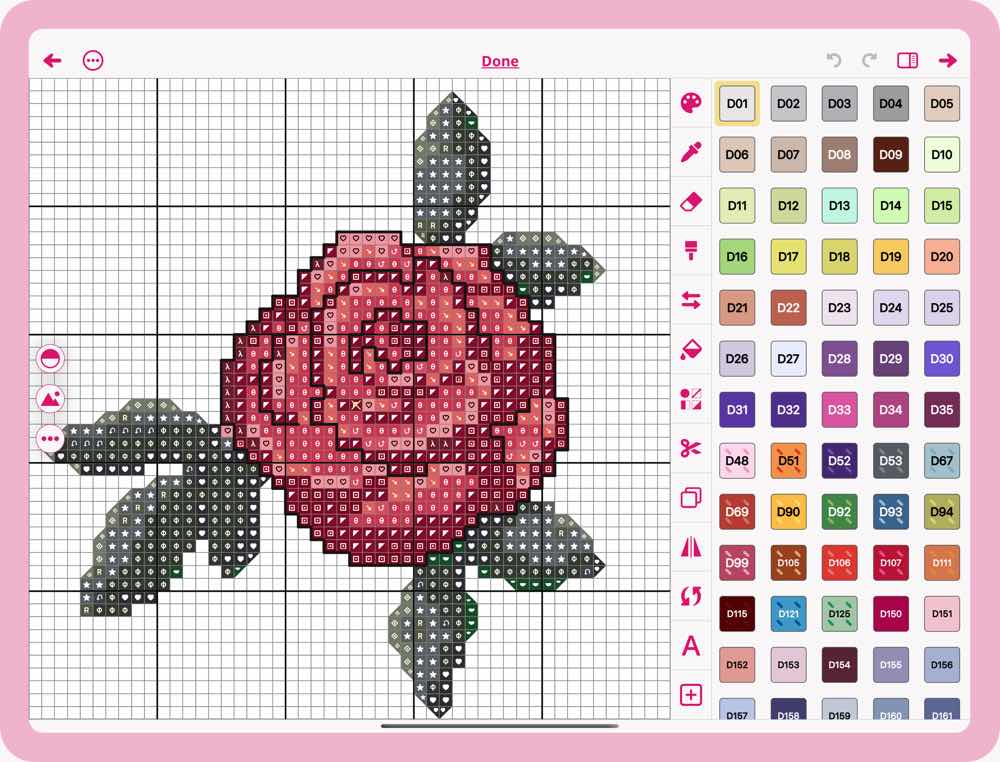
Pattern refinement acts as the final polishing stage in the journey to create cross stitch pattern from picture, transforming a raw, computer-generated chart into a user-friendly, visually appealing blueprint for a stitching project. It is the point at which digital automation yields to human artistic judgment, ensuring the finished design reflects the nuances and character of the original image while remaining practical and enjoyable to stitch. Without careful refinement, a pattern may be riddled with errors, awkward color transitions, or overly dense areas, detracting from both the aesthetic result and the stitching process itself. The effort invested in pattern refinement directly translates into a more satisfying and visually striking final piece.
Consider a portrait converted into a cross stitch pattern. The initial software-generated chart might include isolated single stitches of various colors scattered throughout the face, creating a speckled, unrealistic effect. Pattern refinement involves manually removing these rogue stitches, blending colors more smoothly, and emphasizing key features like the eyes or mouth. Similarly, in a landscape design, refining the pattern might involve simplifying areas of dense foliage, adjusting color boundaries to create a more natural sense of depth, and adding backstitches to define outlines and improve clarity. These targeted adjustments elevate the pattern from a mechanical reproduction to a work of art, imbued with the stitcher’s own creative touch. The refinement can also be crucial to correct errors caused by the software. It is necessary to check the correctness of the symbols and the threads selected for them. The symbols also need to be easily distinguishable from each other, especially if there are a lot of similar colours.
In conclusion, pattern refinement is not merely an optional step, but a critical component in realizing the full potential of a cross stitch pattern derived from a photograph. It bridges the gap between automated conversion and artistic expression, ensuring a design that is both faithful to the original image and a pleasure to bring to life with needle and thread. While the software provides the foundation, pattern refinement provides the soul, transforming raw data into a cherished heirloom. Even with the best software, manual refinement and review is required. Without this refinement process, time will be wasted on stitching and the resulting output will not be as expected, causing frustration and rework.
What Youll Need
- Embroidery Hoop or Frame: This helps keep your fabric taut and prevents it from puckering during stitching. Choose a size that comfortably fits your design. A hoop with a screw adjustment is ideal.
- Aida Cloth: This is the most common fabric for cross stitch because of its evenly spaced holes, making it easy to create neat stitches. Different “counts” (holes per inch) are available; a lower count (e.g., 14-count) means larger holes and a larger finished project.
- Embroidery Floss (Thread): DMC and Anchor are popular brands offering a wide variety of colors. Your chosen cross stitch pattern will specify which colors you need. It is important to buy the same brand as that suggested in the pattern.
- Embroidery Needles: These needles have a large eye to easily accommodate embroidery floss and a blunt tip to slide between the Aida cloth threads without splitting them.
- Scissors: Small, sharp scissors are essential for snipping threads neatly.
- Cross Stitch Pattern: This can be a printed chart or a digital file that you view on a tablet or computer. It shows you where to place each stitch and which color to use.
- Optional: Light Box: Useful to trace the pattern to the Aida cloth
- Optional: Magnifying Glass: This can be helpful if you are using a higher count Aida cloth where the holes are smaller.
Preparation Tips
Preparing Your Fabric: Before you begin, its a good idea to finish the edges of your Aida cloth to prevent fraying. You can do this with masking tape, serging or a zigzag stitch on a sewing machine. Ensure the fabric is centered and securely held by the hoop or frame. Wash the fabric, especially if it has become soiled.
Organizing Your Threads: Keeping your threads organized will save you time and frustration. You can use floss bobbins to wind your threads and store them in a box or organizer. Label each bobbin with the corresponding color number from your pattern.
Setting Up Your Workspace: Good lighting is essential to prevent eye strain. Position your lamp so that it illuminates your work area clearly. Take breaks frequently to stretch and avoid stiffness. Maintain a comfortable posture to avoid back or neck pain.
Step-by-Step Instructions
Step 1
Begin by cutting a piece of Aida cloth slightly larger than your intended design size. This allows for ample space to work and later frame the finished piece. To prevent fraying, fold masking tape along the edges. Securely center the fabric within your embroidery hoop or frame, ensuring it is taut but not overly stretched. Correctly securing your fabric is critical for a stable and even stitching surface.
Step 2
Finding the center of both your fabric and your cross stitch pattern is a fundamental initial step. Fold the Aida cloth in half vertically, then in half horizontally; lightly crease the folds to mark the center point. Similarly, identify the center of your printed or digital pattern, as this is where you will begin stitching. Starting at the center ensures symmetry and prevents running out of space towards the edges of the fabric.
Step 3
Cut a length of embroidery floss approximately 18 inches long. Separate the floss into its individual strands (usually six) and select the number of strands indicated in your pattern (often two or three). Thread the floss through the eye of your embroidery needle. A needle threader can be particularly helpful for this step. Secure one end of the floss with a knot.
Step 4
Consult your cross stitch pattern and locate the symbol nearest to the center point. Bring your needle up through the fabric at the corresponding location on your Aida cloth, leaving the knot on the back. Following the pattern, make your first stitch in the appropriate color. Remember, each cross stitch is typically formed by two diagonal stitches that cross each other in the same direction. Maintain consistent tension to create even, uniform stitches.
Step 5
Continue stitching, carefully following the symbols and color indications on your pattern. Work outwards from the center, completing one section or color at a time. Pay close attention to the grid on the pattern and the corresponding holes on the Aida cloth to ensure accurate stitch placement. Regularly check your work against the pattern to avoid errors.
Step 6
When you run out of floss, or when you have finished a section, secure the end of the thread on the back of your work by weaving it through several existing stitches. Trim off the excess floss with your scissors. When starting a new thread, avoid knots as this increases the amount of fabric on the back and can spoil the appearance. Instead, weave the end of the thread several stitches into the back.
Step 7
Once you have completed all the cross stitches, remove the fabric from the hoop or frame. Gently press the finished piece from the back with a warm iron to remove any creases. You can then frame your cross stitch or use it to embellish other items, such as pillows or bags. Consider washing and drying the piece before framing, to ensure it does not shrink later. Wash with cool water and mild soap and air dry on a flat surface. Ensure your piece is completely dry before framing.
So, there you have it! Turning a cherished photo into a unique cross stitch pattern is a wonderfully rewarding journey. From carefully prepping your image and selecting the right software, to meticulously choosing your color palette and refining the final pattern, each step brings you closer to creating a truly personalized piece of art. The process is not only creative but also incredibly relaxing, offering a welcome escape from the hustle and bustle of everyday life.
The beautiful thing about this craft is that every finished piece tells a story. Whether it’s a beloved pet, a breathtaking landscape, or a treasured family portrait, the act of stitching each X is an act of love and remembrance. It’s a way to preserve memories in a tangible form, transforming digital images into lasting heirlooms.
Now it’s your turn! We hope this guide has inspired you to embark on your own cross stitching adventure. Don’t be afraid to experiment, have fun, and most importantly, express your creativity. We’d absolutely love to see what you create, so please feel free to share your finished projects with us! Or, if you have any questions or comments, please leave them below we’re always happy to help.
Happy stitching!
Images References :
Image used for illustration purposes only. All rights belong to their respective owners.


