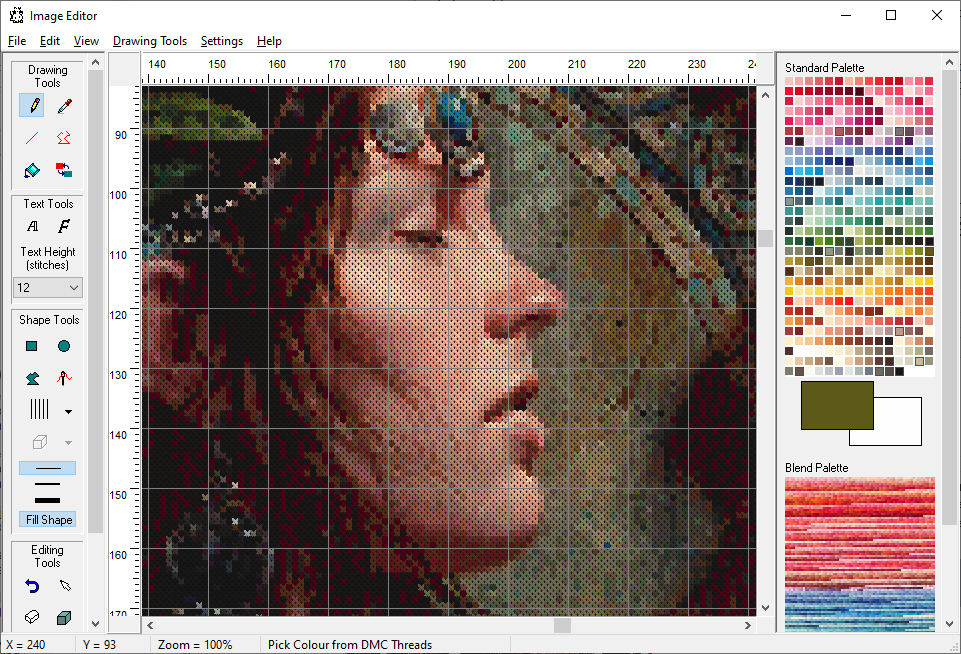
Imagine transforming cherished photographs, captivating landscapes, or beloved artwork into intricate tapestries of color and texture. The art of needlework offers a unique avenue for personal expression, allowing one to meticulously render digital or physical images into a tangible, stitched creation. The result is more than just a craft; it’s a personalized piece of art, imbued with the maker’s time, care, and creativity.
Needlework traditions have deep roots in cultures worldwide, evolving from simple methods of mending and embellishment into complex art forms. Historically, it served not only practical purposes but also as a means of storytelling, preserving cultural narratives, and creating family heirlooms passed down through generations. This rich history lends a sense of heritage and connection to each contemporary project.
This needlework method is celebrated for its accessibility and adaptability. Whether a novice eager to explore a new hobby or an experienced stitcher seeking a fresh challenge, the process allows for customized projects of any size or complexity. The readily available materials and adaptable techniques ensure that creating a personalized project is within reach for crafters of all skill levels.
From miniature designs perfect for greeting cards to large-scale projects that command attention as wall art, there are many styles to try. Explore contemporary adaptations feature bold color palettes, abstract designs, and unconventional textures, while others maintain a classic aesthetic with traditional motifs and delicate shading. This diverse range of possibilities ensures a constant stream of inspiration and creative exploration.
The possibilities are truly exciting. Let’s dive deeper into how to bring these personalized visions to life, exploring methods for transforming images into detailed guides for your next stitching adventure. The following sections will walk you through the process, offering tips, techniques, and resources to help you on your creative journey.
Image Resolution
The quality of the source photograph plays a crucial role in the ultimate success of any project. When seeking to transform a picture into a cross stitch chart, understanding image resolution is the cornerstone upon which the entire process is built. A well-chosen image with adequate resolution provides the raw data needed to create a detailed and satisfying stitched artwork.
-
Detail Preservation
Higher resolution images contain more pixels per inch, meaning they capture finer details. This is particularly important when converting intricate photographs, such as portraits or landscapes with complex textures. The more pixels available, the better the software can differentiate subtle variations in color and shading, leading to a more accurate and realistic cross stitch representation.
-
Stitch Definition
Low-resolution images can result in blurry or pixelated cross stitch patterns. The software must “guess” at the colors and details that are missing, often leading to a blocky, less defined final product. A higher resolution allows for more distinct and well-defined stitches, preserving the integrity of the original image and creating a more visually appealing finished piece.
-
Enlargement Capabilities
Often, the original photograph needs to be enlarged to create a cross stitch chart of a desired size. Higher resolution images can withstand enlargement better than lower resolution ones without significant loss of quality. This provides more flexibility in choosing the size and scale of the final stitched artwork.
-
Color Accuracy
Images with higher resolution typically contain a wider range of color information. This is crucial for accurately representing the color nuances of the original photograph in the cross stitch chart. With more color data, the software can better match the threads to the image, resulting in a more faithful and vibrant representation.
In short, the quality of the initial photograph directly impacts the quality of the resulting cross stitch chart. By prioritizing images with adequate resolution, crafters can ensure a more detailed, accurate, and ultimately satisfying stitching experience. Ignoring this crucial element can lead to frustration and a final product that fails to capture the essence of the original image. Selecting a high-resolution image, therefore, is not merely a recommendation but a necessity for achieving truly stunning results.
Color Palette
The selection of a color palette serves as a vital bridge between the original photograph and the final cross stitch creation. When an image is converted into a needlework design, the vast spectrum of color present in the photograph must be distilled into a manageable, stitchable range. This color reduction process is a critical step, directly influencing the realism and artistic appeal of the finished piece. The effectiveness of this translation relies heavily on the careful choices made within the color palette.
Consider a vibrant sunset photo with countless gradients of orange, pink, and purple. A successful chart conversion captures the essence of this scene by selecting thread colors that mimic these subtle shifts. Limiting the palette to only a few shades, however, might result in a flat, less nuanced representation. Similarly, using thread colors that clash or don’t accurately reflect the original image can detract from the overall aesthetic. Software solutions, such as DMC’s Color Variations, provide alternatives that combine multiple tones in a single thread, allowing stitchers to achieve a blend with fewer color changes. Another example is using variegated thread. These kinds of software and alternative threads are used in making chart more realistic.
Mastering color palette selection is essential for anyone seeking to transform images into stunning cross stitch patterns. It requires a careful balance between practicality and artistic vision. The goal is to honor the original image’s colors while acknowledging the limitations and possibilities of the medium. Thoughtful color choices will create a needlework piece that genuinely captures the spirit and beauty of the photograph, while poorly considered selections can lead to a disappointing result. A well-curated color palette transforms a simple chart into a vivid, expressive work of art.
Stitch Density
When embarking on the creative journey to transform photographs into cross stitch charts, stitch density emerges as a crucial consideration. It dictates the level of detail, texture, and overall aesthetic of the finished needlework piece. Understanding the nuances of stitch density empowers the crafter to achieve a desired look and accurately represent the original image.
-
Detail Resolution
Stitch density directly influences the level of detail achievable in the cross stitch pattern. A higher stitch density, achieved through smaller stitches, allows for finer details and smoother transitions between colors. This is particularly important when converting intricate images like portraits or landscapes with subtle gradations. Conversely, a lower stitch density, using larger stitches, results in a more pixelated appearance, which might be suitable for simpler designs or abstract interpretations. The choice depends on the desired level of realism and the complexity of the source image.
-
Fabric Choice
The fabric on which the needlework is executed plays a significant role in determining stitch density. A finer fabric, like linen or even-weave, can accommodate higher stitch densities, allowing for greater detail and a more refined appearance. Conversely, a coarser fabric like Aida cloth might be more suited for lower stitch densities, as it provides larger, more defined squares for stitching. Selecting the appropriate fabric in conjunction with the chosen stitch density ensures a balanced and visually appealing final product.
-
Time Investment
Stitch density directly correlates with the time and effort required to complete a cross stitch project. Higher stitch densities naturally demand more stitches per unit area, resulting in a longer and more labor-intensive stitching process. Lower stitch densities, on the other hand, allow for quicker completion, making them ideal for smaller projects or crafters with limited time. Balancing the desired level of detail with the available time and patience is crucial for a satisfying needlework experience.
-
Yarn Consumption
The amount of floss or yarn required for a project is also closely tied to stitch density. Higher stitch densities necessitate more thread to cover the same area, leading to increased yarn consumption. Lower stitch densities, using fewer stitches, require less yarn overall. Factoring in yarn consumption when planning a cross stitch project helps to ensure that sufficient materials are available and avoid unexpected shortages during the stitching process.
Ultimately, the selection of stitch density is a pivotal decision when converting a photograph into a cross stitch chart. It intricately weaves together the elements of detail resolution, fabric choice, time investment, and yarn consumption. Understanding these interdependencies empowers crafters to make informed choices, resulting in a needlework piece that accurately reflects the original image and provides a rewarding stitching experience. The careful consideration of stitch density, therefore, transforms a simple pattern into a truly personalized and visually captivating work of art.
Software Selection
The digital realm offers a plethora of tools designed to transform photographic memories into intricate cross-stitch charts. Selecting the right software is akin to choosing the perfect set of brushes for a painter; it directly impacts the precision, efficiency, and creative possibilities of the project.
-
Algorithm Efficiency and Quality
The conversion algorithms used by various software packages can significantly differ in quality. Some prioritize speed, resulting in a simplified chart that may lack detail and color accuracy. Others employ more sophisticated algorithms that meticulously analyze the image, preserving subtle gradations and intricate patterns in the resulting cross-stitch design. The best software strikes a balance, offering options for both quick conversions and in-depth analysis, catering to different project needs and skill levels. For example, a complex landscape photo would benefit from an algorithm that handles color blending smoothly to avoid harsh transitions.
-
Customization Options and User Interface
A user-friendly interface and robust customization options are essential for a satisfying experience. The ability to adjust parameters like stitch density, color palette, and chart size allows for fine-tuning the design to match the desired aesthetic and skill level. Software that offers previews of the converted chart and allows for manual editing provides greater control over the final outcome. A simple project may only require basic settings, but a portrait often needs significant user adjustment to properly define facial features.
-
File Format Compatibility and Export Options
The selected software should seamlessly integrate with existing workflows. Compatibility with common image formats (JPEG, PNG, TIFF) and the ability to export the chart in a usable format (PDF, PNG) are crucial for sharing the design or printing it for use. Some software even offers options for exporting the chart in formats compatible with electronic cutting machines, allowing for precise fabric preparation. These formats also allow easier incorporation into blogs, websites, and online pattern marketplaces.
-
Thread Palette Management and Color Matching
Accurate color matching is paramount for achieving a realistic and visually appealing cross-stitch design. The software should offer comprehensive thread library, typically including DMC, Anchor, and other popular brands. Tools for reducing the number of colors, remapping colors to available threads, and displaying the estimated thread usage per color streamline the stitching process. A good application will show exactly how many skeins of each color will be needed based on the size and density of the project.
In essence, the software selection process is an investment in the overall quality and enjoyability of crafting a photograph into a cross stitch chart. Choosing the right tool not only simplifies the technical aspects but also opens up new avenues for creative expression, transforming cherished memories into unique and lasting works of art. This decision can mean the difference between a frustrating attempt and a pleasurable stitching experience.
What Youll Need
- Cross Stitch Chart (Printed or Digital): This is the blueprint derived from converting your photo. Whether it’s a physical paper chart or a digital file on a tablet, it will guide your stitching.
- Aida Cloth: This specialized fabric with evenly spaced holes is the foundation. Common sizes are 11, 14, 16, or 18 count (stitches per inch). Beginner’s often find 14-count Aida easiest to work with.
- Embroidery Floss: Stranded cotton floss is the most common choice. The cross stitch chart will indicate the specific colors and amounts needed. Brands like DMC and Anchor are widely available.
- Embroidery Needle: Choose a needle with a blunt tip and a large eye to easily accommodate the floss. Size 24 or 26 is usually a good fit for Aida cloth.
- Embroidery Hoop or Frame: This keeps the fabric taut while you stitch, preventing puckering and distortion. Hoops come in various sizes and materials (wood, plastic). A frame might be preferred for larger projects.
- Scissors or Thread Snips: Small, sharp scissors are essential for trimming floss ends neatly.
- Optional: Needle Minder: A magnetic accessory to keep your needle safely attached to your fabric when you are not actively stitching.
- Good Lighting: Essential for seeing the Aida cloth holes and floss colors clearly. Natural daylight is ideal, but a bright lamp with adjustable settings works well too.
Preparation Tips
Before you start, wash and iron your Aida cloth to prevent shrinkage or wrinkles later. You might want to serge or tape the edges of the fabric to prevent fraying. Center the design on your fabric, leaving enough extra around the edges for framing or finishing.
Organize your floss colors according to the chart’s symbol or number. Use a floss organizer (cardboard bobbins or plastic containers) to keep everything neat and tangle-free. Work in a well-lit and comfortable space. Take breaks to avoid eye strain and maintain good posture. Proper preparation can greatly enhance your stitching experience and the final result!
Step-by-Step Instructions
Step 1
Begin by securing your Aida cloth within the embroidery hoop or frame, ensuring it is taut and wrinkle-free. This provides a stable and even surface for stitching. Trim any excess fabric around the hoop, leaving a few inches for comfortable handling and future finishing. The tautness is key to achieving uniform stitches.
Step 2
Fold the cross stitch chart in half vertically and then horizontally to find the center point. Do the same with the Aida cloth. This intersection will be your starting point for stitching, ensuring that the design is properly centered on the fabric. Mark the center points on both the chart and fabric lightly with a water-soluble marker or a pin.
Step 3
Cut a length of embroidery floss, about 18 inches (45 cm) long, to prevent excessive tangling. Separate two or three strands from the six-strand floss most cross stitch patterns call for using two or three strands, depending on the desired stitch density. Thread the needle with the appropriate number of strands, and secure the end with a knot. A needle threader can be helpful.
Step 4
Starting at the marked center point on the fabric, use your chart to guide you in placing each stitch. Bring the needle up through the lower-left corner of the square, and then down through the upper-right corner to form the first half of the “X.” Complete the stitch by bringing the needle up through the lower-right corner and down through the upper-left corner, completing the “X.” Maintain consistent stitch direction throughout the project for a professional finish. Avoid pulling the floss too tightly, as this can distort the fabric.
Step 5
Carefully follow the chart, paying attention to the color symbols and stitch placement. Work in rows or sections, completing all stitches of one color in a given area before moving on to the next. Use a highlighter to mark off completed sections of the chart, helping you keep track of your progress. For isolated stitches, consider using the “waste knot” method to start and end without visible knots on the back.
Step 6
To end a thread, run the needle under several completed stitches on the back of the fabric, and then trim the excess floss close to the fabric. Avoid creating large knots, as these can create bumps and affect the finished appearance. Always weave in the ends neatly to ensure the stitches remain secure.
Step 7
Once all the stitches are complete, carefully remove the fabric from the hoop or frame. Gently hand-wash the finished piece with mild soap and lukewarm water if necessary. Iron the piece face down on a soft towel to remove any wrinkles, being careful not to flatten the stitches. Finally, prepare the cross stitch to fit a frame or any chosen finishing technique. Enjoy your beautiful creation!
Transforming a treasured photograph into a cross stitch chart is more than just a craft projectit’s a chance to preserve memories in a truly unique and personal way. It allows you to step away from the digital world and create something tangible, beautiful, and filled with meaning. The rhythmic act of stitching can be incredibly relaxing, and the satisfaction of seeing your image come to life, stitch by stitch, is deeply rewarding.
The finished piece is a testament to your patience and creativitya handcrafted heirloom that can be cherished for years to come. Whether you’re creating a heartfelt gift for a loved one or adding a personal touch to your own home decor, cross stitching brings artistry and warmth to any space.
We encourage you to give this project a try! Don’t be afraid to experiment with different image resolutions, color palettes, and stitch densities to achieve your desired effect. Once you’ve completed your project, we’d love to see your creations. Share your photos in the comments below, or tag us on social mediawe can’t wait to celebrate your stitching success!
Happy stitching!
Images References :
Image used for illustration purposes only. All rights belong to their respective owners.



