Imagine the quiet contentment of transforming simple threads into intricate designs. Each careful stitch builds upon the last, blossoming into a tapestry of color and texture. This rewarding pastime offers a welcome escape, a chance to slow down and immerse oneself in the rhythmic flow of needle and thread. The finished artwork, often a testament to patience and skill, brings lasting joy and a tangible sense of accomplishment.
The art of counted thread embroidery boasts a rich heritage, woven through centuries and across diverse cultures. From ancient samplers meticulously documenting patterns and techniques to folk art traditions passed down through generations, its enduring appeal lies in the ability to create personalized heirlooms that capture stories and preserve memories. These handcrafted pieces often become cherished symbols of family history and artistic expression.
Whether seeking a mindful meditation or a challenging artistic endeavor, this craft caters to a wide spectrum of skill levels. Simple projects offer an accessible entry point for beginners, while more complex designs provide seasoned stitchers with opportunities to hone their expertise and explore intricate techniques. The relative affordability of materials and the portability of projects further enhance its accessibility and widespread popularity.
The world of counted thread embroidery is ever-evolving, with contemporary designs pushing the boundaries of traditional techniques. From bold geometric patterns to whimsical landscapes, the possibilities are virtually limitless. Digital patterns and online communities foster collaboration and inspiration, allowing stitchers to share their creations and learn from one another, ensuring the continued vitality of this timeless art form.
Once the final stitch is complete, preserving the beauty and longevity of the finished piece becomes paramount. The question then arises: what are the best practices for ensuring a clean and well-maintained artwork? The following guidelines provide detailed instructions on the gentle art of laundering embroidered treasures, allowing artisans to confidently care for their meticulously crafted works.
Gentle Detergent Selection
The choice of detergent is paramount when preparing to launder carefully crafted needlework. It’s a decision that directly impacts the lifespan and vibrancy of the threads and fabric, demanding a mindful approach to prevent unintended damage. The selection process should prioritize the delicate nature of the materials involved.
-
pH-Neutral Formulas
Detergents with a neutral pH are essential for preserving the integrity of both the embroidery floss and the base fabric. Highly alkaline or acidic detergents can cause colors to fade, bleed, or even damage the fibers, leading to a dull or distorted appearance. Selecting a detergent specifically labeled as pH-neutral minimizes this risk and ensures gentle cleaning action.
-
Enzyme-Free Options
Enzymes, commonly found in laundry detergents, are designed to break down stains. However, they can also inadvertently degrade certain types of natural fibers used in cross stitch, such as silk or wool. Choosing an enzyme-free detergent ensures that the threads are gently cleansed without the risk of enzymatic damage, safeguarding the longevity of delicate stitch work.
-
Fragrance-Free Considerations
While a pleasant scent might seem desirable, added fragrances in detergents can sometimes contain chemicals that irritate sensitive skin or even react negatively with certain dyes. Opting for a fragrance-free detergent reduces the potential for allergic reactions and prevents unwanted chemical interactions that could compromise the color or texture of the finished piece. Its a proactive step in preserving the original artistry.
-
Liquid Detergent Preference
Liquid detergents generally dissolve more readily in water than powdered detergents, reducing the risk of residue clinging to the fabric fibers. Undissolved powder can leave unsightly marks or create a gritty texture on the finished piece. A liquid formula ensures a more even distribution of the cleaning agent and a thorough rinse, leaving the cross stitch artwork clean and residue-free.
The mindful selection of a gentle, pH-neutral, enzyme-free, and fragrance-free liquid detergent is an integral component of “how to wash cross stitch.” This careful consideration directly impacts the preservation of color, texture, and overall integrity, enabling the artistry to be cherished for generations. The right detergent, therefore, becomes an essential tool in safeguarding handcrafted artistry.
Lukewarm Water Temperature
Maintaining the integrity of delicate needlework hinges on mindful temperature control during laundering. The use of lukewarm water, neither scaldingly hot nor chillingly cold, is a cornerstone of preservation, safeguarding against potential damage and ensuring the artwork’s enduring beauty. Understanding the science behind this seemingly simple step unlocks the secrets to gentle and effective cleaning.
-
Minimizing Fiber Stress
Extreme temperatures exert stress on fabric fibers, potentially causing them to shrink, stretch, or distort. Hot water, in particular, can weaken natural fibers like cotton and linen, leading to irreversible damage and a loss of structural integrity. Lukewarm water provides a gentle middle ground, loosening dirt and grime without compromising the strength or shape of the embroidered piece. It respects the inherent delicacy of the materials.
-
Preventing Color Bleeding
Dyes used in embroidery floss are often susceptible to bleeding, especially during the initial wash. Hot water accelerates this process, causing colors to run and stain adjacent areas of the fabric, resulting in a marred and unsightly appearance. Lukewarm water significantly reduces the risk of color bleeding, allowing the dyes to remain stable and preserving the vibrancy of the original design. This gentle approach safeguards the artist’s carefully chosen palette.
-
Protecting Delicate Embellishments
Cross stitch projects often incorporate embellishments such as beads, sequins, or metallic threads. Hot water can damage these delicate additions, causing them to melt, warp, or detach from the fabric. Lukewarm water provides a safer cleaning environment, minimizing the risk of damage to these intricate details and preserving the overall aesthetic appeal of the finished piece. This preservation ensures that special touches remain intact.
-
Ensuring Effective Detergent Action
While hot water is often touted for its cleaning power, it can actually hinder the effectiveness of certain detergents. Excessive heat can denature enzymes or alter the chemical properties of cleaning agents, reducing their ability to lift dirt and grime. Lukewarm water provides an optimal temperature for detergents to dissolve and work effectively, ensuring a thorough and gentle cleaning process that removes impurities without damaging the artwork. This balance is crucial for achieving a pristine result.
The adoption of lukewarm water is not merely a suggestion but a crucial element in the process of “how to wash cross stitch.” It represents a commitment to preserving the delicate balance of fiber integrity, color stability, and embellishment protection. This simple temperature adjustment serves as a powerful safeguard, ensuring that these treasured artworks remain vibrant and beautiful for years to come. Proper heat management, therefore, becomes an act of artistic stewardship.
Air Drying Priority
The culmination of careful washing finds its safeguard in the practice of air drying. After the gentle cleansing, the method of drying becomes pivotal in preserving the form and color of the stitched piece. Heat, the antagonist of delicate fibers and vibrant dyes, must be consciously avoided. Air drying, therefore, represents a commitment to the long-term integrity of the artwork, a final act of care in the cleaning process. Imagine a tapestry left in the sun; its colors dull, its threads brittle. Air drying prevents this fate, offering a gentle path to dryness.
To prioritize air drying is to understand its multifaceted benefits. Laying the freshly washed cross stitch flat on a clean, absorbent towel allows air to circulate freely, gradually drawing moisture away without placing stress on the fabric. Alternatively, hanging the piece, carefully supported, in a shaded area ensures even drying, preventing wrinkles and distortions. Consider the implications of machine drying: the high heat can shrink the fabric, fade the colors, and damage delicate stitches, effectively undoing the careful work put into the washing process. The choice is clear: air drying preserves, machine drying risks destruction.
The importance of air drying extends beyond mere aesthetics; it also contributes to the longevity of the materials. By avoiding the harsh conditions of a machine dryer, the fibers retain their strength and flexibility, preventing premature wear and tear. This gentle approach ensures that the cross stitch piece remains a cherished heirloom for generations to come. Air drying, therefore, is not merely a step in the washing process; it is an investment in the enduring beauty and structural integrity of the handcrafted artwork. It stands as the concluding verse in the ballad of careful cleansing.
What Youll Need
- Gentle Liquid Detergent: Look for pH-neutral, enzyme-free, and fragrance-free options. Baby laundry detergent often works well.
- Clean Basin or Sink: Ensure it’s free from any soap residue or other contaminants.
- Lukewarm Water: Test the temperature to ensure it’s comfortable for your hand.
- Clean White Towels: Soft, absorbent towels are crucial for drying. White is best to avoid any color transfer.
- Flat Drying Surface: A clean table or surface where you can lay the piece flat to dry.
- Optional: Blocking Board & Pins: If you plan to block your piece after washing to ensure it’s square.
Preparation Tips
Inspect Your Work: Before washing, carefully examine your cross stitch piece for any loose threads or beads that might detach during washing. Secure them if possible.
Colorfast Test (Optional): If you’re concerned about color bleeding, test a small, inconspicuous area by gently dabbing it with a damp, white cloth. If color transfers, consider dry cleaning instead.
Clean Your Workspace: Ensure your sink or basin is thoroughly cleaned to avoid any unwanted residue transferring to your project.
Prepare Your Drying Area: Lay out a clean, dry towel on your flat drying surface before you begin washing. This ensures a ready and clean space for your artwork after it’s washed.
Step-by-Step Instructions
Step 1
Begin by filling a clean basin or sink with lukewarm water. The temperature should be comfortable to the touch, ensuring it’s neither too hot nor too cold. This gentle temperature is crucial for protecting the delicate fibers and preventing color bleeding.
Step 2
Add a small amount of your chosen gentle liquid detergent to the lukewarm water. A teaspoon or less is generally sufficient. Gently agitate the water with your hand to ensure the detergent is fully dissolved and evenly distributed. Avoid creating excessive suds, as these can be difficult to rinse out.
Step 3
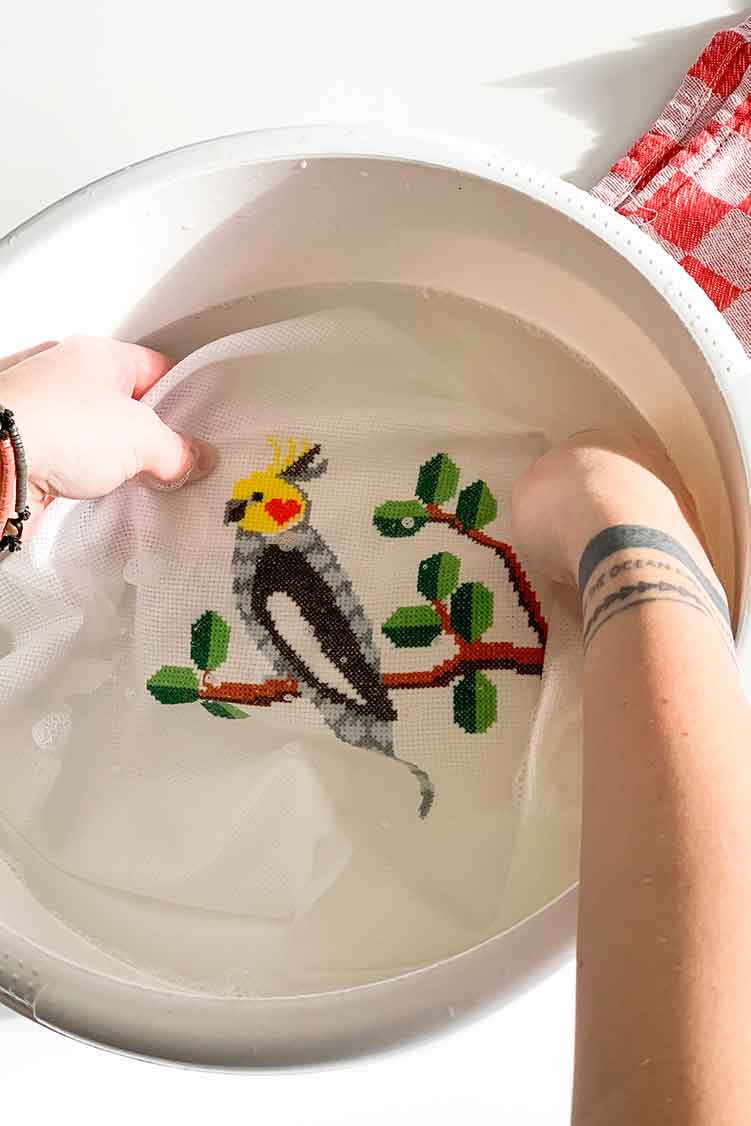
Carefully submerge your cross stitch piece into the soapy water, ensuring it’s fully immersed. Gently swirl the piece around in the water to allow the detergent to penetrate the fibers and loosen any dirt or grime. Avoid scrubbing or wringing the fabric, as this can damage the stitches and distort the shape.
Step 4
Allow the cross stitch piece to soak in the soapy water for approximately 15-20 minutes. This soaking period allows the detergent to effectively lift away any impurities without requiring harsh agitation. Monitor the water for any discoloration, which indicates dirt and residue being released.
Step 5
Remove the cross stitch piece from the soapy water and discard the dirty water. Rinse the basin thoroughly and refill it with clean, lukewarm water. Gently rinse the piece under the clean water, repeating the process until all traces of detergent are removed. The water should run clear, indicating that no soap residue remains.
Step 6
Gently remove excess water from the cross stitch piece by pressing it between two clean, white towels. Avoid wringing or twisting the fabric, as this can distort the shape and damage the stitches. Simply press firmly to absorb as much water as possible.
Step 7
Lay the cross stitch piece flat on a clean, dry towel on a flat surface. Gently reshape the piece to ensure it’s square and even. Allow it to air dry completely, away from direct sunlight or heat. Turn the piece occasionally to ensure even drying.
Step 8
Once the piece is nearly dry, you may choose to block it to ensure it’s perfectly square. Pin the edges of the piece to a blocking board, gently stretching it into the desired shape. Allow it to dry completely before removing the pins. This step is particularly helpful for projects that will be framed.
Taking care of your cross stitch doesn’t have to be daunting! Its a simple process that protects the hours of love and dedication you poured into your project. With a few gentle steps, you can easily refresh your finished piece, ensuring its colors stay vibrant and its stitches remain pristine.
Whether you’re preserving a family heirloom or maintaining a contemporary design, knowing how to wash your cross stitch allows you to fully enjoy the artistic creation. Its lasting beauty becomes a testament to the simple yet meaningful act of care. You have the knowledge to make it shine!
Now it’s your turn! We encourage you to give these washing techniques a try. Share your results, ask questions, or leave a comment about your experience. We’d love to see what you create, from sparkling clean pieces to the joy of caring for hand-made art.
Happy stitching!
Images References :
Image used for illustration purposes only. All rights belong to their respective owners.


