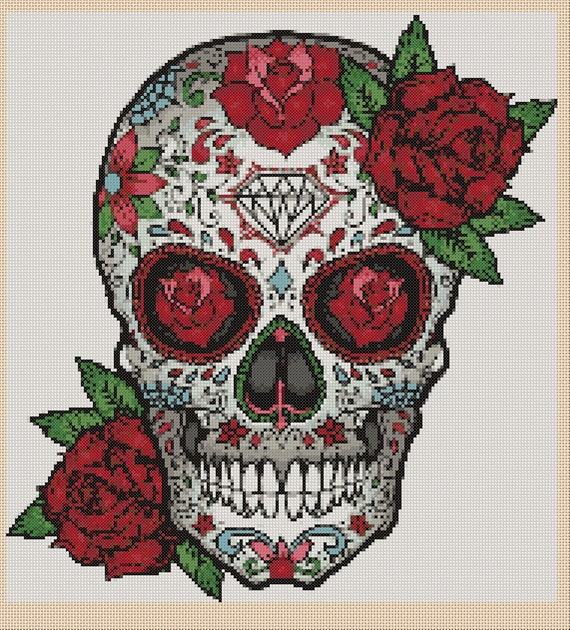
Embroidery, with its intricate stitches and vibrant threads, offers a unique avenue for creative expression and mindful relaxation. Imagine transforming simple fabric into a captivating piece of art, where each carefully placed ‘x’ contributes to a bold and evocative design. The satisfaction of completing such a project, knowing it was crafted entirely by hand, is a reward in itself. The result is a tangible creation and a testament to patience and artistic vision.
The art of needlework boasts a rich tapestry of history, woven through cultures and generations. From ancient tapestries depicting historical events to delicate samplers showcasing a young woman’s skill, embroidery has always been a form of storytelling and self-expression. Certain motifs, like the iconic skull, have transcended time, appearing in various forms of art and design. The skull symbolizes mortality, rebellion, or even a celebration of life, depending on the cultural context and artistic interpretation.
Needlework is a craft that welcomes enthusiasts of all skill levels. The fundamental techniques are readily accessible, making it an ideal starting point for beginners. More experienced crafters can explore advanced stitching methods and complex color palettes, pushing the boundaries of their artistic abilities. The required materials are generally affordable and easily sourced, removing common barriers to entry and fostering a community of enthusiastic makers.
Within the realm of embroidered creations, the options are endless. One might prefer a realistic portrait rendered in subtle shades or a stylized rendition with bold, contrasting colors. Popular variations include incorporating beads, sequins, or other embellishments for added texture and dimension. Contemporary trends often blend traditional techniques with modern aesthetics, resulting in pieces that are both timeless and on-trend. The creation of decorative pillows, suitable to accent any space, is also a trending option for needlework enthusiasts.
The following resource explores one specific avenue within this rich craft: using needlework to create distinctive home dcor. It will explore a design that blends tradition and contemporary style, transforming a basic pillow into a visually arresting statement piece for the home. The process, step-by-step instructions, and material recommendations make this an accessible project for crafters of all levels.
Design Clarity
For a visually striking creation like a needlework pillow adorned with a skull, design clarity is paramount. It serves as the foundation upon which the entire project rests. Without a clear and well-defined plan, the final product risks becoming a muddled and frustrating endeavor. A design of this nature, due to the nature of a skull requires both the main contours and intricate details within to be readily apparent to the stitcher. A pattern lacking in clarity is likely to lead to inconsistencies in stitch placement, causing the skull to appear distorted or lacking in definition. This critical aspect directly impacts the overall aesthetic, potentially transforming a striking symbol into an unrecognizable shape.
Consider, for example, a complex skull pattern with shading to create a three-dimensional effect. The pattern must indicate precisely where darker shades should be stitched to form shadows and where lighter shades should be used to highlight bone structure. A poorly designed chart may not clearly differentiate between similar colors, leading to unintended blending and a loss of depth. Similarly, the pattern must accurately depict the curves of the skull, particularly around the eye sockets and nasal cavity, to convey realism. Ambiguous lines or inaccurate proportions can result in a skull that appears flat or cartoonish. The design itself can be made using computer programs, where each colored X is placed in such a manner to give the project definition. The other option is to create one using traditional methods.
In summary, the success of a skull pillow design hinges on the legibility and precision of the pattern. Clear instructions, well-defined symbols, and accurate color representation are essential components. These characteristics minimize errors, ensuring the stitcher can confidently execute the design and create a visually compelling piece. When selecting a pattern, scrutinizing its level of detail and clarity before embarking on the project is key. Clarity is not just an aesthetic consideration, it is a crucial element that transforms a complex design into an accessible and rewarding experience.
Color Palette
The careful selection of a color palette is fundamental when embarking on a needlework journey, especially when the subject is as evocative as a skull. The chosen hues breathe life into the design, conveying mood, symbolism, and overall aesthetic impact. The skull, as a motif, offers both freedom and constraint; color choices can be bold and rebellious or subdued and somber. The perfect palette transforms a simple design into a striking work of art, imbuing it with personality and depth.
-
Symbolism of Hues
Colors carry inherent symbolic weight, and understanding these associations is crucial. Black often represents mourning, mystery, or power, while white signifies purity or death. Red can denote passion, anger, or even lifeblood. When stitching a skull, these color choices significantly alter its meaning. A skull stitched in vibrant reds and oranges might celebrate the Day of the Dead, while one in muted grays and blacks evokes a sense of somber reflection. The skillful application of symbolic hues layers meaning into the piece, enriching its narrative.
-
Contrast and Depth
The interplay between light and dark shades creates depth and dimension. High contrast palettes, such as black and white or deep blues and bright yellows, make the skull appear more three-dimensional, emphasizing its contours and bone structure. Gradual shading, achieved through a spectrum of similar tones, produces a more subtle and realistic effect. Strategic use of shadows and highlights elevates the design from a flat representation to a visually engaging focal point. Without careful consideration to contrast and depth, the skull can look flat or lacking definition.
-
Thread Texture and Sheen
The texture and sheen of the thread can contribute significantly to the overall color perception. Matte threads absorb light, creating a softer, more subdued look, while threads with a sheen reflect light, adding vibrancy and dimension. Blending threads of different textures and sheens can create subtle variations in color, adding nuance and complexity to the design. For instance, using metallic threads for the teeth can add a touch of edginess and visual interest.
-
Background and Context
The colors chosen for the background or surrounding elements play a crucial role in complementing the skull’s palette. A dark background allows lighter colors to stand out, while a brightly colored background can create a sense of energy and excitement. Considering the overall aesthetic of the pillow and its intended placement within the home ensures that the color palette harmonizes with its surroundings. A skull pillow with a neutral background works well with many design aesthetics while a colorfully stitched skull with a patterned background makes more of a bold statement.
Ultimately, the color palette chosen for a cross stitch skull pillow pattern is a reflection of individual style and artistic vision. By carefully considering the symbolism of colors, the interplay of contrast and depth, the texture of the threads, and the surrounding context, crafters can create a pillow that is both visually striking and deeply meaningful. From goth inspired aesthetics to the colorful and unique style of folk art, the color palette offers countless opportunities to create a unique and personalized accent piece.
Stitch Precision
The creation of a compelling cross stitch skull head pillow hinges significantly on the degree of stitch precision achieved. Each individual ‘x’ contributes to the overall definition and clarity of the skull’s form, making stitch accuracy not merely an aesthetic preference, but a structural necessity. A deviation from precise stitch placement can distort the skull’s features, blurring the lines and undermining the intended design. Uneven tension, inconsistent stitch direction, or inaccurate counting all contribute to a less than satisfactory final outcome. This delicate balance between craftsmanship and design dictates the perceived quality and artistic value of the finished pillow.
Consider, for instance, the eye sockets of a skull. Their dark, hollow appearance relies on closely packed, uniform stitches to convey depth and shadow. If stitches are loosely placed or unevenly distributed, the eye sockets may appear ill-defined and lacking in impact. Similarly, the delicate curves of the skull’s cheekbones depend on precise stitch alignment to capture their subtle contours. Inconsistent stitches in this area may flatten the appearance, robbing the skull of its three-dimensional quality. A crafter may choose to use tools, such as magnifying glasses, to ensure precision during the project.
The practical significance of understanding stitch precision lies in empowering the needleworker to produce exceptional results. By mastering the fundamentals of even tension, accurate counting, and consistent stitch direction, any creator can transform a simple pattern into a stunning piece of art. While minor imperfections are inevitable in handmade crafts, striving for stitch precision elevates the project from a mere hobby to a refined skill. Ultimately, the dedication to precision contributes to the enduring beauty and lasting appeal of a cross stitch skull head pillow, ensuring it serves as a testament to the maker’s craftsmanship and artistic vision.
What Youll Need
- Cross Stitch Pattern: The heart of the project! Choose a skull pattern that suits your skill level. These are available online, in craft stores, or as printable PDFs. Make sure it includes a color key and clear symbols.
- Aida Cloth: This is the fabric specifically designed for cross stitch, with evenly spaced holes that make creating neat ‘x’ stitches easy. The “count” refers to the number of stitches per inch (e.g., 14-count is common). A smaller count means larger stitches, and a larger count means smaller, more detailed stitches.
- Embroidery Floss: Also called stranded cotton. This comes in a wide range of colors. The pattern will specify which colors you need, often with DMC or Anchor color codes.
- Embroidery Hoop: This tool holds the Aida cloth taut while you stitch, preventing puckering and making it easier to maintain consistent tension. Choose a size that’s comfortable for you.
- Embroidery Needles: These needles have a large eye to easily accommodate the embroidery floss and a blunt tip to glide smoothly through the Aida cloth without snagging.
- Scissors: Small, sharp scissors are essential for trimming the floss ends neatly.
- Pillow Form: Once your stitched piece is complete, you’ll need a pillow form to stuff inside. Choose a size that complements your stitched design.
- Sewing Machine or Needle and Thread: You’ll need this to sew the stitched piece into a pillowcase.
- Optional: Fabric for backing the pillow: Your stitched art will be the front of the pillow, choose a fabric that complements the skull design.
Preparation Tips
Prepping your Aida Cloth: Before you start stitching, it’s a good idea to “finish” the edges of your Aida cloth to prevent fraying. You can do this by serging the edges or using masking tape. Find the center of your fabric by folding it in half both ways. This is usually the starting point of your pattern.
Organizing your Threads: A key to successful stitching is keeping your floss organized! You can use a thread organizer, bobbins, or even a cardboard box with labeled compartments to keep the colors separate and prevent tangling.
Good Lighting and Posture: Cross stitch can be time-consuming, so make sure you have adequate lighting to prevent eye strain. It’s also important to maintain good posture to avoid neck and back pain. Take breaks to stretch and rest your eyes.
Step-by-Step Instructions
Step 1
Begin by cutting your Aida cloth to a size larger than your finished design; leave at least 2-3 inches of extra fabric around all sides for framing in the hoop and later sewing the pillow. To prevent fraying during stitching, secure the edges of the Aida cloth with masking tape or a zigzag stitch on your sewing machine. Find the center of your Aida cloth by folding it in half vertically and horizontally, gently pressing to mark the center point. This intersection is typically the starting point for your cross stitch pattern.
Step 2
Select the first color of embroidery floss indicated in your pattern. Separate the floss into the number of strands specified in the pattern instructions (typically 2-3 strands for 14-count Aida). Thread your embroidery needle with the appropriate number of strands, then pull the ends through so that they are even. To secure the floss and prevent it from slipping out, use a loop start method. This will require that you fold your floss in half, thread the loose ends through the needle, and when you go to start your stitch, hold the loop to the back and secure it with your stitch.
Step 3
Following the pattern chart, locate the center point on your Aida cloth and begin stitching. Each square on the chart corresponds to a single cross stitch on the fabric. Bring the needle up through the lower left corner of the square, then down through the upper right corner, forming a diagonal stitch (/). Next, bring the needle up through the lower right corner of the square, then down through the upper left corner, completing the cross (x). Ensure that all your top stitches slant in the same direction for a neat and uniform look. Complete one color at a time.
Step 4
Continue stitching, carefully following the pattern chart and using the correct colors of embroidery floss. Pay close attention to the symbols and color key to avoid errors. Count your stitches meticulously to ensure accurate placement. Use a highlighter to mark off sections of the pattern as you complete them, helping you keep track of your progress. If you run out of floss, secure the end on the back of your work by weaving it under several existing stitches, then trim the excess.
Step 5
Once you have completed all the cross stitches in your pattern, inspect your work to ensure that all stitches are neat, uniform, and accurately placed. Backstitch details to add definition and character to your work. This is when you will add the outline to the skull with black thread, as well as any other accents that the pattern calls for. Secure any loose ends of floss on the back of your work by weaving them under several existing stitches, then trim the excess.
Step 6
Remove your stitched piece from the embroidery hoop. Gently press the finished piece to remove any wrinkles. If using additional fabric for the pillow back, cut it to the same size as your stitched front. With right sides together, sew around the perimeter, leaving a 10-12 inch opening at the bottom for turning and inserting the pillow form. If you chose to stitch onto a larger piece of Aida cloth, trim the excess around your art to the correct pillow size, and then follow those steps.
Step 7
Turn the pillowcase right side out and press the seams. Carefully stuff the pillow form into the opening. Fold the raw edges of the opening inward and pin them in place. Use a ladder stitch or whip stitch to sew the opening closed securely. Give your finished pillow a final press to smooth out any wrinkles. Your completed needlework pillow is now ready to adorn your home.
Creating a needlework skull pillow is a wonderfully engaging project that blends the timeless appeal of cross stitch with a touch of edgy style. It is a chance to unwind, focus your energy, and create something truly unique and expressive for your home. You’ll find the process not only rewarding but also deeply satisfying as you watch your creation come to life, stitch by stitch.
This craft serves as a reminder that traditional techniques can be reimagined with contemporary flair. The skull motif, often associated with rebellion or remembrance, takes on a softer, more personal meaning when rendered in the delicate medium of cross stitch. It’s an opportunity to connect with history while putting your unique stamp on a classic design.
Now it’s your turn to bring this striking pattern to life! Whether you are a seasoned needleworker or a curious beginner, we encourage you to pick up a needle and embark on this creative journey. We’d absolutely love to see your finished pillowsplease share photos of your creations in the comments below. Your unique style and color choices will undoubtedly inspire others. Or, tell us about your favorite needlework projectswe are always looking for fresh ideas!
Happy stitching!
Images References :
Image used for illustration purposes only. All rights belong to their respective owners.


